 In an interview with Renewable Watch, Dr Daniel Joyeux, Group President, Efectis, discusses the importance of fire safety checks cross India’s expanding energy and especially battery storage infrastructure. He also talks about the company’s plans in India and the recent acquisition of AADIT. Edited excerpts…
What are going to be your primary focus areas in India from an infrastructure point of view?
We are dedicated to fire safety, and we are independent third-party assessors. We validate the solutions of others. In that respect, we are starting what we call fire resistance. This means that for all infrastructure that may have specific fire performance requirements, we assess the level of performance in order to satisfy the technical specifications of the owner, builder and operator. We may also check, once those requirements have been implemented within the infrastructure, whether they are consistent with what we assessed.
Tell us about the recent partnership with the Indian company AADIT. What are your plans in India?
AADIT has a fire testing laboratory in Chennai and were seeking a partner to help them expand. The decision to work together was taken last year in October, and it took about one year of discussions and negotiations, as well as the necessary administrative processes to complete the acquisition process.
Through this partnership, we will bring all the technical knowledge along with investments to help them expand in the Indian market. So, we are working on knowledge and training. We will invest in equipment, but we would also like to invest in terms of standardisation and legislation.
There have been many incidents of fires in the recent months, not just in India but in other parts of the world as well. Thus, there is a need to develop standardisation and legislation, but also to strengthen the enforcement process. Fire audits are necessary to verify compliance with safety standards, and this is what we are developing.
We will continue to hire new teams, train them, give them all the necessary knowledge and provide access to the expertise we have in France, the Netherlands, the UK and Turkey. So, our first mission is to extend the Efectis network by including the new Efectis team in India.
What are the key safety considerations that developers and operators should keep in mind when developing these battery storage projects?
Assessing the fire behaviour of battery energy storage systems (BESS) is important. In Europe, in 2023, the first European battery regulation 2023/1542 was published by the European Commission, with different requirements to be met, particularly for fire safety at the module, pack and BESS levels. Their implementation within buildings shall be regulated.
Currently, I am leading a working group within the European Committee for Standardisation, with the objective of developing testing standards, as well as standards for implementation, because technologies are developing very quickly.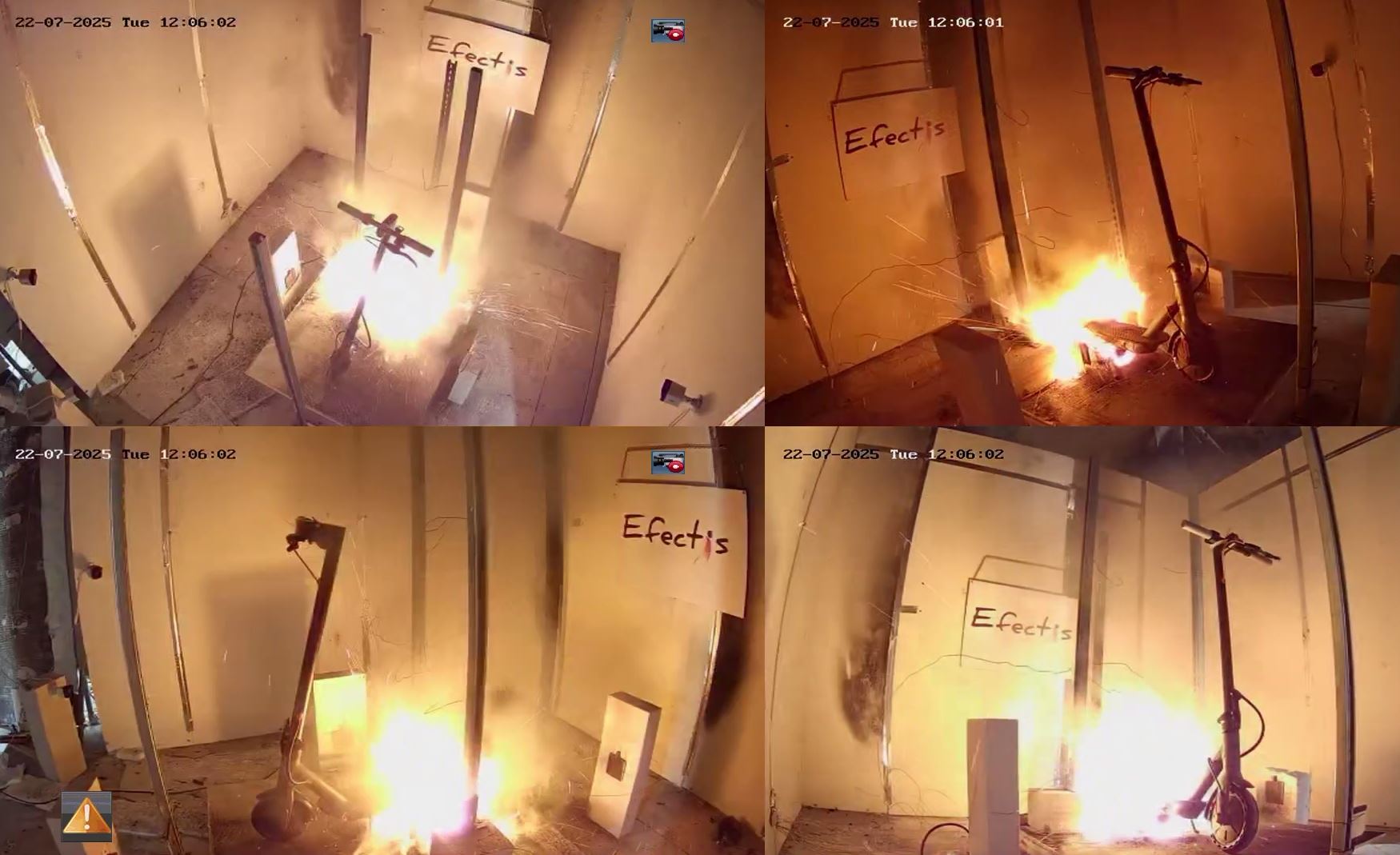
The standardisation process is a long one, so we need to accelerate it in order to establish rules for the industry to assess performance. At the moment, there is a high level of risk associated with BESS, particularly when they are located close to production facilities and, in some cases, residential areas.
Do project owners and installers give the required importance to fire safety at design stage or is it more of an afterthought?
If we are speaking about older energy production systems, such as nuclear plants, the rules have already been developed and continuously improved. For example, after Fukushima, there were definite improvements. I am also active in a working group with EDF (French Nuclear Plant operator) to propose further improvements to fire safety rules and characterization. We conduct a lot of testing for them, and the requirements have been clearly defined.
The new rules, such as the European battery regulation, are not yet completely enforced because the rules have not been fully implemented. At the moment, it is more a matter of manufacturers choosing to assess the fire safety of their systems. Therefore, regulators, authorities and governments should make it clear that these assessments must be carried out to address the safety issues in upcoming projects.
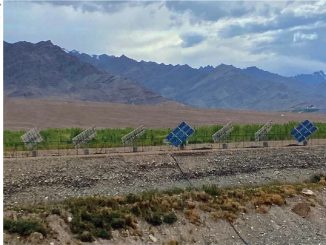
For large solar power projects, like those in India, it is very important that if a fire starts, you are able to limit its spread. Thus, assessing what has been done on site is important. When you add solar panels to a manufacturing plant, you can often have fires that spread throughout the industrial facility. I know that insurance companies are becoming increasingly stringent on this issue because they understand that the potential losses can be significant, and the cost of business interruption can also be very high. Hence, there is a need to test and verify on site how the installations have been carried out.
What key fire safety considerations, criteria, and mandates should different departments and regulators follow?
I would focus on buildings, particularly when electrical charging systems are installed for electric vehicles (EVs) in underground car parks beneath residential buildings. The risk is high because the nature of these fires is very different from what we have seen in the past.
I started my professional career dealing with vehicle fires and assessing the risks associated with them. However, at that time, it was essentially a conventional engine. EVs burn very differently. The global impact of one car may not be very significant, but the fire can propagate rapidly, and the impact may be due to the number of cars that can burn and the speed at which the fire spreads.
So, it may be very critical to characterise these vehicles before generalising the risks and to examine the conditions under which they are charged. Thus, it is important to work with car manufacturers because they have solutions and information, particularly through battery management systems. We know that for firefighters, it can be extremely difficult to extinguish an EV fire, as the amount of water required can be enormous. Therefore, the best approach is to ensure that if a fire occurs in an EV battery, it happens in a location where the risk is manageable, for example, not in a car park or close to an industrial facility where the fire could propagate.
How receptive has the overall industry been to your suggestions and recommendations?
It is a question of education and you must educate the market in general, that is, you educate the owners, operators, installers, and manufacturers.
However, it takes time and it is a lot of work. I intend to work on that in India to effectively educate the market that fire safety is important. We have to communicate about it extensively. Everyone should understand that rules have to be developed where they do not exist, and that existing rules need to be followed.
Fire safety rules shall be applied in every industry and enforced by audit. If not, the risk becomes higher and higher. To conclude, education is the biggest task we have to undertake over the next few years.