

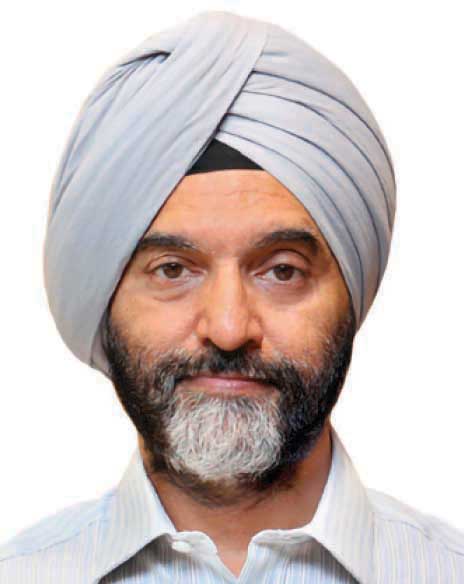
On the occasion of International Women’s Day, the Ministry of New and Renewable Energy (MNRE), in collaboration with the National Resources Defense Council (NRDC), launched an initiative called “Women in Renewable Energy”. This is part of the effort to empower women in leading the transition towards clean energy. Against this backdrop, the MNRE and the NRDC organised a conference on women in renewable energy to discuss gender inclusion through skill development and targeted policymaking for green jobs. The keynote address was delivered by Bhupinder Singh Bhalla, secretary, MNRE. In his address, Bhalla talked about employment generation opportunities, gender inclusivity and skilling initiatives in the renewable energy sector. Edited excerpts from his address…
The current uptake of renewable energy in India is inspiring. The country has set clear renewable energy trajectories and ambitious climate goals. We are progressing towards these goals by adopting new technologies and are committed to enhancing climate resilience by utilising clean energy. India is earning global recognition as a leader in the energy transition. This achievement is not merely a reflection of the government’s efforts; it is a collective endeavour, driven by industries, corporations and every conscientious citizen attempting to reduce their carbon footprint. It is a spirit that permeates through every household, every community and every corner of our nation.
The recently launched PM Surya Ghar Muft Bijli Yojana has received a positive response. In the past 20-25 days since its launch, we already have more than 4.5 million registrations on the scheme’s web portal, which is a significant feat in the context of the previous rooftop solar scheme. In the past five years, under the old rooftop solar programme (Phase II), the country witnessed a total of only 693,000 residential installations.
 There has also been a change in how policies are implemented. Registrations are now spread across the country and not just focused on one state, which was the case earlier. The actual addition of applications resulting from these registrations has surpassed 180,000 under the new scheme since its inception. These applications will soon translate into installations.
In my opinion, this scheme has become successful in such a short period of time as it is bringing energy transition into our homes. It enables us to reduce our dependence on conventional electricity. I am certain that this percentage will continue to grow, and the proliferation of rooftop solar installations will significantly increase our individual contributions to decarbonising the planet.
We anticipate that this scheme will create an ecosystem of about 100,000 people on the ground. To fulfil the demand, the MNRE will initiate a training programme this year, which will lead to significant employment generation.
We know that a lot of employment is generated during the construction phase, but the need for personnel decreases significantly at the operational level. Typically, you only need five to ten people on a 24×7 basis to manage a 300 MW plant, apart from security and outsourced staff.
Currently, most of the developers/independent power producers have a predominantly male workforce in the field. However, in head offices, regional offices or supervisory offices, there is a greater representation of women across various roles, from middle management to senior levels. We do not know the exact number, but we are hoping that the survey from the NRDC and the Council on Energy, Environment and Water (CEEW) will help us determine the number of women working in the renewable energy sector in India.
Meanwhile, in the manufacturing sector, there has been significant progress as far as gender inclusivity is concerned. Some manufacturing plants have decided to have a majority of women staff. For example, Tata has announced that 80 per cent of the workforce at its upcoming cell factory will be women. Further, developers such as ReNew and Avaada Energy have made similar commitments for their manufacturing endeavours. It is a commendable trend because there is no shortage of trained women in India. We have women with technical expertise available at all levels of society, including in the science, technology, engineering and mathematics (STEM) field. It is key to employ these women. Several reports suggest that having women in the workforce has a positive effect on the efficiency and output of the organisation.
We have a substantial amount of upcoming manufacturing capacity in the country, ranging from polysilicon and modules to wind turbines. The manufacturing space will have much greater gender inclusivity compared to project sites. Overall, I believe that the number of women in the sector will rise in the next few years.
A recent study by the World Bank highlights that India has the highest percentage of women graduates in the STEM field in the world, which is about 43 per cent. However, another study by the Asian Development Bank highlights that only one in 10 women have the skills required for a green economy. We need to change that and utilise the technical capabilities of the workforce in advancing the green economy. Therefore, our skilling programme for the sector will cater to several of the schemes that we have announced. For example, under the National Green Hydrogen Mission, a big skilling programme is being organised in consultation with the Ministry of Skill Development and Entrepreneurship.
We are now initiating this process in the rooftop solar space as well with the PM Surya Ghar Muft Bijli Yojana. There is a significant need for skilling in the rooftop solar space, and, therefore, we must now focus our efforts in this area. There are a lot of avenues through which we plan to skill women in the renewable energy sector. In addition to the Suryamitra Skill Development Programme and the Vayumitra Skill Development Programme, we want to start a bioenergy-focused Jaivmitra skill development programme.
I am interested in knowing the outcomes of the NRDC and CEEW survey analysis, but that is only going to be a starting point. These surveys should become an annual or a biannual exercise, which continue to track the status of the sector. They can provide us with indicators and supporting frameworks that can be used to tweak our policies and enable the inclusion of more women in the renewable energy sector.

