

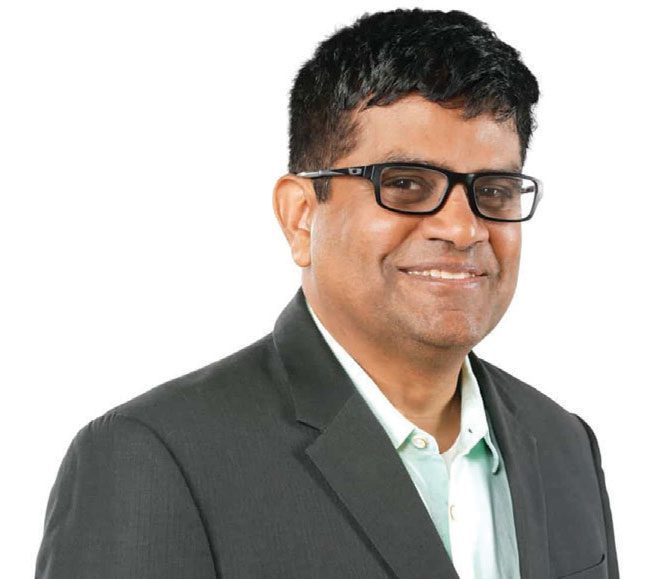
 Dr Arulkumar Shanmugasundaram, Chief Executive Officer and Managing Director, SWELECT Energy Systems, spoke to Renewable Watch about the company’s expanding independent power producer (IPP) and manufacturing businesses, the growing role of battery energy storage systems (BESSs) and hybrid projects, domestic solar manufacturing, open access opportunities and the policy measures needed to accelerate storage deployment. Edited excerpts…
Could you outline SWELECT’s current business portfolio and manufacturing capabilities?
SWELECT has a manufacturing base comprising solar modules as well as module mounting structures and other balance-of-system components. Our solar module manufacturing capacity has recently been expanded from 1 GW to about 2.2 GW, while our module mounting structure facility has a capacity of around 750 MW, which can be scaled to 1 GW.
We have three main businesses. The first is the IPP business. We currently have around 160-170 MW of commissioned ground-mounted capacity and we plan to take this to 1 GW over the next two years. We have visibility to reach 500 MW by March 2027, with power purchase agreements, land and connectivity identified. The IPP portfolio is also evolving with BESS. Several projects we are pursuing now involve solar-wind hybrids, solar-plus-BESS or solar-wind-BESS combinations. BESSs are becoming an integral part of our IPP portfolio. The second business is engineering, procurement, and construction, primarily for captive consumers. The third is our distribution business, which we are looking to expand significantly, particularly through the PM Surya Ghar: Muft Bijli Yojana. We have established distribution channels across Uttar Pradesh, Bihar and Odisha, and are targeting a revenue of around Rs 3 billion-Rs 3.5 billion from this business this year.
How is your IPP portfolio evolving geographically and in terms of customer segments?
Our IPP portfolio has historically been concentrated in Tamil Nadu, but we are now diversifying. Of the projects currently being signed, around 250 MW is outside Tamil Nadu. Once we reach 500 MW, we expect approximately 50 per cent of the portfolio to be in Tamil Nadu and 50 per cent outside the state. Of the 250 MW of projects already signed, around 80 MW is under PM-KUSUM in Madhya Pradesh, while the remaining 170 MW comprises open access projects in Kerala, Karnataka and Rajasthan. Our focus is largely on commercial and industrial (C&I) customers rather than government-bid projects.
What are the key cost pressures facing solar manufacturing?
Steel prices have increased significantly, by around 25 per cent since December 2025. Zinc prices have also risen, affecting hot-dip galvanisation costs. Consequently, module mounting structure costs have increased by around 15-20 per cent. The module business has been volatile, with selling prices increasing sharply last December and subsequently declining. Current prices are broadly around the November-December 2025 levels. Aluminium, copper and expandable polyethylene costs have also increased. Foreign exchange has been another factor, with the rupee depreciating substantially over the past eight to nine months. However, module selling prices have not reflected these cost increases because of higher capacity and squeezed margins. Cell prices have helped offset some of the pressure, as they have come down from earlier levels.
How do you assess India’s solar manufacturing policies, including Approved List of Models and Manufacturers?
I have been involved in manufacturing for a long time, and in my view, the government took manufacturing much more seriously after Covid-19. There has been significant commitment and support towards building the domestic manufacturing base. More than tariff barriers, non-tariff barriers have helped. While tariffs are important, I do not think manufacturing growth would have happened to the same extent through tariff barriers alone.
We are seeing progress in cell manufacturing as well, although the commissioning of capacity has been delayed. This creates a challenge if we move towards complete dependence on domestically manufactured cells. The focus is also shifting towards ingot and wafer manufacturing. Overall, the policies have been effective in building manufacturing scale in India, although the growth has been gradual.
How are you managing technology risk given the rapid evolution of solar cell technologies?
Solar technology is evolving much faster than it did in the past. The transition from multicrystalline to monocrystalline and subsequently to N-type technologies and TOPCon has happened within a relatively short period. We see TOPCon, including front-contact and back-contact configurations, remaining relevant for some time. heterojunction technology is also developing, while perovskite-tandem technology has potential. However, stability at an industrial scale remains a challenge. For utility-scale applications, I believe it will take another four to five years before stable 25- or 30-year-life perovskite systems emerge.
SWELECT has already experienced several technology transitions. We had to close our earlier manufacturing line and establish a new facility in Coimbatore as technology moved towards mono and subsequently, newer cell formats. We started with M10R and have since moved to G12R. We therefore have to continually upgrade our equipment to accommodate changes in cell technology and size.
We have not pursued back-contact technology because we expect complete dependence on Indian cells in the near future. There is currently limited back-contact cell manufacturing capacity in India. Converting a TOPCon cell line to back-contact is possible but requires additional capex, suitable plant layout, and mature technology and yields.
Are you considering further upstream integration?
We decided not to enter cell manufacturing because there is already substantial capacity announced and under development. Cell manufacturing is highly capital-intensive and requires clear visibility on utilisation.
We are, however, keen to move into ingot and wafer manufacturing. The challenge in ingot manufacturing is getting the process right, achieving the required yields and establishing a competitive cost structure. Our approach is to spend the next year identifying equipment and developing the process. Once we achieve the required yields and cost structure, we can consider scaling up to a 2 GW line.
What is your view on the potential oversupply in solar manufacturing?
India could produce around 50-65 GW of modules annually, while the announced manufacturing capacity is much higher. Demand could increase substantially with the growth of electric vehicles and data centres, but I am not sure whether it will be sufficient to absorb all the planned capacity. Module manufacturing is relatively low capex compared to cell manufacturing. Therefore, even at lower utilisation levels, we may not see significant distressed assets.
Cell manufacturing is different because it is capital-intensive. Announced capacity is approaching 60-65 GW, although actual production will be more important than nameplate capacity. There is also a technology challenge. Around 15 GW of existing cell capacity is based on mono-PERC technology and will eventually need to be upgraded. Fortunately, upgrading mono-PERC to TOPCon does not require a complete transformation.
What policy measures would help accelerate BESS deployment?
There needs to be a clear policy for behind-the-meter BESS. For open access BESS, I particularly like Rajasthan’s approach, where a certain percentage of open access capacity is mandated to be supported by batteries depending on the connected load, along with exemptions from transmission and wheeling charges for a specified period. This can be a win-win for utilities and consumers. BESS can increase power injection during peak periods, reducing utilities’ peak power procurement requirements, while consumers can benefit from lower peak power costs.
There also needs to be clarity on BESS connectivity. If a solar project has connectivity, there should be clarity on using that connectivity during non-solar hours through BESS and other sources. For behind-the-meter projects, BESS should not automatically be treated as additional load, and there should be clarity on the ability to inject power back into the grid where required. These measures can benefit both utilities and consumers.
Which markets are attractive for your open access business?
Karnataka currently has one of the most favourable policies because there are no significant restrictions on time slots. Andhra Pradesh has significant potential because the market is relatively underpenetrated, particularly with data centres being announced, although its policy remains restrictive. Maharashtra also has a large market, while Tamil Nadu has developed a substantial commercial and industrial open access market, although it is relatively more penetrated. We are also looking at Uttar Pradesh and Rajasthan, where BESS is being considered as an integral part of projects.
Which businesses will drive SWELECT’s growth over the next few years?
The IPP business will be an important growth driver. We currently have sufficient capital to reach around 500 MW and potentially beyond that. Therefore, we will need to consider additional equity, a platform model or other structures to scale the business. Our objective is to reach 1 GW in two years, but the business cannot stop there, given the demand. I am also particularly excited about the distribution business. We want to build it into a meaningful, large-scale business, with products that can attract customers and generate volume and revenue. We will continue with EPC, but selectively. One poor EPC order can offset the gains from several good orders, so we will not pursue aggressive top-line growth at the expense of margins. We are also looking at increasing our wind portfolio. Some older wind assets have annual banking provisions, which can be an attractive feature and provide benefits similar to battery storage. Our focus is therefore on building a more balanced portfolio of wind, solar and BESSs.
