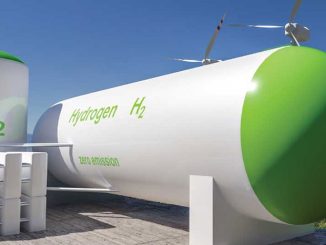
 Green hydrogen has rapidly moved from being a long-term decarbonisation concept to an emerging industrial and energy transition priority. Backed by policy support, growing institutional interest and ambitious project announcements, the sector has witnessed significant momentum over the past few years. However, despite this progress, the industry remains at a formative stage, with commercial viability continuing to depend on how effectively challenges related to production costs, financing, infrastructure and demand creation are addressed. Several aspects of the value chain are evolving simultaneously, but not always at the same pace, making the economics of green hydrogen central to the sector’s growth trajectory.
In a panel discussion on “Cost Economics of Green Hydrogen” during the 11th edition of the “Green Hydrogen in India” conference organised by Renewable Watch, panellists discussed the evolving economics of the sector, financing-and risk-related challenges, the importance of demand creation, and the role of policy and institutional support in enabling the large-scale adoption of green hydrogen in the country. The panellists included Surbhi Goyal, Senior Energy Specialist, Energy and Extractives, World Bank; Neha Jhawar, Assistant General Manager, Risk Management Department, Bank of Baroda; Priya Kumar, Executive Director, PFC; Shashi Prabha, General Manager (CHAKRA Centre of Excellence), Project Finance and Structuring – Strategic Business Unit, State Bank of India. Edited excerpts…
Cost structure
Green hydrogen economics is dominated by two primary cost components: renewable energy and electrolysers. Renewable energy accounts for nearly 70 per cent of the production cost, making India’s low-cost solar and wind resources a significant competitive advantage. The sharp decline in renewable tariffs over the past decade has already contributed to improving the cost profile of green hydrogen.
However, the scope for further reduction in renewable energy costs is limited. Incremental improvements are expected, but they are unlikely to drive transformative change. The second component, electrolysers, therefore emerge as the primary driver of future cost reductions. With increasing domestic manufacturing, technological improvements and economies of scale, electrolyser costs are expected to decline substantially over the next decade. Efficiency gains will also play a role. Higher efficiency translates into lower electricity consumption per unit of hydrogen produced, directly impacting overall costs. Yet, these improvements will take time to materialise and require sustained investment in research and development.
Cost gap with grey hydrogen
Despite favourable trends, green hydrogen remains more expensive than grey hydrogen. Current estimates indicate a cost differential of two to three times, which poses a major barrier to widespread adoption. While declining renewable energy and electrolyser costs are expected to narrow the gap, green hydrogen currently remains significantly more expensive than grey hydrogen. This gap highlights the importance of adopting a life cycle perspective rather than focusing solely on upfront costs. Investments in fossil-fuel-based infrastructure carry long-term risks, particularly as global decarbonisation efforts intensify. Assets built today may face reduced utilisation or early obsolescence, altering their economic viability over time.
In contrast, green hydrogen investments, while costlier upfront, align with future regulatory and market trends. This shift in perspective is essential for both developers and financiers, as it reframes the discussion from immediate cost competitiveness to long-term value creation.
Financing constraints and risk perception
Access to finance remains one of the most critical bottlenecks. While capital availability is often cited as a challenge, the issue is less about liquidity and more about risk allocation. Financial institutions require clarity on project viability, which depends on both cost structures and revenue visibility. Green hydrogen projects present unique risks compared to conventional infrastructure. High capital intensity, evolving technology and uncertain demand create a complex risk profile. As a result, lenders are cautious, particularly when evaluating large-scale commercial projects.
Key risks include cost risk, offtake risk, technology risk and policy risk. To mitigate these challenges, early projects have focused on captive consumption models, where producers are also end-users. This reduces dependence on external demand and provides greater revenue certainty. However, scaling beyond this model will require broader market development.
Demand creation remains a key challenge
The absence of a strong demand base is emerging as the single largest constraint. While supply-side initiatives have gained traction, demand remains fragmented and uncertain. Industrial sectors such as refining, fertilisers and steel represent significant potential, but large-scale adoption is yet to materialise. One of the proposed solutions is the introduction of demand-side mandates, similar to renewable purchase obligations. These could require industries to source a certain percentage of their hydrogen consumption from green sources. However, timing is critical. Introducing mandates before supply chains are fully developed could disrupt markets and increase costs for end-users. A calibrated approach is therefore necessary, where mandates are aligned with supply availability. In parallel, awareness needs to be created around the actual cost impact on end products. In some cases, the increase in final product prices may be marginal, despite higher input costs, but perception barriers continue to persist.
Role of incentives
Government incentives are playing a crucial role in bridging the viability gap. Production-linked incentives, capital subsidies and policy support under national programmes have provided initial momentum. State-level incentives, including capital cost support, are further enhancing project feasibility. However, given the nascent stage of the sector, additional support mechanisms may be required, including viability gap funding to offset high initial costs, tax incentives across both capital and operational phases, contract-for-difference mechanisms to stabilise revenues, and carbon pricing or carbon taxes to help internalise environmental costs. Such interventions can accelerate early adoption and enable the sector to achieve scale, which in turn will drive cost reductions.
Infrastructure and resource considerations
Green hydrogen development extends beyond production to encompass the entire value chain. Infrastructure for storage, transportation and distribution remains underdeveloped and requires significant investment. Without these supporting systems, even cost-competitive production will not translate into market growth. Resource availability is another critical factor. Water, a key input for electrolysis, must be sourced sustainably. Estimates suggest that around 10-12 litres of water are required per kg of hydrogen produced. This raises important questions around water sourcing, particularly in water-stressed regions. Similarly, land availability and renewable energy integration must be addressed. Large-scale projects will require coordinated planning across multiple inputs, reinforcing the need for a holistic approach.
Tariff trends and market signals
Recent auction results have provided encouraging signals, with discovered prices significantly lower than earlier international benchmarks. This suggests that developers are factoring in future cost reductions and efficiency gains while bidding. However, aggressive pricing also introduces risks. If cost assumptions do not materialise, some projects may face delays or fail to reach financial closure. This pattern has been observed in other emerging technologies, where early optimism is followed by consolidation. The current phase should therefore be viewed as a learning period, where initial projects help establish benchmarks, identify challenges and refine business models. The lessons from these projects will be critical in shaping the next wave of development.
Blended finance and new funding models
Given the risk profile of green hydrogen, blended finance is emerging as a key solution. By combining concessional funding from development institutions with commercial capital, blended finance structures can improve project viability and reduce perceived risks. Development finance institutions play an important role in this context. Their ability to absorb higher risks and provide long-term capital makes them well suited to support early-stage technologies. By participating in initial projects, they can help establish track records, build confidence and attract private investment. Collaboration between public and private stakeholders is essential to scale these models. No single entity can address the challenges in isolation, and coordinated efforts will be required to unlock capital at scale.
Bridging the gap between announcements and execution
A notable feature of the sector has been the large number of project announcements, many of which have yet to translate into on-ground implementation. This reflects a wait-and-watch approach adopted by both developers and financiers. Developers are closely monitoring cost trends, policy developments and market signals before committing significant capital. Similarly, financiers are seeking greater clarity on project fundamentals, including demand visibility and infrastructure readiness. Bridging this gap will require simultaneous progress across multiple fronts. Policy support, financial innovation and market development must converge to create a conducive environment for execution.
Future outlook
The transition to a green hydrogen economy will not be immediate. It will unfold over the next decade through a combination of technological progress, policy support and market development. The current phase is characterised by experimentation, learning and gradual scaling. Cost economics will continue to be the defining factor, but it must be viewed in conjunction with broader ecosystem readiness. Reducing costs, creating demand, mitigating risks and building infrastructure are all interconnected challenges that must be addressed in parallel.
The experience of the renewable energy sector offers a useful precedent. What was once considered prohibitively expensive has become one of the most cost-competitive sources of power. A similar trajectory is possible for green hydrogen, provided the right enablers are in place. Ultimately, the sector’s success will depend on coordinated action across stakeholders. Policymakers, financiers, developers and end-users all have a role to play in shaping the market. As these elements come together, green hydrogen can evolve from a promising concept into a commercially viable pillar of the energy transition.