 India’s wind power sector is entering a phase where capacity addition is increasingly being shaped by the requirements of firm and round-the-clock (RTC) power, rather than standalone renewable procurement. Hybrid, firm and despatchable renewable energy (FDRE), RTC and commercial and industrial (C&I) projects are emerging as important avenues for growth, while land availability, transmission connectivity, forecasting, scheduling and deviation settlement mechanism (DSM) norms and policy uncertainty continue to affect project economics. Against this backdrop, at Renewable Watch’s 14th edition of the “Wind Power in India” conference, leading developers discussed the opportunities in the sector, project execution challenges, financing concerns and policy priorities. Edited excerpts…
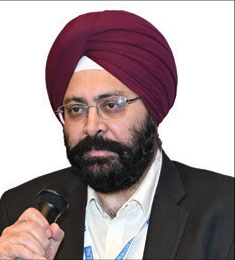 Dr Jatinder Singh Chandok, Chief Executive Officer, ONGC NTPC Green Energy
Land acquisition is becoming an important development priority for us. We are looking at acquiring land even before power purchase agreements (PPAs) are signed, where we believe that demand will emerge over the coming years. This gives us greater flexibility to respond when the market develops. However, the recent increase in wind additions is not sufficient. Annual additions had earlier declined to around 2-3 GW, while approximately 6 GW was added in the previous financial year. A significant part of this capacity was developed earlier and commissioned in a single year. With the increasing number of FDRE and RTC tenders, wind cannot be left out. Storage has its own advantages, but the sizing requirement changes substantially when wind is included in an RTC portfolio.
Land acquisition, transmission availability and curtailment remain the biggest challenge for us. In some locations, bringing in wind capacity is difficult because of land and supply constraints. On the operational side, generation profiles are also not always matching expectations, which affects the overall RTC solution. Greater investment in storage and transmission should help reduce curtailment over time.
Offshore wind is also part of our pipeline. We are discussing the segment with Solar Energy Corporation of India Limited and the Ministry of New and Renewable Energy. Tamil Nadu appears particularly attractive, where we are seeing the potential for capacity utilisation factors of 50-55 per cent. We have therefore proposed support for an initial 500 MW project to bring the tariff closer to Rs 5 per unit and establish the offshore ecosystem. Without subsidy, the tariff could cross Rs 20 per unit. In this space, we require a single-window approval mechanism and detailed offshore studies. Since there is currently no Indian original equipment manufacturer manufacturing offshore wind turbines, we have suggested that the first projects should be allowed to source turbines internationally rather than being restricted by domestic content requirements.
 Gaurav Jaitak, Vice-President, Welspun New Energy
The key challenges in the sector include land acquisition and the clearances needed for it, availability of accurate wind measurement and transmission infrastructure. Further, for accurate forecasting and DSM compliance, data validation is critical. We use third-party agencies with historical and past data to prepare forecasts. However, when DSM requirements become tighter, developers need to be particularly careful about the assumptions and variation clauses built into their models.
The sector is moving towards larger wind turbines, but is also creating a trade-off. While it can reduce the land requirements, larger turbines create significant logistics and right of way (RoW) challenges. Globally, much larger turbines are being discussed, but the ground-level infrastructure needs to keep pace with turbine size.
 Sandy Khera, Chief Executive Officer and Country Manager, Enel India
The focus across the industry is shifting from plain vanilla wind and solar towards FDRE, RTC and hybrid projects, where generation is matched more closely with the customer load profile. The optimal combination of wind, solar and storage can provide firm power, but this also increases engineering complexity. The next phase of growth will therefore require stronger technical capabilities rather than simply competing on the lowest tariff.
DSM is an important part of this transition. Its objective should be grid discipline rather than penalisation. Forecasting wind generation accurately remains difficult, particularly at the individual generator level. Regional aggregation could help reduce deviations, provided the regulatory framework is designed around the objective of grid stability.
For developers, the main issue is not necessarily having the most favourable policy in the world, but having a consistent and stable framework. If the developer knows the risks at the bidding stage, those risks can be incorporated into the tariff. Applying new requirements retrospectively to projects that were already bid and operational creates challenges.
Payment risk, policy certainty, currency exposure and collection history all affect the cost of capital. Greater policy certainty and contract enforceability will directly improve project economics. Going forward, green bonds and sustainability-linked financing can provide alternatives for project financing.
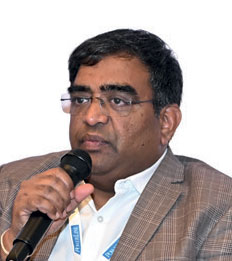 Vinay Pabba, Chief Executive Officer, Vibrant Energy (now CEO, Inox Neo Energies)
Vibrant Energy is focused on supplying renewable power to C&I customers. We were early entrants into the virtual PPA (VPPA) segment. Under our structure, power is settled on the exchange while the generator receives a fixed tariff. The formal VPPA framework has improved transparency, but there is still scope for regulatory refinement. The current framework refers to renewable energy certificates but does not adequately address other renewable energy attributes such as international renewable energy certificates, green commodity certificates and voluntary carbon credits. This is important because international C&I customers are increasingly looking for these attributes to offset their global emissions. In a C&I context, solar tariffs are around Rs 3.2-Rs 3.3 per kWh, while wind is around Rs 3.7-Rs 3.8 per kWh. The fixed VPPA tariff therefore depends on the asset mix. Our larger interstate transmission system (ISTS) projects have been co-located wind-solar hybrids, resulting in a blended tariff. Curtailment within a VPPA project is generally treated similarly to a conventional C&I PPA. Where grid constraints prevent power from being injected, the generator typically bears the risk rather than the offtaker.
The phase-down of ISTS exemptions has had an impact on the C&I renewables market. The exemption helped accelerate C&I participation in the ISTS market. However, these exemptions can also distort price signals and socialise costs across the system. The benefits and costs therefore need to be considered together.
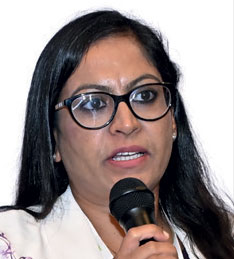 Monika Rathi, Country Head, Vena Energy
Wind needs to be recognised for its role in grid stability and FDRE projects. A wind-heavy portfolio can complement solar generation, particularly because wind generation is often available outside solar hours. However, the current DSM treatment of hybrid projects creates difficulties. To ease DSM-related challenges, regional or cluster-level aggregation could help. In some states, state-level pooling has resulted in reduced DSM deviations. Thus, the objective should be grid stability rather than penalising individual projects. From a policy perspective, open access needs longer-term certainty. State regulations and exemptions can change, forcing projects back to the drawing board. While green open access has been well-intentioned, implementation has often been inconsistent.
Repowering is another important opportunity, particularly in states like Gujarat where some wind projects are 30-35 years old. With good sites becoming scarce, replacing older turbines at existing sites can improve utilisation of available land. However, new sites also require careful assessment of wind gusts and turbine design conditions.
 Vaibhav Singh, Head of Strategy, Tata Power
Our focus is increasingly on FDRE and RTC projects, alongside utility-scale and C&I projects. Wind remains important for us as it helps reduce the storage requirement in firm power projects. The development process continues to face land and connectivity constraints. During construction, RoW is a major bottleneck, delaying the entire project. Logistics will become even more challenging with larger turbines, particularly with 5 MW machines and blade diameters increasing to around 180 metres.
Repowering should form part of the sector’s long-term strategy. At the same time, policymakers need to synchronise transmission development with renewable auctions. Pre-approved renewable energy zones and streamlined RoW clearances could substantially reduce project delays.
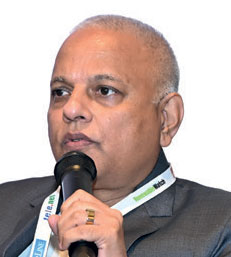 Rajesh Prabhakar Zoldeo, Head – Business Development & Commercial, Renewable Business, Sembcorp India
Wind remains competitive against battery storage and is complementary to solar. Solar generation is increasingly facing curtailment during daytime hours, while wind can provide generation during evening periods when power prices can be higher. However, the slow pace of wind development in the past has reduced the availability of this complementary generation.
Policy changes need to avoid retrospective application. Some existing wind projects are supplying power at tariffs as low as Rs 2.50 per kWh. A revenue impact from DSM can make such projects unviable and also raise concerns among lenders. Developers can design new projects around known regulations, but existing projects cannot easily absorb such changes. A more centralised policy framework, greater stability and predictable implementation across states would therefore support both developers and lenders. If policy risks are reduced, projects can be designed more accurately, tariffs can better reflect actual risks and financing conditions can improve.