Battery energy storage systems (BESSs) depend on continuous coordination between the battery management system (BMS), power conversion system (PCS), energy management system (EMS), protection systems, supervisory control and data acquisition (SCADA) infrastructure, and grid or load despatch centres. Reliable communication, low latency and continuous data visibility are therefore becoming central to performance, while greater connectivity is increasing cybersecurity requirements. As projects scale, interoperability between equipment from different original equipment manufacturers (OEMs), predictive maintenance, remote diagnostics and fleet-level control are becoming key considerations. Against this backdrop, Renewable Watch organised a webinar on “Connected Energy Storage: Building Reliable and Resilient BESS Infrastructure”. Edited excerpts…
 Durgesh Agarwal, Deputy General Manager, NTPC Green Energy Limited
BESS has to be managed actively throughout the life of the project, particularly when it becomes part of a larger round-the-clock or firm and despatchable renewable energy portfolio, where solar, wind and storage have to work together as one solution.
Connectivity is therefore critical. Even when the control centre is remote, we need complete visibility of operating parameters and control over the asset. At the portfolio level, interoperability becomes a major issue as projects may use different batteries, PCS and EMS platforms. We need an architecture that allows additional assets to be integrated without being constrained by proprietary protocols.
Predictive maintenance will also be important. The EMS is central here, as it receives operating data across the system and can support decisions on how individual blocks should be despatched or maintained. As portfolios expand, the requirement will move beyond plant-level operation towards integrated portfolio-level visibility and decision-making.
 Nitesh Bhutada, Founder, Newen Systems
Different BESS applications create different operating requirements. In a large behind-the-meter C&I project, the system may need to follow the plant’s actual load profile and execute peak shaving accurately. In a distribution application spread across multiple substations, the requirement shifts towards data visibility, remote operation and network support functions.
The performance of a storage system depends not only on the battery, but on how seamlessly the BMS, PCS, EMS and data layer are integrated. If this integration is weak, one part of the system can behave differently from what the overall operating strategy requires. Reliable data access is therefore fundamental. Where connectivity is weak, even evaluating performance or applying analytics becomes difficult.
This is why customer-facing monitoring should be treated as an operating layer rather than an add-on. A common platform can support different applications and locations while avoiding the need to redesign the solution for every site. We have also seen the importance of standardising interfaces as the market scales.
Localisation is progressing on the power electronics side. PCS products and DC-DC converters can increasingly be designed, manufactured and tested in India. However, localisation also depends on domestic testing infrastructure, engineering capability and confidence in Indian equipment. Building these supporting capabilities will be as important as manufacturing the equipment itself.
 Naresh Chandak, Senior Vice President, New Business and Renewable Energy, IndiGrid
Our experience with the 20 MW/40 MWh Kilokari BESS project in Delhi has shown that detailed engineering is extremely important. The project has been operating for around a year and a half, and against an AC-to-AC round-trip efficiency requirement of 85 per cent, we are achieving close to 89 per cent. Availability is also close to 99 per cent against a requirement of 95 per cent.
Good BESS performance begins with detailed engineering, integration testing and clarity on the project key performance indicators (KPIs). It cannot be approached in the same way as a solar project. Sizing, year-on-year capacity requirements, grid studies, static and dynamic compliance, capacity testing, and system integration all need to be addressed at the design stage. Factory acceptance testing of battery containers, cells, modules, packs, racks, PCS and the integration with the EMS can significantly simplify commissioning.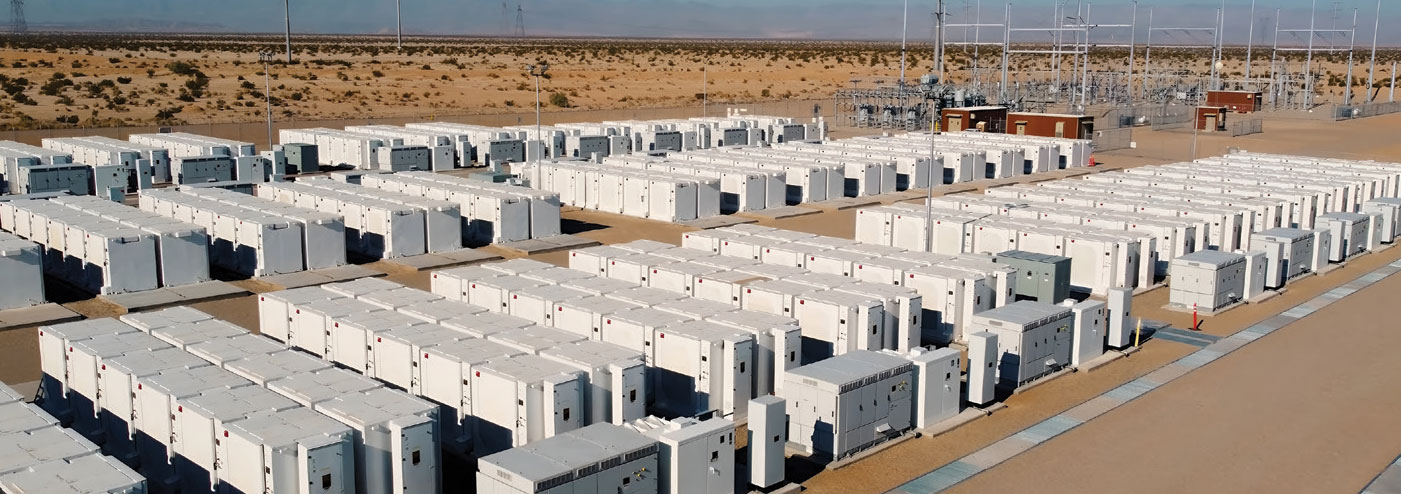
The data requirement is substantial for operating a BESS. This makes clear technical specifications important. Battery, PCS and EMS suppliers need a clear problem statement and clearly defined KPIs so that the complete system can be integrated and commissioned without avoidable anomalies.
Udyut Goyal, Head, Business Development, AmpereHour Energy
 BESS operates on second and sub-second response intervals. To deliver the required response, all the underlying components have to operate within the same guardrails. Connectivity is needed at three levels: within the BESS, between the batteries, PCS and EMS; between the BESS and the central control centre; and eventually across multiple assets at the fleet level. It is a real-time asset, so the communication architecture has to be designed around the response time expected from the system.
The EMS plays a critical role in integrating field devices and communicating with external control centres. The architecture should therefore be open and hardware-agnostic. If an EMS works only with selected hardware, scaling the system across multiple OEMs and future projects becomes difficult.
We also need to move from reactive to predictive maintenance. Auxiliary consumption and long-term operations and maintenance requirements are still not fully understood across the industry. Safety is another area where predictive systems can add value, including early detection of conditions that may lead to thermal or fire events.
Excessive fragmentation of responsibility can complicate integration. Having one or two parties accountable for delivering the overall system against clearly defined KPIs can reduce interface risks. India can also localise much of the AC side, including the EMS, controls and communication layer, while battery localisation is likely to progress in stages.
 Dhaval Makhecha, Senior Solutions Account Manager, Belden
A BESS is not an isolated container. The BMS, EMS, PCS, protection systems, power plant controller and SCADA continuously exchange operating and control data. From the field level to SCADA and the remote control centre, this communication needs to remain reliable and available in real time.
From a connectivity perspective, availability, interoperability and security are the three main challenges that need to be addressed during BESS design. Availability is important because any loss of communication reduces visibility and can directly affect BESS operation. The second is interoperability, because different OEMs may use different communication protocols and network architectures. This needs to be addressed at the engineering stage rather than after equipment has already been selected. The third is cybersecurity, as BESS is increasingly connected to load despatch centres, grids and remote control systems.
Open standards can reduce future integration constraints. Communication protocols such as IEC 60870-5-104 and IEC 61850, and standard network redundancy approaches, can help prevent dependence on a single OEM. Regarding cybersecurity, compliance should not be treated only as a checklist. Component-level security, system-level audits and applicable Central Electricity Authority and international requirements need to be incorporated from the design stage.
 Gaurav Shanbhag, Manager, Solution Consulting – Energy & Transportation, India, Belden
The BESS communication network has to support the operating speed expected from the asset. Functions such as fast frequency response require deterministic communication and very low recovery times. Furthermore, network availability and cybersecurity have to be considered as part of BESS performance, not as separate communication system requirements. For larger projects, data and control networks may need to be separated, with segmented architectures and redundant network paths used to improve availability. Ring architectures, industrial switches and controlled information technology-operational technology interfaces can reduce disruption if part of the communication network fails. Firewalls and secure remote access systems are also becoming more important as storage assets become connected to external networks.
Cybersecurity needs to be built into the BESS architecture from the start. Standards such as IEC 62443 provide a framework for securing industrial automation and control systems, while the wider power system communication environment also requires appropriate security controls. Network design also has to remain scalable. Storage portfolios will continue to expand, so the architecture should allow additional battery blocks, PCS equipment and sites to be incorporated without requiring a fundamental redesign.