 By Meheli Roy Choudhury, Research Consultant, and Dr Debajit Palit, Head, Centre for Climate Change and Energy Transition, Chintan Research Foundation
India’s renewable energy story is celebrated as a tale of speed, scale and global credibility. As of March 2026, the country has achieved more than 280 GW of renewable capacity including around 150 GW of solar, 56 GW of wind, 51 GW of hydro and 17 GW of other renewable technologies. But alongside every megawatt of green power added, there is a quieter and socio-political undercurrent that we rarely interrogate: who bears the cost of this transition within the energy transition? Furthermore, while electricity generation from renewables does not emit greenhouse gases, the entire value chain – from mineral extraction for solar panels, wind and hydro turbines to end-of-life management – is not necessarily clean. The current dominant just transition conversation in India is almost exclusively focused on the coal economy, highlighting job losses, district-level development plans and alternative livelihoods. Yet, as renewables expand and support a low-carbon transition, they also place increasing pressure on resources, albeit at a lower scale. This includes minerals for equipment manufacturing, land for large-scale projects, water for operations and maintenance of certain technologies, and the challenge of managing resources sustainably at end of life.
Concerns of land conflicts, ecological degradation and community displacement
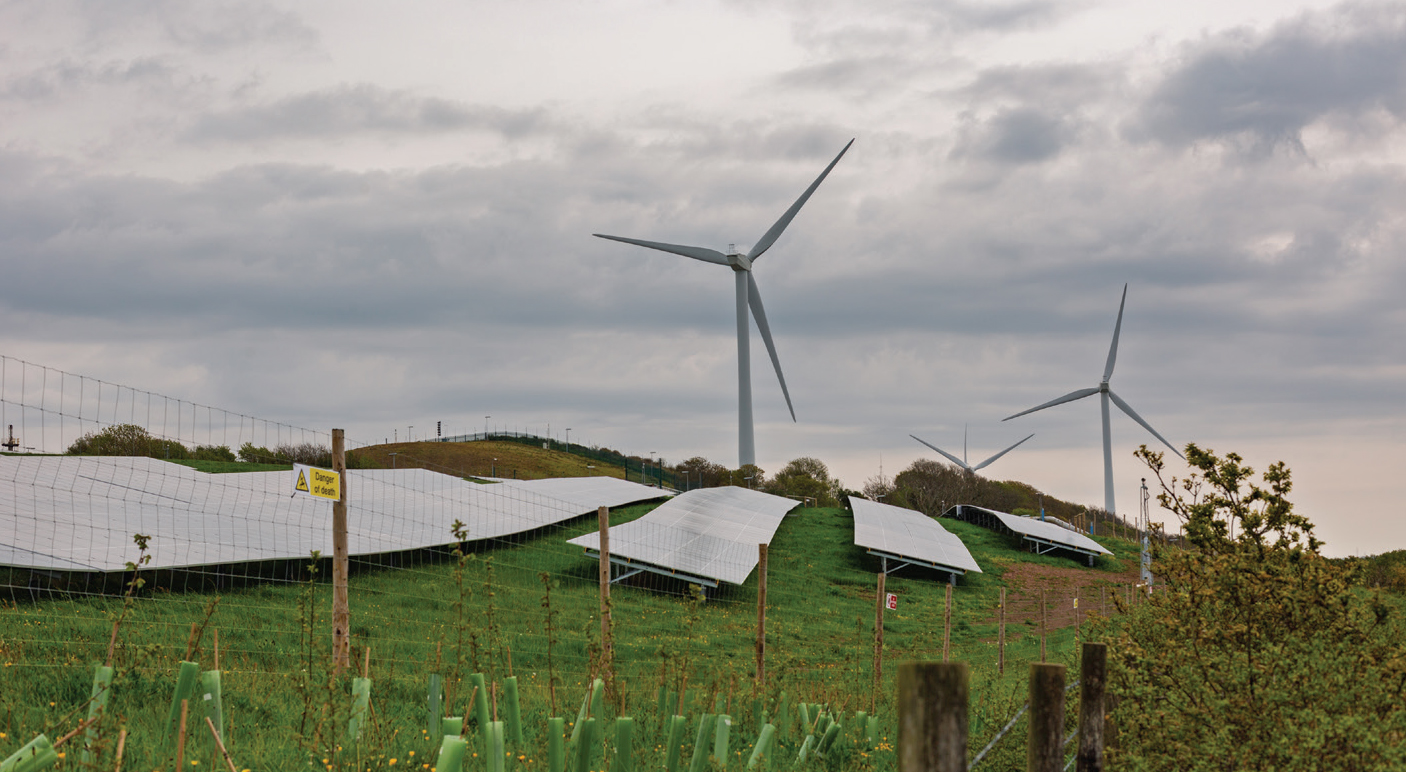 Consider how most solar projects are secured today: developers take waste-degraded land on a 20-30-year lease, paying a fixed annual rent to landowners, often farmers. However, renewable energy projects set up on “wasteland” may face several social and environmental risks due to the ambiguity of the term. For instance, land that may be recorded as degraded or waste may be used for pastures, growing minor crops, etc. Such land, if left unused, will eventually become waste. For a household, the loss of land is not merely being unable to use the land, it is a loss of identity, bargaining power and sometimes inflation-adjusted security.
Unlike coal mines, where environmental clearance conditions mandate land restoration and reclamation, solar contracts rarely carry legally enforceable land restoration clauses or decommissioning bonds. After two decades under panels, with limited sunlight and soil compaction from construction, the land, if returned to the farmer, may be agriculturally dead.
India aims to implement 500 GW of renewable energy capacity by 2030. At such a scale, issues are bound to surface, unless preventive actions are taken. Land conflicts, ecological degradation and community displacement might emerge as recurring fault lines, even if it is unintentional, as observed from some of the existing projects. For instance, in December 2025, the Supreme Court, while battling the green versus green debate, laid the mandate on the Great Indian Bustard, establishing a legal precedent: biodiversity conservation is now a non-negotiable threshold for energy infrastructure.
If such challenges are surfacing at 250 GW, what will the picture look like when India scales up to 1,800 GW of installed renewable capacity by 2070? As renewable expansion accelerates, with projects increasingly located near or on agricultural land, associated negative externalities are likely to intensify.
Much is said about distributed renewable energy as a way to address land or ecological issues. Schemes such as PM Surya Ghar and PM-KUSUM are important for empowering households and farmers to become energy prosumers. However, neither rooftop nor feeder line agriculture-linked solar can substitute for the sheer quantum of utility-scale capacity required to support industrial growth.
This forces us to confront the land question, particularly in relation to solar development. Broadly, India is drawing from two buckets. The first is waste-degraded land, often non-remunerative tracts, leased to developers, sometimes with agrivoltaics to preserve partial cultivation beneath the panels. The second includes open natural ecosystems, often termed as wastelands. While these areas lack permanent human structures, they act as grazing land or support local ecosystems.
Models for land procurement
Solar projects roughly demand 4-8 acres of land per MW, depending on technology, making land the single most critical and potentially most contentious input in India’s clean energy programme. India’s net zero targets are projected to require 50,000-70,000 square km of land for solar and 1,500-2,000 square km for wind, along with 4-10 billion cubic metres of water under different scenarios.
Despite no regulatory mandates for responsible land reclamation for renewables, some models do exist, which help percolate the benefits to all stakeholders involved. In Karnataka, the government formed a special purpose vehicle to acquire land on a leasing model, instead of outrightly purchasing it, which allowed farmers to be compensated while the solar park continued operations. The compensation ranged from Rs 21,000 to Rs 63,000 per annum. At the Pavagada solar plants, land leased from farmers has been promised a 5 per cent increase in compensation, which will be reviewed with the community after 10 years.
Such instances of revenue sharing demonstrate that renewable deployment need not follow a one-way extraction of land rights; it can be structured to embed farmers as long-term economic stakeholders in the energy transition rather than dispossessed bystanders.
Such practices are not new. In the 1990s, Gadag district in Karnataka adopted multiple land use practices for wind farms, which continue till date. Negotiations between landowners and companies yielded rights to cultivation beneath windmills – for every 1 acre of land, 0.1 acre became cultivable land. This arrangement built substantial trust among farmers, who received an upfront payment while continuing to earn from ongoing cultivation.
In fact, ageing coal mines can also be viable spots for solar infrastructure development. Repurposing such land for renewable energy generation not only reduces the pressure on farmland but also offers a way to revitalise post-mining regions. Many of these sites already have access to transmission infrastructure and transport connectivity, which are critical enablers for large-scale solar installations. This approach is not just an instance of land reclamation, but an opportunity for local job creation and greening the local ecology.
Globally, such cases already exist, especially in China, where 14 GW of solar capacity on coal land has already been achieved in 2025. Mid-sized solar projects, typically ranging from 5 MW to 50 MW, are best suited in such contexts, as they are ambitious enough to attract investors and feasible enough to avoid major grid upgrades. In India, an estimated 500 square km of already decommissioned and abandoned mine land has the potential to accommodate over 27 GW of solar capacity. Coal India Limited has already shared plans to develop pumped storage projects in de-coaled coal mines.
Another suggestion for the smart use of limited land is non-agricultural land, usually marshy, arid or disturbed landscapes. A key example of this is Kutch, Gujarat, where Adani Green Energy Limited (AGEL) is building the world’s largest renewable .energy project at Khavda, approximately the size of Mumbai, with a capacity of 30 GW. The project incorporates innovative measures such as corrosion-resistant foundations and waterless robotic cleaning systems to maintain panels amid acute water scarcity. The Khavda plant is seen as a model for India’s future energy parks that balances scale with ecological and social responsibility.
The case of the Rewa solar park has long been well regarded as a global benchmark for its innovative “plug-and-play” land model. It is the first project in India to break “grid parity” largely due to its approach to de-risking land for developers while ensuring benefits to landowners. The adoption of voluntary sale practices, aggregation of state-owned wasteland, the government offering a price higher than the “non-remunerative” agricultural value of the rocky terrain and the provision of “ready-to-build” plots with infrastructure to developers helped gain social licence.
High demand for natural resources such as water is an equally important factor. According to some studies, each round of cleaning 1 MW of solar panels in India can consume between 7,000 and 20,000 litres of water, a level of demand that can exacerbate scarcity in drought-prone regions. With approximately 56 per cent of all solar installations in India located in arid and semi-arid regions, it is prudent to include water management practices in such areas.
In its ESG report for 2022-23, AGEL noted that 100 per cent of its operating plants aggregating over 200 MW in Tamil Nadu, Rajasthan, Karnataka, Gujarat and Andhra Pradesh are certified as “water-positive”. This resulted in AGEL becoming the world’s first renewable energy-based independent power producer with a massive 14 GW operational portfolio to turn water-positive. The company has also adopted waterless robotic cleaning, rainwater harvesting and groundwater recharge pits and ponds, while maintaining panel efficiency and lowering operational dependence on manual cleaning cycles.
A just transition lens changes the governance question
There is no “impact-free” corridor for renewables; the real test is whether the impacts are managed rather than exported to the weakest actors. Once we accept that renewable energy also produces site-level concerns, the policy question changes from “How fast can we add capacity?” to the more democratic “On what terms and for whom?” The entire policy stack now rewards the fastest, cheapest build, relegating social safeguards as a secondary concern. This is because renewable energy is being positioned as “socially good”. However, its social harms are sometimes invisible and still not scrutinised with the same rigour as fossil fuel projects.
Integrating environmental gains with economics
 With India’s solar tariffs having fallen by nearly 85 per cent over the past decade, touching record lows of Rs 2.40-Rs 2.80 per kWh, and expected to decline further, there is now fiscal headroom to introduce a deferred land reclamation levy. Created by setting aside just Re 0.1-Re 0.2 per kWh from project revenues, it could accumulate over the project’s lifetime and be used at the end of its life to restore the land’s fertility and help landowners to re-establish productive use. Alternatively, the funds generated can be used to integrate biodiversity measures in solar parks. For instance, California is actively integrating biodiversity habitats such as wildflower planting and insect corridors within solar parks, a move popularly termed as “ecovoltaics”.
Beyond reclamation, there is also the question of sharing project profits. Instead of one-time leases, developers could establish community trusts that hold a small equity stake or receive a fixed share of revenue. For instance, if a fraction of the project’s earnings were transferred each year into a local renewable fund, farmers could benefit from a steady annual income or the fund could support local schools, water infrastructure, or new livelihood projects, transforming affected villages into long-term project partners.
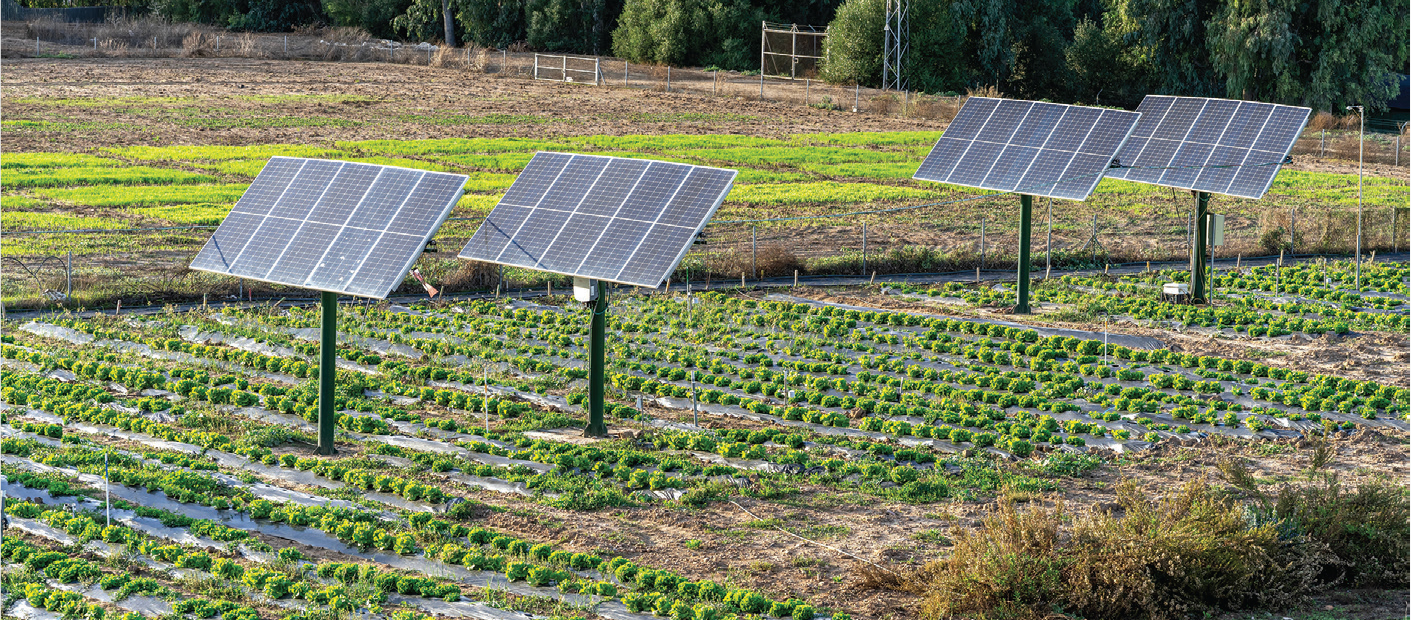
Agrivoltaics has also emerged as the next big change in India’s adaptation and mitigation efforts. PM-KUSUM 2.0, expected to roll out any day now, is likely to provide a fillip to agrivoltaics. An essential first step would be to define how solar modules can be co-located with agricultural production on the same parcel of land. Equally crucial will be to define the right crops to be used, considering the tilt of the modules and holding space for mechanised harvesting and pasture. Beyond technical design, the process must be anchored in co-ownership models, where farmers transition from passive lessors to active equity partners or energy cooperatives. This shift ensures that the financial harvest of the sun is shared equitably, de-risking projects through community-led land stewardship rather than external acquisition. In case the crop fails due to climate change-induced disruptions, the burden should not fall solely on farmers, nor should it give developers a free pass to abandon the agricultural component. Farmers must have the legal right to dictate the pivot and get the land back after proper reclamation. This ensures that even if the crop fails due to climate change, farmers’ household income remains intact thanks to solar revenues. Guidelines should specify that land cannot be left fallow in the event of a climate-induced failure or lower returns from agriculture. It must be prepared for the next season or planted with soil-building cover crops to maintain the agricultural land-use status.
In the floating solar PV (FSPV) segment, a “biodiversity-first” approach must be adopted to avoid legal quagmires, typically seen in land-based projects. To ensure a truly sustainable transition, these projects must move beyond viewing water as just an available surface area and instead adopt coexistence models such as maintaining open-water buffer zones for diving birds and using non-toxic, eco-friendly mooring to prove that clean energy and wetland integrity are not a zero-sum trade-off. Ideally, only artificial waterbodies should be used for FSPV and not the natural ones that provide ecosystem services.
Such mechanisms would make projects more socially and environmentally acceptable, reduce litigation and land conflicts, and ensure that clean energy growth does not replicate extractive inequalities.
The way forward
India will install hundreds of gigawatts of renewable energy in the future. If we do not correct the course now, we will have created a second layer of climate-induced dispossession. Government, developers, big enterprises and civil society alike must be cognisant of these conversations from the very beginning. The rhetoric of scaling renewables justly must become a primary driving force for a people-centric transition, and must be addressed ex-ante, not ex-post. The promise of a just transition cannot be postponed. It must be embedded in every megawatt of clean capacity built from this day forward. Clean energy without social justice is simply another extractive economy with greener branding.
(The views expressed in the article are personal.)