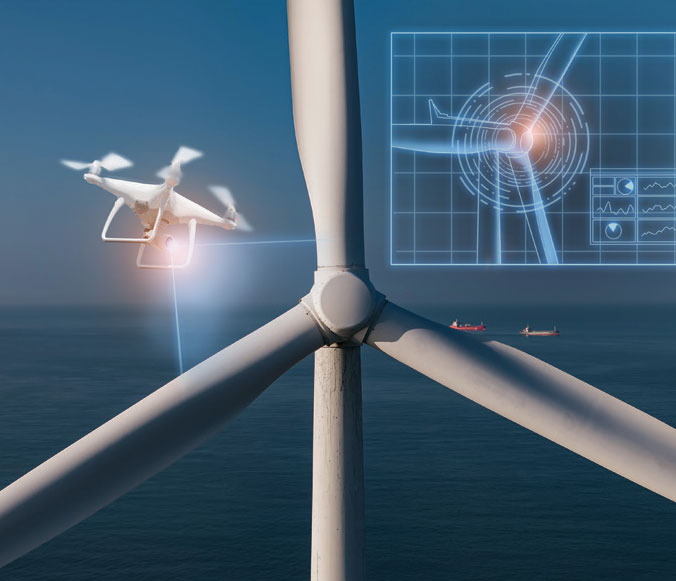
 As India’s wind power sector expands and matures, operations and maintenance (O&M) is becoming important for maintaining asset performance and maximising generation. The O&M landscape is also becoming more complex as turbines age, projects operate across diverse climatic conditions, and new technologies and larger machines enter the fleet. Ensuring timely access to spares, skilled manpower and specialised repair capabilities, while managing site-specific risks and equipment failures, remains significant for maintaining turbine availability. The focus is gradually shifting from responding to failures to anticipating and preventing them. Condition monitoring, data analytics, artificial intelligence (AI), digital tools and predictive maintenance are creating new opportunities to improve asset management and reduce downtime.
The article draws on key insights from the session on “Optimising O&M” at the 14th edition of the Wind Power in India conference organised by Renewable Watch. The panellists included Mahesh Arali, Head – OMS, Envision; Dr Prosenjit Chakraborty, Business Head – Technology, Jakson Green; Sunil Jain, Head – Operations (Renewables), Apraava Energy; Deepak Khare, Senior Vice President and Head of Projects, BluPine Energy; Harish Pant, Head of O&M, Hero Future Energies; and Rohit Sharma, Head – Business Development, Inox Green Energy.
Addressing ageing assets and supply chain constraints
One of the major challenges facing wind O&M is the ageing of the installed fleet. Turbines are typically expected to operate for around 25 years. Many turbines in India have already been operating for 10-15 years, while some of the oldest machines are around 30-35 years old. New products are entering the market and older models are becoming obsolete. This creates difficulties in sourcing spares and carrying out maintenance.
The issue is compounded by the dependence on imported components. Several major turbine components are sourced from outside India, making the availability of spares vulnerable to global supply chain disruptions and geopolitical developments. For older turbines, even original equipment manufacturers (OEMs) can face difficulties in arranging and maintaining adequate spare inventories. This can have a direct impact on turbine availability. While O&M contracts often specify availability levels, the impact of individual turbine failures can be significant, particularly when several machines are affected at the same time.
The availability of major components is particularly important when operating under comprehensive O&M contracts. Gearboxes, generators and main bearings were identified as components where lead times can be substantial. Maintaining appropriate inventories and ensuring that service providers have access to these components can help reduce restoration periods.
Site-specific conditions require tailored solutions
Wind turbines operate across diverse geographical and climatic conditions in India. As a result, equipment may face different challenges depending on the site. Salinity can be a concern in coastal areas, while dust storms can contribute to blade erosion in arid regions. High monsoon activity and foggy conditions can create different operating challenges in other locations. Thunderstorms can also expose weaknesses in lightning protection systems.
The panellists highlighted cases where standard turbine designs had to be augmented or retrofitted to address certain site-specific conditions. Lightning protection for blades was one such area. In hotter regions, cooling arrangements for converter panels can also become a concern. This points to the need to consider local conditions more closely during turbine selection and project development. Higher upfront spending on suitable modifications or additional equipment could help reduce life cycle costs by preventing recurring failures and extended downtime later.
Blade-related issues were identified as another important area of concern. Edge erosion can require specialised repair skills, while blade bearing gaps and associated oil leakage can also lead to failures. In some cases, blades have to be brought down for repairs, significantly increasing downtime. For instance, an activity which could potentially be completed in two to three days when undertaken at a height may take around 15 days when the blade has to be brought down. The limited availability of skilled resources for such specialised work still remains a challenge. Developing repair capabilities and maintaining inventories of repaired components can help reduce the time required to restore affected turbines.
Planning for low-wind season can reduce high wind losses
Wind generation is highly concentrated in a few months of the year, with a significant share of annual revenue generated during high-wind periods. Consequently, a major turbine failure during this period can have a disproportionate impact on project economics. Carrying out preventive maintenance during periods of lower-wind availability can help avoid such situations. If repeated failures are observed in generators, gearboxes or other major components, operators need to identify the root cause and undertake corrective measures before the high-wind season begins.
Condition monitoring can support this by providing information on the health of major components. Vibration data and other monitoring parameters can help estimate the remaining useful life and determine when corrective work should be undertaken. This allows operators to plan resources, cranes and spare parts in advance and reduce turnaround time. Furthermore, regular inspection of transmission lines during the low-wind season can help identify potential issues before they affect turbine availability.
Moving towards energy-based availability
Another issue raised was the way turbine availability is measured under O&M contracts. Time-based availability remains common, but there was a view that greater emphasis should be placed on energy-based availability. Time-based availability can indicate whether a turbine was operational for a certain period, but it does not necessarily capture how much energy the turbine was capable of generating during that period. Moving towards an energy-based approach could provide a closer link between O&M performance and actual generation.
However, shifting to energy-based availability involves greater commercial exposure for O&M providers. Large rotor turbines that have entered the Indian market in recent years are still relatively new to Indian operating conditions. Several years of operational data may therefore be required before service providers can confidently assess the performance and associated risks. The panellists suggested that high-wind and low-wind periods could also be treated differently in O&M contracts. Higher availability requirements during the high-wind season could be accompanied by lower commitments during the low-wind period, allowing preventive maintenance to be undertaken when its impact on generation is lower.
Data is the foundation for AI adoption
AI and digital technologies are increasingly being explored for wind O&M, but their effectiveness depends fundamentally on the quality and availability of data. Wind turbines across India operate under very different conditions, from coastal regions and high-elevation areas to hot and dusty environments. Data from these turbines needs to be properly collected, organised and stored before it can be used for analytics. Older turbines present a particular challenge because many do not have modern communication protocols and data access capabilities. Without reliable historical data, it becomes difficult to develop effective predictive models or identify early indicators of equipment failure.
AI uptake for predictive maintenance
AI is being explored for several O&M applications, including predicting potential turbine failures, identifying fatigue loads and determining appropriate maintenance actions. Such tools can also support manpower planning by helping operators identify where resources are likely to be required. However, the adoption of predictive maintenance also requires closer cooperation between developers and OEMs. A challenge, which has been highlighted, is that operators may identify anomalies in advance but still need to convince the service provider to replace a component before it actually fails. Data, therefore, becomes an important basis for such decisions. For example, rising temperatures under high loading conditions can indicate a potential bearing failure. Demonstrating these trends through historical operating data can help build the case for early replacement and avoid a much larger failure and longer downtime later.
Future outlook
The next stage of digital O&M is likely to involve bringing different sources of information together rather than looking at individual data sets. Condition monitoring, Supervisory Control and Data Acquisition data, oil and grease analysis and other information can provide different indications of asset health. When these are brought together, operators can move closer to identifying the actual cause of a problem and deciding what action is required.
Machine learning can also be used to break down the reasons of generation losses. Operators can identify whether losses are related to misalignment, pitch settings, blade condition, aerodynamics or other performance issues. This can help identify which turbines need attention and what kind of corrective action is required.
Digital tools are also finding applications in field operations. Mobile applications can help teams record work permits, isolation activities and maintenance schedules even when there is no internet connectivity. The information can then be uploaded when connectivity is restored. Safety is another area where digital tools are being used. Image analytics can check whether personnel undertaking maintenance activities are wearing the required safety equipment. This can add another layer of monitoring to field operations.
The shift in wind O&M is, therefore, not only about introducing AI or replacing manual processes with digital tools. It is also about using the available information to make better maintenance decisions. As the fleet gets older, avoiding failures will become increasingly important, particularly during the high-wind season.