

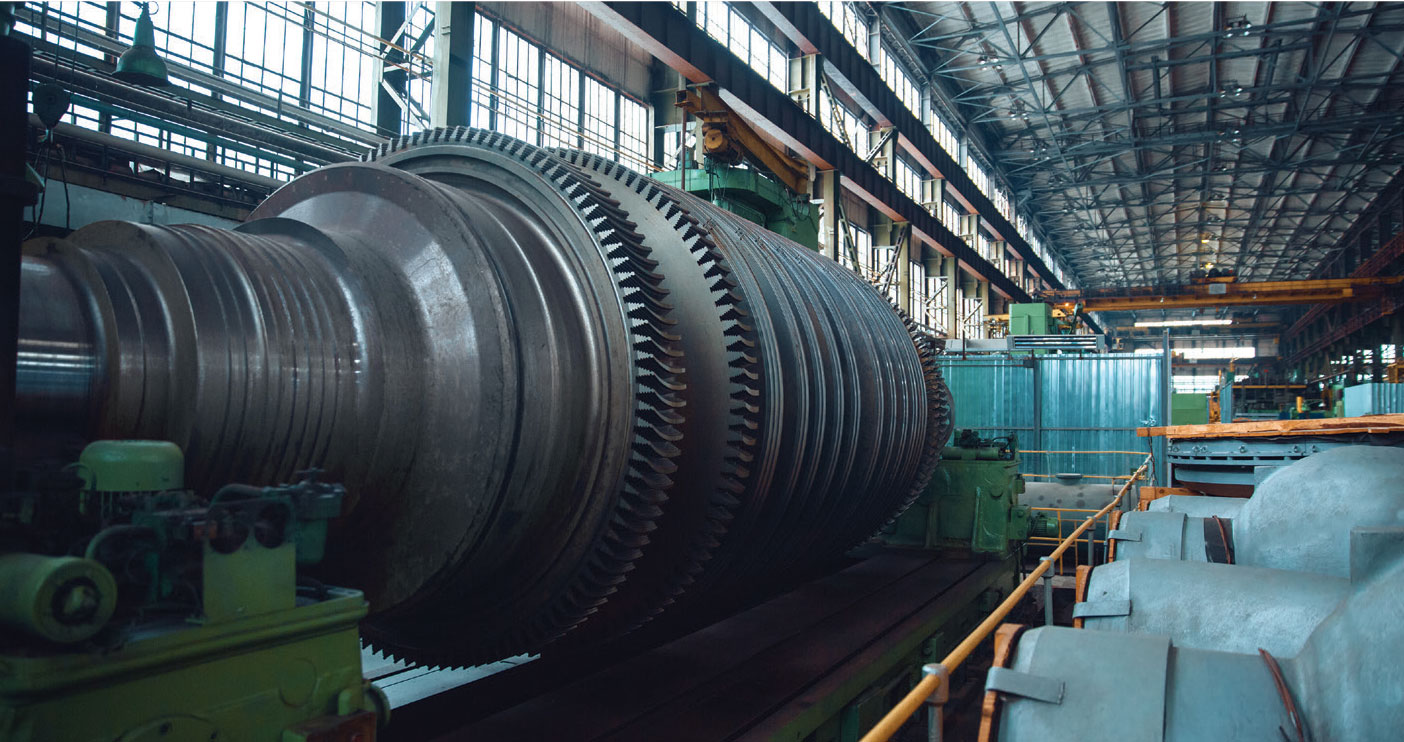
India’s wind turbine manufacturing sector is entering a new phase, supported by a recovery in capacity installations, rising demand for larger turbines and growing localisation of the domestic supply chain. The country has about 24 GW of wind turbine manufacturing capacity, but only around a quarter of this capacity is currently being utilised for domestic installations. Also, exports of wind equipment manufactured in India have grown rapidly, highlighting the potential for the country to emerge as a larger manufacturing and export hub.
The industry’s outlook has improved considerably after a difficult period following the shift to competitive bidding and the disruption caused by the Covid-19 pandemic. Wind installations have picked up strongly since 2022, with annual additions rising by around 50 per cent in 2024-25 and 2025-26. Manufacturers now report healthy order books across different turbine platforms, while the industry is preparing for the next phase of growth through larger machines and deeper localisation.
 However, the sector’s ability to realise this potential will depend on more than manufacturing capacity. Developers continue to face delays related to land acquisition, right of way (RoW), connectivity and project execution. At the manufacturing end, critical components such as bearings, castings, forgings, gearboxes and power electronics remain areas of dependence on imports. The industry therefore needs to build scale, strengthen domestic component manufacturing and create a more predictable demand pipeline.
Building scale and strengthening localisation
India’s wind manufacturing base has developed a substantial degree of localisation. Blades, towers, generators and several other major components are already manufactured domestically. Some manufacturers have reached around 70 per cent localisation, with efforts under way to bring the remaining components into the domestic supply chain. The next stage, however, is proving more difficult because it involves technically complex components and requires larger investments in specialised manufacturing facilities.
Heavy castings and forgings are among the key gaps. These include components used in gearboxes, bearings and flanges. Domestic capacity for such specialised manufacturing is limited, while suppliers in other markets benefit from much larger production volumes. Setting up similar facilities in India can be difficult without sufficient demand and long-term visibility. This creates a cycle in which low domestic volumes discourage investment in component manufacturing, while the absence of a deeper component ecosystem limits localisation and cost competitiveness. Industry players believe targeted government support for such manufacturing facilities could help break this cycle. With the right ecosystem, localisation levels could increase substantially, reducing dependence on imports and improving the cost competitiveness of Indian turbines. The challenge is particularly important for components that may have a relatively small share in the overall value of a turbine but are critical to its functioning. Bearings, for example, continue to be sourced largely from overseas, despite the presence of bearing manufacturers in India. The problem is not just manufacturing capacity. Wind turbine components have long qualification cycles, and domestic suppliers need to meet stringent requirements and obtain approvals from turbine manufacturers before they can enter the supply chain. This means localisation policies need to be supported by a coordinated effort involving OEMs, component manufacturers and policymakers. Building the capacity alone will not be enough unless domestic suppliers are also given a pathway to qualification and long-term orders. Electronics and communication systems are another emerging area. As turbines become more sophisticated and increasingly connected to the grid and control systems, the importance of power electronics, communication equipment and related components will rise. Localising these components could also offer significant cost benefits.
Larger turbines, larger opportunities
The Indian wind turbine market is gradually moving towards comparatively higher-capacity machines. Turbines in the 3 MW to 4 MW range currently account for a significant share of demand, while select players have also launched 5 MW+ turbines. Manufacturers are also working on turbines with higher hub heights and larger rotor diameters to improve generation from available sites. The move towards larger turbines is important because India’s remaining wind resource is not necessarily concentrated in the same high-quality sites that supported earlier development. Larger and more efficient turbines can help improve generation from lower-wind-speed locations, including parts of central and western India. However, higher towers and larger turbines can increase capital costs, and the additional generation needs to justify this investment. The appropriate combination of turbine rating, hub height, rotor size and site conditions will therefore vary across locations.
Demand needs to catch up with manufacturing capacity
One of the biggest issues facing the manufacturing sector is the gap between available capacity and actual domestic demand. With around 24 GW of manufacturing capability and only about 25 per cent being used for domestic installations, the industry has considerable room to scale without immediately requiring a massive expansion of manufacturing facilities. Annual wind installations need to rise substantially to create the scale required for globally competitive manufacturing. Greater domestic demand would allow manufacturers and component suppliers to operate at higher utilisation levels, spread fixed costs across larger volumes and invest more confidently in new facilities.
At present, Indian manufacturing is estimated to be about 15-20 per cent more expensive than Chinese manufacturing, although it remains more competitive than manufacturing in several other global markets. Targeted incentives, correction of inverted duty structures and greater scale could help close this gap. The emphasis, however, is shifting from simply providing incentives to creating a sustained demand anchor. If annual procurement and installation targets are clearly established and implemented, manufacturers can plan capacity, component suppliers can invest in new facilities and the entire supply chain can move towards greater efficiency. Land acquisition, right of way, local approvals and grid connectivity can delay projects by several months. For turbine manufacturers, such delays can result in equipment being produced but not installed on schedule, increasing inventory and interest costs. Delay in land acquisition can postpone turbine deliveries and payments. This creates uncertainty for manufacturers even when their order books are strong.
Restoring industry linkages and supporting innovation
Over the years, the close link between turbine manufacturers and developers has weakened, resulting in a loss of some of the technical knowledge and site-level experience accumulated by OEMs over the years. Wind projects require detailed assessment of wind resources, site conditions, turbine configuration and infrastructure. Rebuilding stronger knowledge-sharing mechanisms between OEMs and developers could therefore improve project design and reduce execution risks.
Research and development and testing infrastructure will also become increasingly important as turbine sizes increase. Domestic manufacturers need the ability to develop and test new platforms suited to different Indian wind regimes. At the same time, regulatory frameworks need to provide sufficient flexibility for manufacturers to introduce new turbine platforms without facing unnecessary delays in qualifying every new configuration. The industry also needs greater investment in testing facilities and standards for emerging technologies.
The way forward
As India’s wind fleet expands, end-of-life management will become an increasingly important issue. Older turbines are now beginning to reach the end of their operating lives, bringing blade disposal and recycling challenges to the forefront. Composite materials used in blades are difficult to recycle, and improper disposal can create environmental concerns. Some domestic solutions are emerging, including recyclable blade materials and the use of blade waste in applications such as cement production and construction materials. However, these solutions remain limited and can be expensive. The development of standards for recyclable materials, along with testing facilities and clear environmental guidelines, could help create a more organised circular economy for wind equipment.
Overall, India’s wind manufacturing sector is better positioned today than it was a few years ago. Domestic manufacturing has expanded, localisation has improved and exports are growing. The sector has also demonstrated resilience through a prolonged period of weak installations and regulatory changes. Going forward, the next challenge is to convert this manufacturing base into a globally competitive ecosystem. This will require deeper localisation of critical components, stronger domestic demand, faster project execution and greater investment in R&D and testing. Above all, the industry needs scale.
With annual wind installations still well below the level needed to fully utilise the existing manufacturing base, creating a clear and sustained demand pipeline could be the most important step. If annual additions move towards 10-15 GW and eventually higher, manufacturers will have greater confidence to invest, component suppliers will have stronger business cases to localise and India could strengthen its position as a global wind manufacturing hub.
Based on a panel discussion among Dr Govind Bhagwatikar, Country Manager and Director, Sany Wind; Rajesh Goel, Head – Manufacturing, INOX Wind; Aditya Pyasi, Chief Executive Officer, Indian Wind Turbine Manufacturers Association; and Sandeep Narang, Partner, EY India, at Renewable Watch’s, Wind Power in India conference


