 India’s green hydrogen industry is gaining momentum, with developers moving rapidly from pilots to commercial projects. Supported by government incentives, falling renewable energy costs and rising global decarbonisation commitments, companies are positioning India as a competitive hub for green hydrogen and its derivatives. Developers are advancing projects targeted at both domestic industries and international markets in Europe, Japan and South Korea. At the same time, the sector continues to face challenges around offtake certainty, transmission connectivity, infrastructure readiness and evolving global certification standards. Industry stakeholders are increasingly calling for stronger demand-side mechanisms, including hydrogen purchase obligations, to create long-term market visibility and unlock financing. Against this backdrop, senior executives from across the green hydrogen value chain discussed project developments, technology pathways, export opportunities and policy priorities at Renewable Watch’s 11th annual conference on “Green Hydrogen in India”. Edited excerpts…
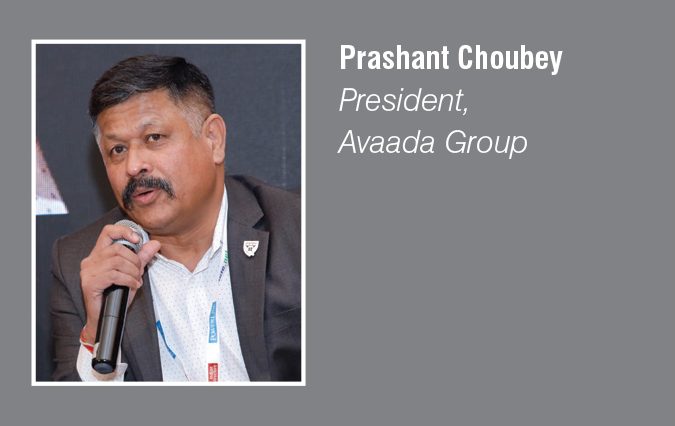 Prashant Choubey
The Avaada Group is an integrated energy transition conglomerate with businesses spanning solar manufacturing, renewables, green hydrogen and energy storage solutions. The company currently has around 7.2 GW of operational renewable energy capacity and plans to scale this to nearly 30 GW by 2030. Around 10.5 GW is already under construction. As part of its backward integration strategy, Avaada has expanded into solar module, cell and glass manufacturing. The company currently has approximately 8.5 GW of module manufacturing capacity.
Within green fuels, one of the company’s flagship developments is a 0.5 million metric tonne per annum green ammonia project at Gopalpur in Odisha. The Gopalpur project is being developed inside Tata Steel’s special economic zone (SEZ) and is located close to the port, with a dedicated corridor being facilitated by the Odisha government. Around 1,700 MW of solar capacity is planned within Odisha itself, while nearly 700 MW of wind capacity from outside the state will help provide renewable power for Green Ammonia production.
Integrating renewable energy, transmission connectivity, land, water and port infrastructure into a single coordinated development remains one of the biggest execution challenges. Several enabling ecosystems, including bunkering infrastructure and large-scale transmission connectivity, are still evolving.
Offtake certainty remains one of the most critical requirements for large-scale green ammonia projects. Negotiations for long-term supply agreements are currently at advanced stages, enabling continued investment in project development and engineering activities. On the technology side, Casale has been onboarded as the ammonia licensor for the Gopalpur project and pre-FEED activities have already been completed. Discussions are also ongoing with multiple electrolyser manufacturers.
Renewable energy integration remains a key optimisation challenge. Developers must carefully balance battery storage, hydrogen storage and renewable banking mechanisms to ensure continuous plant operations while maintaining commercial viability.
Green ammonia economics are also beginning to become competitive relative to grey ammonia under certain market conditions. Volatility in global ammonia prices, combined with rising geopolitical and geo-economic uncertainties, is strengthening the case for domestic green ammonia production.
A stronger demand-side ecosystem similar to renewable purchase obligations in the power sector is increasingly being seen as necessary. Hydrogen purchase obligations for refineries, steel and fertiliser industries could accelerate market development and create the predictability required for financing and investment. India already has substantial existing hydrogen demand across refineries, steel and fertilisers. Refineries alone account for nearly 7-7.5 million tonnes (mt) of hydrogen demand, while the steel and fertiliser sectors represent several additional million tonnes annually. With the right policy support and demand obligations, the sector could potentially replicate the cost reduction trajectory witnessed in the solar industry over the past decade.
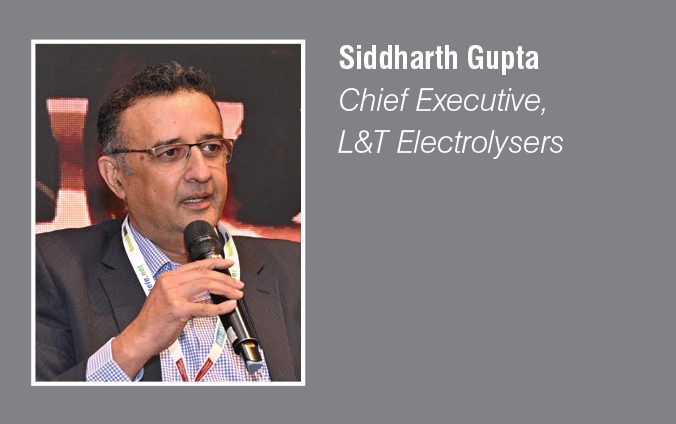 Siddharth Gupta
Larsen and Toubro (L&T) established its green hydrogen business in 2022. Through its wholly owned subsidiary L&T Energy Green Tech Limited (LTEGL), it is actively focused on building an integrated and globally competitive green hydrogen ecosystem with a strong emphasis on domestic electrolyser manufacturing.
L&T Electrolysers (LTEL), a wholly owned subsidiary of LTEGL, has already established a state-of-the-art electrolyser manufacturing facility in India with an initial manufacturing capacity of 400 MW scalable to 1 GW, incorporating advanced automation, precision manufacturing, stack assembly, and testing capabilities to support large-scale deployment of electrolysers for green hydrogen production.
We have also secured allocations of 300 MW for electrolyser manufacturing and 90,000 mtof green hydrogen under the Government of India’s SIGHT-PLI schemes.
Our strategic vision includes developing green hydrogen and derivative projects across multiple locations in India to cater to both domestic and export markets. The company is currently executing Indian Oil’s 10 kilotonnes per annum green hydrogen project in Panipat on a build-own-operate basis.
In December 2023, India’s first indigenously developed electrolyser with more than 85 per cent local content was manufactured and assembled at Hazira. A test plant has also been established at Hazira, where hydrogen generated from the electrolyser is being blended with natural gas in furnaces at L&T’s heavy engineering division. This has enabled operational understanding across the hydrogen value chain rather than remaining limited to equipment manufacturing.
L&T has also developed a 4 MW electrolyser stack with indigenous content exceeding 85 per cent. Developing the domestic vendor ecosystem required extensive engineering, manufacturing validation and supplier qualification exercises over the past two years.
Demand visibility, however, remains a challenge for electrolyser manufacturers. While L&T currently has 400 MW manufacturing capacity, confirmed orders remain limited. This creates uncertainty not only for original equipment manufacturers (OEMs) but also for the broader micro, small and medium enterprise (MSME) supplier ecosystem supporting domestic manufacturing. The company currently offers electrolysers at costs less than half of comparable European systems and also claims competitiveness against Chinese suppliers. Technology advantages include higher efficiency, lower specific energy consumption and operation at 28 bar pressure, reducing downstream compression requirements and improving total cost of ownership.
Several policy measures are also being sought to strengthen India’s electrolyser manufacturing ecosystem. Domestic manufacturers investing in local facilities and technology development continue to require dedicated incentives and policy support. While local content has already exceeded 85 per cent, certain critical components such as membranes are still imported. Extending production-linked incentive-type schemes not only to electrolyser OEMs but also to component manufacturers involved in membranes, electrodes and related materials could help build a stronger domestic supply chain while encouraging Indian MSMEs to invest in advanced manufacturing capabilities for the hydrogen sector. Going forward, pressurised alkaline technology is expected to remain commercially dominant for at least the next five years, particularly for refinery applications.
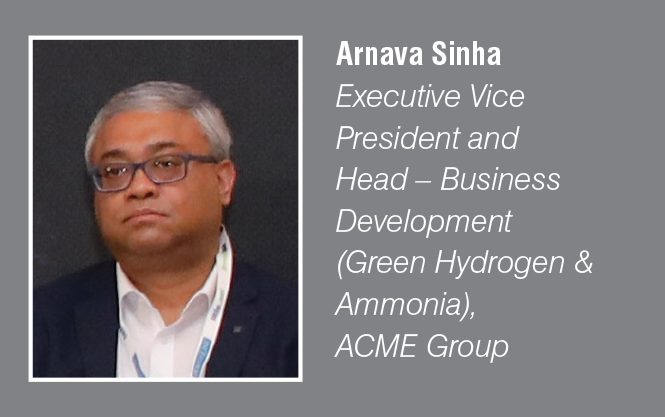 Arnava Sinha
The ACME Group was among the early entrants in the green hydrogen and ammonia market, beginning with a pilot-scale integrated solar, electrolyser and green ammonia facility in Bikaner, Rajasthan. The pilot project provided operational experience before the company moved towards commercial-scale developments.
The group’s first large-scale project is a 100,000 tonne RFNBO-certified green ammonia facility in Duqm, Oman, which is currently more than halfway completed and targeted for commissioning in early 2027. The project has already secured complete offtake through Yara, a Norwegian company. A second phase involving nearly 800,000 tonnes of RFNBO-certified ammonia capacity is also planned in Oman, primarily targeting European markets. In India, ACME is developing two major green ammonia projects at Gopalpur and Paradip in Odisha. The Gopalpur project is being developed in partnership with Japan’s IHI Corporation and involves substantial participation from Japanese technology providers and financiers. The project is expected to produce approximately 400,000 tonnes of green ammonia and is targeted for commissioning around 2030. The ammonia is expected to be supplied to Japan for co-firing applications in coal power plants.
The company’s Paradip project combines domestic and export-oriented demand. Contracts have already been secured to supply 370,000 tonnes of green ammonia under the Solar Energy Corporation of India’s (SECI) fertiliser tender programme beginning from 2029. However, the total planned capacity at the site is around 800,000 tonnes, with additional volumes expected to be exported to international markets. Alongside green ammonia, around 100,000 tonnes of green methanol capacity is also being developed at Paradip. The methanol project is expected to target the marine fuel segment, particularly European shipping markets.
Green ammonia is expected to become cheaper than grey ammonia by the time commercial deliveries begin in 2029. Recent SECI fertiliser tenders have already demonstrated this transition in economics. Replacing 2.5-3 mt of grey ammonia imports currently entering India annually is emerging as a major opportunity. Green ammonia is increasingly being viewed not only as a decarbonisation pathway but also as a strategic energy security and affordability solution. Transmission connectivity remains one of the most critical bottlenecks for developers. Renewable energy resources are concentrated in states such as Rajasthan and Gujarat, while ammonia export facilities need to be located near ports with existing ammonia handling infrastructure. The lack of adequate transmission systems connecting renewable energy sites to industrial clusters is therefore becoming a major constraint.
Several policy and regulatory bottlenecks also continue to persist, including issues related to deemed export benefits, SEZ structures and renewable energy connectivity. While significant progress has been made in incentivising supply and initiating demand creation, enabling infrastructure and policy frameworks still require further strengthening. Financing is increasingly becoming less of a challenge compared to offtake certainty, infrastructure readiness and payment security mechanisms.
 Nitin Yadav
Gentari, a wholly-owned subsidiary of Petronas, is focusing on building an integrated clean energy business spanning renewable energy, hydrogen and mobility solutions. The company currently has around 9.1 GW of renewable energy and storage capacity globally. In India, it has partnered with AM Green for an ammonia platform project that has already achieved final investment decision and secured offtake arrangements. Alongside this partnership, the company is also developing its own green ammonia project in Tuticorin, Tamil Nadu.
Offtake visibility continues to remain one of the biggest challenges for the sector. While refinery and fertiliser tenders in India have demonstrated initial demand aggregation, most large-scale projects continue to depend on exports. European demand is currently driven by regulations and decarbonisation targets, although stronger long-term commitments from buyers are still awaited. In Japan and Korea, demand is emerging through tender-based procurement mechanisms where developers compete for long-term supply contracts.
Parallel discussions are under way with European buyers while preparations are also being made to participate in future tenders in East Asian markets. Long-term offtake agreements remain essential for achieving financial closure. Green hydrogen and ammonia projects involve a significantly more complex value chain than conventional fuels such as liquefied natural gas. Beyond production plants, developers must simultaneously establish shipping, storage, terminal and cracking infrastructure.
Gentari is working across the value chain (shipping, storage, terminal, and cracking infrastructure) on its own, through group companies, or partnerships. In addition, the company is also working with Japanese partners on ammonia-based turbine pilots as part of broader decarbonisation efforts.