

 By Dr Rohit Gupta, IAS, Chairman and Managing Director, Rajasthan Renewable Energy Corporation Limited
India stands in the middle of the most decisive decade in its energy transition. At COP26, the nation committed to five climate pledges, the Panchamrit, which together define the trajectory of our energy future. Commendable work has been carried out in this space and India’s installed renewable energy capacity has crossed significant milestones.
However, a fundamental paradox exists. The more renewable energy we add to the grid, the more unstable the grid becomes. Solar generates only during the day. Wind is also seasonal and unpredictable. This is the central challenge of the energy transition: how do we make an inherently variable source of energy behave like a reliable, despatchable one?
The answer lies in energy storage. The most versatile, scalable and rapidly deployable form of storage is battery energy storage systems (BESSs). Through this article, I attempt to highlight why energy storage is central to the success of India’s energy transition, the various ways BESSs make renewable energy dependable, the commercial and policy architecture enabling its scale-up and how Rajasthan is positioning itself at the forefront of this shift.
Need for BESS
India’s renewable energy penetration is outpacing the readiness of grid infrastructure, leading to demand-supply imbalances, transmission congestion, power curtailment, frequency variations and volatile market prices. A key challenge is the “duck curve” – a sharp dip in net demand during the day and a steep ramp-up in the evening. Without storage, utilities are forced to rely on expensive gas-based peaking power or imported coal to meet this evening surge.
Energy storage is the answer. Among the blend of storage technologies available, a BESS stands out for its versatility. The Ministry of Power has identified multiple end uses of BESSs such as generation and storage, standalone BESSs, storage and transmission, storage and distribution, storage for ancillary services, and behind-the-meter applications. While lithium-ion currently dominates, alternative chemistries are emerging. For instance, vanadium redox flow batteries offer longer-duration storage. India’s first vanadium redox battery project has already come online at NTPC’s NETRA facility in Greater Noida.
Applications
A key application of a BESS is peak demand management. Distribution companies procure BESSs to store cheap off-peak power and discharge it during evening peak hours. The majority of standalone BESS tenders in India, from RVUNL in Rajasthan to MSEDCL in Maharashtra and GUVNL in Gujarat, are structured around this.
Another application is renewable energy integration. BESSs absorb excess solar generation during the day and injects it into the grid when solar output drops. The solar-plus-BESS tender model directly addresses this.
Another use case is ancillary services. BESS assets respond in milliseconds. This makes them ideally suited for frequency regulation and ancillary services. BESSs have now been allowed to participate in secondary and tertiary ancillary markets, as well as in the high-price day-ahead market (HP-DAM) segment on power exchanges.
BESSs also help in transmission deferral. In congested transmission corridors, deploying BESSs can defer or eliminate the need for expensive new transmission lines, an option currently underexplored by transmission utilities. At the distribution end, BESSs can be deployed at high-demand substations to manage load fluctuations and improve power quality. When behind the meter, a BESS allows commercial and industrial (C&I) consumers to store cheap grid power and use it during high-tariff hours, turning storage into a direct cost-saving tool.
BESSs are also playing an increasingly important role in distributed renewable energy (DRE). PM-KUSUM 2.0 is expected to include provisions for solar-plus-BESS at the distribution level. While still at an early stage, the intent is clear: distributed BESS, paired with ground-mounted, rooftop and feeder-level solar, can reduce local grid stress and make DRE more reliable.
Value stacking allows a single BESS asset to provide various services throughout the day rather than being limited to one function. For example, a BESS can store excess solar power during the day (energy arbitrage), discharge during evening peak demand (peak shaving) and offer real-time grid support such as frequency regulation (ancillary services). Developers can unlock multiple revenue streams from the same asset, improving returns and making storage deployments more financially sustainable.
 Business models
The Indian market has seen multiple business models for BESS deployment. First, a standalone BESS (BOO/BOOT model), wherein the developer builds, owns and operates the BESS asset. The offtaker (typically a discom) pays a monthly capacity charge (Rs per MW per month). The developer manages charging and discharging. This is the dominant model currently.
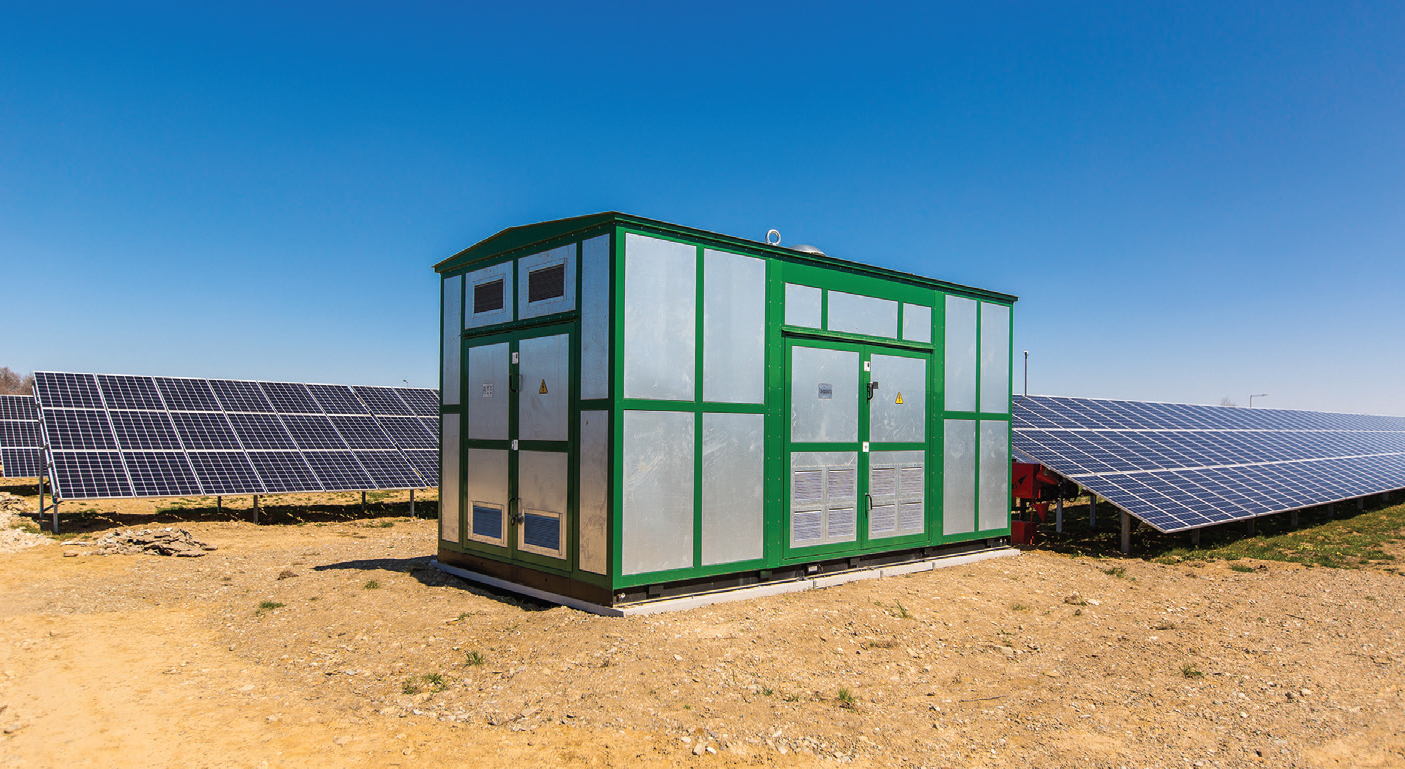
Second, solar-plus-BESS (bundled tariff), where a solar plant and BESS are co-located and the developer handles both generation and storage. This model is gaining traction.
Third, the EPC model, where the utility or discom owns the asset. A contractor builds it on a turnkey basis. Projects like NTPC’s vanadium flow battery in Uttar Pradesh (3 MWh) follow this model.
Fourth, energy-storage-as-a-service (ESaaS), which is an emerging model where storage is offered as a service rather than an owned asset. This lowers the entry barrier through subscription-based arrangements. ESaaS may eventually democratise storage access.
Policy initiatives and tariff trends
The most transformative policy intervention for BESSs in India has been the viability gap funding (VGF) scheme. The first tranche supported 13.2 GWh of standalone BESSs with up to 30 per cent capital cost subsidy. Following its success, the Ministry of Power launched the second tranche to support 30 GWh of BESS capacity.
Through 2025, tariffs have continued to fall. Successive tenders by NVVN for Rajasthan and APTRANSCO for Andhra Pradesh pushed discovered tariffs progressively lower. The direction is clear: storage tariffs are on a structural downward curve, and every new tender reinforces this trend.
Two structural factors underpin this decline. First, global battery cell prices dropped by nearly a third between 2022 and 2024. Second, the levellised cost of storage (LCoS), the true measure of what it costs to store and deliver one unit of electricity, has declined.
India’s energy storage sector is projected to grow fivefold between 2026 and 2032. The estimated investment requirement is Rs 3 trillion for BESSs alone in the 2027-32 period. As someone who sees the on-ground dynamics daily, I can say with confidence: the financial viability of BESSs is no longer a question. The year 2025 was a trailblazing year for India’s BESS policy.
Let me outline the architecture. Demand-side enablers like energy storage obligations and the National Framework for Energy Storage have been released, all solar installations have been advised to include 10 per cent ESS (two-hour) capacity, interstate transmission system charge waivers have been extended for solar-plus-BESS until 2028, competitive bidding guidelines have been issued for standalone BESS and renewable energy-plus-ESS projects, and energy storage has been identified as a “champion sector”.
On the supply side, the key enablers include the production-linked incentive (PLI) scheme to build 50 GWh of advanced chemistry cell (ACC) battery gigafactories in India, a minimum 20 per cent domestic content requirement for all BESS projects availing of VGF to expand the “Make in India” battery ecosystem, and the mandated development of indigenous energy management system application software for all VGF-supported BESS projects.
 Rajasthan’s progress in the BESS space
I write this article not merely as an observer but as someone responsible for driving renewable energy deployment in Rajasthan, India’s most renewable-rich state. The Rajasthan Integrated Clean Energy Policy 2024 sets an energy storage target of 10 GWh by 2028-29. It offers 100 per cent exemption on transmission and wheeling charges for standalone BESSs. All renewable energy projects above 5 MW on the state transmission utility network must install a minimum 5 per cent BESS capacity with at least two-hour storage duration. There is also a provision mandating BESSs for captive plants.
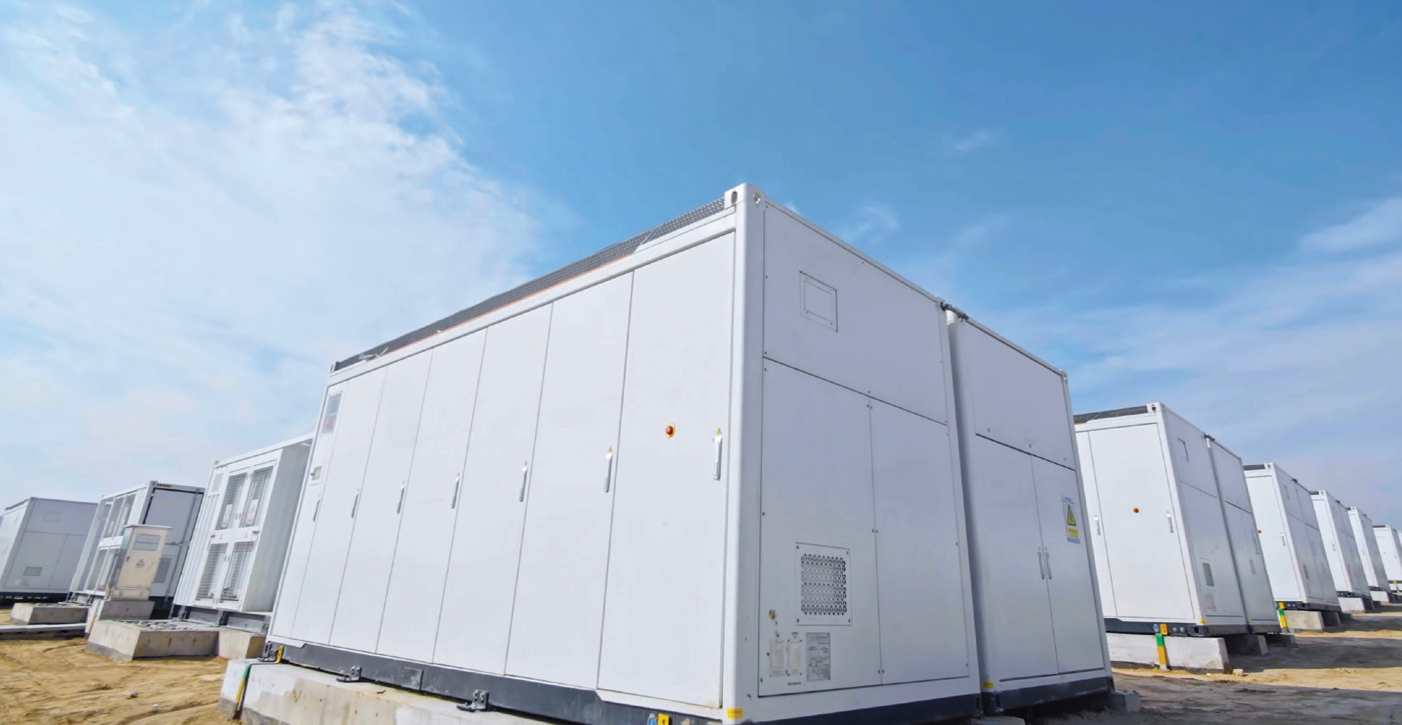
As of early 2026, 2,000 MW/4,000 MWh of BESS capacity is under active implementation in Rajasthan under RVUNL and NVVN tenders. In addition, RVUNL has floated 6,000 MWh of standalone BESS tenders so far, with another 6,000 MWh currently under planning.
The Pugal Mega Solar and BESS Project, under the flagship Pugal solar park, is a 2,450 MW solar project planned with an integrated 1,600 MW/6,400 MWh BESS capacity. The project is designed to cater to the expected peak power deficit in Rajasthan.
Challenges and the way forward
No responsible account of India’s BESS journey can omit the challenges. They are real and acknowledging them is the first step towards addressing them.
Contracting delays and cancellations: A paradox exists. Falling battery prices make BESSs more attractive, but they also incentivise offtakers to delay, hoping for even lower tariffs tomorrow.
Supply chain and domestic manufacturing: There is no significant domestic battery cell manufacturing capacity at present. Dependence on imported lithium and cobalt exposes the market to global price volatility and geopolitical risk.
Financing: High initial capital expenditure, longer payback periods and early-stage market risks result in stringent loan terms with higher interest rates and shorter tenors.
Technology and quality risk remain a serious concern: A 1 MWh BESS on paper does not mean 1 MWh delivered. After accounting for state of health (85 per cent) and depth of discharge (90 per cent), usable energy drops to about 0.77 MWh. At the gigawatt-hour scale, even a small efficiency loss translates into significant energy and revenue erosion. Factors like high ambient temperatures, deep discharge cycles and inconsistent state-of-charge management further accelerate this degradation. This makes robust O&M monitoring not optional but essential. Without real-time tracking of cell health, thermal conditions and charge-discharge patterns, performance can deteriorate far more sharply than the design curve suggests.
Let me now offer a practitioner’s view of the path forward. First, timely contracting is non-negotiable; second, domestic manufacturing must be accelerated; third, investment in BESSs needs to be de-risked through payment security mechanisms and clear offtake guarantees; and fourth, utilities and gencos must build significant capacity to understand the varied uses of BESSs and apply value stacking, ensuring that investments made in the technology generate appropriate returns for electricity consumers, and help reduce tariffs.
In addition, a well-designed regulatory framework for value stacking and the development of state-level ancillary services frameworks will be critical to gradually phasing out the VGF scheme, thereby allowing market economics, rather than subsidies, to drive storage deployment.
Finally, contracts must be well structured to incentivise developers to maintain and upgrade the deployed BESS. As BESS adoption expands into the C&I segment, a clear and standardised operating framework, covering grid interconnection, metering, safety compliance and commercial settlement, is essential to provide consumers and developers with a predictable framework to invest and operate.
In 2023, just 4 GWh of BESS capacity was tendered. In 2025, this capacity jumped to 60 GWh – a watershed moment. Fifty new players entered the BESS space as developers in a single year.
I am confident that BESS is the bridge between the renewable energy we can generate and the reliable power our economy demands. It is the technology that converts solar and wind abundance from a generation asset into a grid asset. It is the catalyst of the energy transition. For Rajasthan and for India, the time to act is now.

