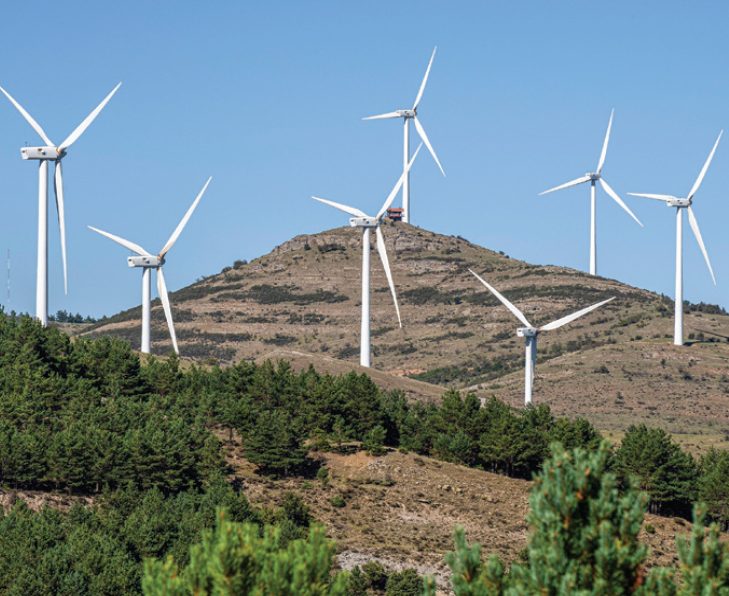
 The electricity sector in Latin America is at a crossroads. The region’s installed generation mix is dominated by hydropower and renewable energy, which together account for nearly two-thirds of the total capacity, making it one of the cleanest energy mixes globally. However, the sector faces challenges such as climate-driven droughts that affect hydro reliability, high network losses, and insufficient investment and system readiness to support the net zero transition. According to the International Energy Agency, close to half of the 33 Latin American and Caribbean (LAC) countries, including Brazil, Chile, Costa Rica and Colombia, are committed to achieving net zero emissions by 2050. To remain on track, clean energy investment during 2026-30 must increase fourfold compared to the previous decade. The scale and pace of supply-side expansion must accelerate to meet the rapidly rising demand. Transmission infrastructure is the critical backbone that will determine LAC’s capacity to build resilient power systems, ensure energy security and sustain economic development.
In this context, a technical note by the Inter-American Development Bank (IDB), titled “Unlocking the Grid: How to Ensure Reliable and Sustainable Energy in LAC”, published in November 2025, presents a comprehensive analysis of the current status, structural challenges and strategic opportunities for the development of transmission networks across the region. The report states that without modern, well-planned and properly financed grids, the region cannot integrate its vast renewable energy potential, guarantee supply reliability, or sustain economic and social development. Transmission, once considered a subordinate function of electricity generation, is now a central component of the future energy architecture.
The study draws on technical, regulatory and financial reviews across over 17 countries, supplemented by interviews with government authorities, regulators, transmission companies and international experts from Brazil, Chile, Colombia, Ecuador, Guatemala, Honduras and Peru, among others. It identifies the main factors constraining timely infrastructure expansion and proposes a five-pillar public policy and institutional road map to accelerate investment and innovation.
Renewable Watch presents key highlights from the IDB report, covering structural barriers, pillars of transformation and broad recommendations…
The investment imperative and structural barriers
Electricity demand in the region is projected to grow by 50-90 per cent by 2040, driven by the electrification of sectors such as transport and the rise of data centres. The latter alone may account for around 5 per cent of the demand by 2035. Despite growing demand, the region’s renewable energy curtailment reached 53,000 GWh in 2024 (around 3.2 per cent of total generation), driven by grid constraints, inflexible contracts and operational limitations, resulting in estimated annual losses of about $7 billion. Diversifying the electricity mix is key to building resilience against climate risks. Rapid growth in variable renewable energy (solar and wind) is outpacing grid expansion. Strong transmission networks help balance regional variability and enhance system adaptability, with long-term benefits outweighing high upfront costs.
Despite clear demand, several structural barriers hinder progress:
Planning gaps: Transmission planning in the region remains reactive, single-scenario and disconnected from execution. Most countries rely on deterministic demand projections and static generation assumptions, overlooking uncertainty from climate change, variable renewables and evolving demand patterns. While plans identify infrastructure requirements, they are rarely linked to financing pipelines, permitting calendars, or institutional capacity, creating a persistent gap between plans and delivery. As a result, project timelines often exceed seven years (more than 10 years in some cases), with most delays occurring before construction due to permitting, land acquisition and coordination challenges. Evidence from the region highlights the urgency of the situation. Brazil must double its current transmission capacity to connect new wind and solar projects in the northeast to major demand centres in the south and southeast, while Chile is facing near-term capacity shortages. Without timely grid expansion, renewable curtailment will rise, thereby increasing costs and undermining system reliability – demonstrating that the gap between generation and transmission is already posing a big challenge.
Regulatory hurdles: Regulatory frameworks vary widely across the region, from highly sophisticated competitive tendering systems with independent operators and firm remuneration (Brazil, Chile and Peru) to vertically integrated state monopolies and discretionary grid access (Mexico, Bolivia, Ecuador and Paraguay). While this diversity is not inherently problematic, most frameworks are outdated; they fail to value resilience, overlook the benefits of grid-enhancing technologies (GETs) and provide weak signals for private investment. Despite the commercial availability of a range of GETs such as dynamic line rating, high-temperature low-sag conductors, flexible AC transmission system (FACTS)-based flow controllers, synchronous condensers, and advanced sensors and automation systems, their adoption across the region remains minimal. Regulatory frameworks designed exclusively to remunerate conventional physical assets (new lines and substations) provide no mechanism to recognise or reward the systemic benefits of these solutions such as released capacity, reduced curtailment, improved real-time operational visibility and avoided structural investment. Planning models that do not structurally include GETs as viable alternatives further compound the problem, rendering these technologies invisible in baseline analyses.
Financing challenges: The region faces a widening transmission investment gap. LAC requires $6 billion-$8 billion annually up to 2030 – potentially tripling by 2050. However, only $3.3 billion was invested in 2022, highlighting a significant gap driven by investor risk perception and weak policy signals. The main barrier to transmission investment is not a lack of capital, but the absence of bankable, well-prepared projects within supportive frameworks. Regulatory uncertainty, unclear risk allocation, lengthy permitting processes and weak project pipelines increase risks, while reliance on sovereign financing imposes fiscal constraints, creating a gap between available capital and deployable opportunities.
Permitting bottlenecks: Environmental and social permitting processes, securing interconnection points and rights of way, and supply constraints related to key components are causing significant delays. Particularly, the lack of clear frameworks for early community engagement and standardised strategic impact assessments has increased territorial conflicts and legal risks for projects. This implies that projects planned now may not come online before 2030, posing a challenge to supply reliability, system resilience as well as regional energy security.
A new vision: The five pillars of transformation
In order to overcome these barriers, a comprehensive agenda is required, which is organised around five strategic pillars. These are:
Proactive, adaptive and integrated transmission planning: Transmission planning must evolve into a proactive, strategic function aligned with national development goals. Rather than responding to fragmented demands, planning should anticipate future needs through integrated scenarios that take into account generation expansion, demand growth, hydrological variability, land use, technological change and public policy priorities. Identifying priority transmission corridors in advance helps reduce social conflict, coordinate investments, and lower regulatory and financial risks.
Meanwhile, planning must strike a balance between ambition and practicality. Overly complex methodologies can stall progress, especially in systems with limited institutional capacity. Therefore, countries should prioritise implementable plans grounded in solid technical analysis and stakeholder engagement, while gradually incorporating more advanced tools such as uncertainty modelling, resilience metrics and digital simulations. Therefore, an iterative approach is essential.
Modern planning should evaluate enabling technologies such as storage, smart grids, FACTS and high voltage direct current, ensuring proper alignment between planning and actual system operations. Crucially, transmission should be viewed not just as infrastructure, but as a strategic enabler of economic development, regional integration and climate resilience.
Strong governance is the foundation of effective planning. Institutions must have clear mandates, technical expertise and operational autonomy to translate plans into projects. Transparency, data availability and multi-sector coordination are essential to ensure credibility and execution. Ultimately, robust planning enhances energy security, reduces uncertainty and creates favourable conditions for sustained investment.
Regulatory modernisation and institutional strengthening: Adaptive regulatory frameworks should be established to recognise outcomes such as system reliability, resilience to extreme events, renewable integration and operational flexibility. This includes moving towards performance-based remuneration schemes that also support innovative solutions such as automation, digitalisation and advanced grid technologies; and incorporating socio-environmental criteria into bidding procedures and tariff setting. Institutional capacity is equally important. Strong, independent regulators with adequate funding and technical expertise are essential to enforce rules, oversee compliance and guide sector transformation.
Regulation must also integrate social and environmental considerations from the outset. Early stakeholder engagement, fair compensation mechanisms and alternative routing options (such as underground lines or shared corridors) can improve public acceptance and reduce project delays. Regional harmonisation is another priority. Aligning methodologies and fostering cooperation among regulators can unlock cross-border interconnection benefits and enhance energy security.
Effective regulation requires proactive risk management. Mechanisms such as guarantees, indexed tariffs and regulatory insurance can mitigate political, social and climate risks, lowering capital costs and attracting diverse investors. Regulatory design must be context-specific, scalable and aligned with broader system objectives.
Financing innovation and investment mobilisation: Scaling finance requires creating enabling conditions and predictable investment pipelines. Recommendations include forming technical investment committees comprising representatives from energy and finance ministries to align energy priorities with national climate goals. Publishing transparent investment plans, with clear timelines and prioritisation criteria, helps attract financing and accelerate due diligence. Innovative tools such as green taxonomies and blended finance can further reduce capital costs. Green and sustainable bonds offer significant potential to mobilise capital, particularly from institutional investors seeking environmentally and socially responsible projects. However, their success depends on clear eligibility criteria, credible certification and robust impact reporting.
Effective contract design is equally critical. Mechanisms such as availability-based payments, cap-and-floor models and long-term regulated tariffs have proved successful across multiple markets in stabilising revenues and reducing exposure to demand uncertainty, and can be adapted to different institutional contexts. In terms of ownership, state-owned or partially state-owned transmission entities can reduce early-stage risks, attract private co-investment and facilitate project development through public-private partnerships or fiduciary structures.
Coordination among planning bodies, regulators and financial institutions is essential to overcome fragmentation. Integrated strategies ensure that regulatory frameworks, financial instruments and project pipelines are aligned. Importantly, financing criteria should account for broader system benefits such as resilience, redundancy and regional integration, rather than relying solely on traditional financial metrics.
Broadly, successful financing depends on five conditions – clear and credible regulation, alignment between planning and finance, early involvement of development banks, efficient risk allocation, and strong technical capacity. Building this enabling environment is crucial for translating plans into tangible infrastructure.
Streamlining permitting and connection processes: Modernising environmental regulations is essential. Clear classification systems, standardised technical requirements and risk-based assessment approaches can improve efficiency and predictability. Simplifying procedures through defined scoping stages, technical admissibility criteria and strict timelines can help transform permitting from a reactive exercise into a structured process.
Institutional capacity within environmental agencies must be strengthened with trained professionals, digital tools and clear guidelines to ensure timely and consistent decision-making. Meanwhile, improving the quality of environmental studies requires the professionalisation of the consultant ecosystem through certification systems, performance monitoring and continuous training. Implementing integrated platforms, such as a single environmental approval window and national data systems, can further enhance transparency, traceability and coordination across institutions. Interinstitutional coordination must also be improved through clearly defined roles, shared platforms and cooperation protocols to reduce duplication and streamline decision-making.
Beyond permitting, effective logistics and supply chain planning are also critical for timely execution. Challenges related to transportation, site access and equipment availability must be addressed early in the project life cycle. Strengthening local manufacturing capabilities and supplier networks can reduce delays, lower costs and enhance resilience.
Innovation and GETs: Innovation must become a central pillar of transmission system development. As already seen, traditional infrastructure expansion alone cannot meet the demands of increasingly complex and dynamic power systems. GETs maximise the use of existing infrastructure, often with lower environmental and social impacts, compared to new lines. Integrating GETs into planning is, therefore, a strategic necessity. This requires incorporating them into project design from the outset, conducting comparative evaluations with traditional solutions and developing analytical tools to assess their system-wide benefits.
Enabling innovation also demands supportive policy frameworks. Regulatory sandboxes, pilot projects and partnerships with research institutions can reduce uncertainty and build institutional knowledge. Clear performance metrics – such as increased transmission capacity, reduced curtailment and improved reliability – are essential to validate these technologies and support their large-scale deployment. A modern transmission system should combine large-scale infrastructure with flexible, modular and intelligent solutions.
Embedding innovation into transmission policy determines whether countries can build resilient, future-ready energy systems capable of supporting decarbonisation, economic growth and energy security. Accelerating the adoption of innovative technologies is one of the most effective ways to unlock the full potential of the grid and ensure sustainable development.
Conclusion
The LAC region has a strong opportunity to lead the next phase of power sector transformation by building on past progress to develop smarter, more resilient and efficient grids. Realising this potential will require a clear vision, strong technical capacity and robust governance frameworks. Looking ahead, the development of national roadmaps will be key to operationalising these recommendations. They should translate key priorities, including resilience, anticipatory planning and innovation, into actionable steps with defined timelines, responsibilities and monitoring mechanisms, while also promoting regional integration and regulatory alignment to unlock cross-border synergies. Overall, by aligning planning, regulation and financing, the region can unlock the full potential of its renewable resources and secure a more resilient and sustainable future for all.