By Tata Power Renewable Energy Ltd
Across industries today, conversations around inclusivity and representation are gaining momentum. Yet, in sectors such as infrastructure, engineering, and renewable energy, field roles at remote project sites have historically seen limited participation from women. Encouraging more women to step into these roles is increasingly being recognised as essential not only for gender equality, but also for building stronger and more diverse teams.
A compelling example of this shift is unfolding in the plains of Koppal, Karnataka, where Tata Power Renewable Energy Limited (TPREL) is developing a 300 MW SECI solar project. The site is also the setting for ‘Sun Sheroes’, a campaign that highlights the journeys of women professionals who are contributing to one of India’s large-scale clean energy projects.
By mid-morning, the sun in Koppal is already unforgiving. The open plains begin to shimmer with heat, and the vast rows of solar panels slowly start catching the day’s strongest light. 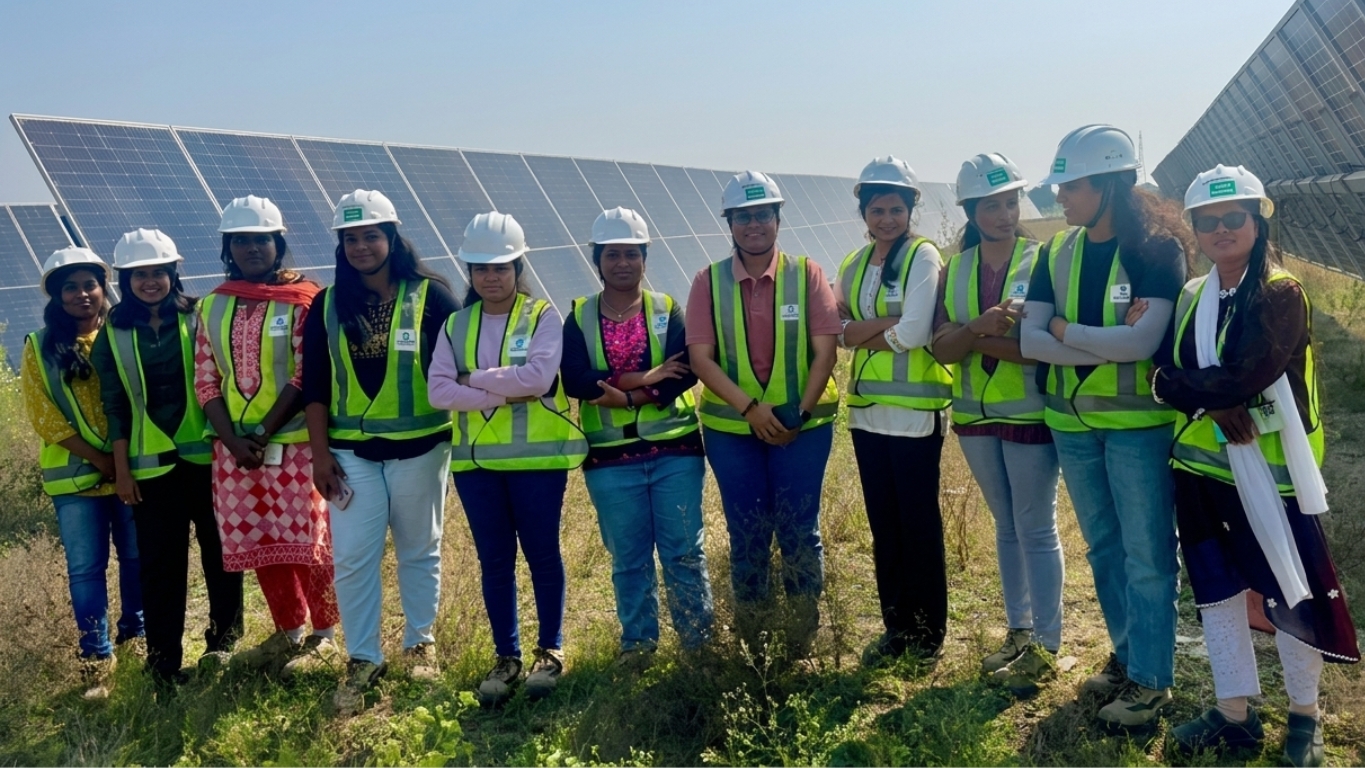
But long before the heat settles in, a small group of women has already arrived at the site. In hard hats and safety shoes, they walk across the wide stretches of land with quiet focus. Their presence may not immediately stand out against the scale of the project but their journey here tells a remarkable story.
From afar, the 300 MW SECI solar project being developed by Tata Power Renewable Energy Limited (TPREL) looks like any large infrastructure site with endless rows of steel structures and machines working steadily in the background.
Look a little closer, though, and another story begins to emerge.
At the heart of this massive project are 19 women who together make up nearly 37 per cent of the workforce on site. They are not just participants in the project, they are leading it. They are responsible for critical decisions that shape the progress of a project spread across hundreds of acres, one that will eventually generate clean energy for millions of homes.
For many of them, the journey to Koppal has not been simple.
They come from different corners of the country—small towns and cities across Uttar Pradesh, Karnataka, Andhra Pradesh, Jharkhand, and Kerala. Each of them carries a story of persistence: convincing families, choosing careers that were not always considered conventional for women, and stepping into workspaces where women leadership in field roles is still rare.
Like many renewable energy sites, Koppal is located far from large cities. The terrain is demanding, and the scale of the project can feel overwhelming at first, with unexpected challenges. Sometimes there are unexpected changes in plans and problems need to be solved on the spot. But there are also deeply satisfying moments: the successful completion of a difficult installation, a team that works together seamlessly, or the quiet pride of watching progress unfold across land that once stood empty.
For younger engineers on the site, the experience has been transformative. Many are getting their first real exposure to complex electrical and mechanical installations. They are learning how to manage vendors and business partners, manage timelines, and take responsibility for decisions that directly impact the progress of the project. With every passing day, their confidence grows.
Safety and support have also been central to their experience. Accommodation and transportation have been thoughtfully arranged so that women can live comfortably while working at the remote site. CCTV monitoring across key areas ensures an additional sense of security, while regular training sessions including self-defence workshops for women, and POSH and gender sensitization workshops for the larger workforce, help build a safe, secure and a truly gender – inclusive site.
But beyond the facilities, what many of them value most is the culture of openness.
When challenges arise as they often do in projects of this scale, communication is simple and direct. Senior leaders remain approachable, and guidance is always within reach. For young engineers navigating their first field assignments, that reassurance makes all the difference.
The work itself remains demanding. Days begin early as teams move across the vast project site, reviewing installations and planning the work ahead. Engineers coordinate with contractors, oversee complex installations, and troubleshoot issues that arise in real time.
Yet for many of the women here, this project means far more than a professional assignment. It represents independence. Growth. And the confidence that comes from being trusted with real responsibility.
For Vijayalaxmi K, Site Manager at Koppal, the experience has been both deeply professional and personal. “I have been working with TPREL for almost two years as Site Manager for the Koppal SECI 300 MW project, and I am extremely proud to be part of this team,” she says. “The trust placed in women to lead challenging roles at remote sites reflects the organization’s progressive mindset. The support, guidance, and facilities provided ensure a safe, respectful, and inclusive environment where women can truly excel.”
Back in their hometowns, conversations are beginning to change too. Families listen as these women talk about vast solar fields, the teams they lead, and the responsibilities they carry each day. Slowly, perceptions shift. New possibilities take shape for younger women who might one day choose careers in engineering or renewable energy.
The story of the Koppal SECI project goes far beyond megawatts or timelines. It is a story about people. About women who chose to step forward, take responsibility, and lead where few had before them. And in doing so, they are not just helping build a solar project, they are quietly helping reshape the future of India’s renewable energy landscape.
As more companies look at ways to encourage women to take up roles at project sites, the experience at Koppal demonstrates how the right mix of trust, safety measures, mentorship, and inclusive workplace culture can make a meaningful difference. Creating opportunities, providing support systems, and recognising the capabilities of women professionals can help ensure that infrastructure and renewable energy sectors become more inclusive in the years ahead.