

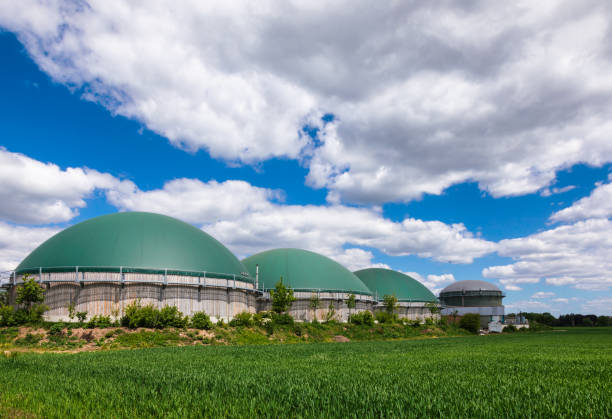
The importance of setting up compressed biogas (CBG) projects in India is driven by the need to ensure energy security, waste management and sustainability. CBG can be a substitute for compressed natural gas (CNG), liquefied petroleum gas (LPG), diesel and furnace oil in transport, cooking, process heat and captive power use, which makes it versatile across multiple demand segments. This versatility is one of the prominent reasons it is gaining strategic importance in India’s energy mix.
The Compressed Biogas Monitor by Renewable Watch Research tracks key developments in India’s CBG market, covering state-wise project pipeline and commissioned projects. The dataset includes indicators such as gas production capacity and feedstock capacity along with by-products such as bio-slurry, fermented organic manure and liquid fermented organic manure. It also covers applications, off-takers and input material used in CBG projects. The article presents a snapshot of the CBG market from March to June 2026.
Market overview
As per NITI Aayog, the all-India biopower potential (biomass and cogeneration bagasse) is 42 GW, comprising 28 GW of biomass potential and 14 GW of cogeneration bagasse potential. Government-led programmes such as Sustainable Alternative Towards Affordable Transportation scheme (SATAT) and GOBARdhan have significantly given the thrust to the development of CBG projects in the country.
As of June 2026, Renewable Watch Research has tracked about 1,847 CBG projects in total, which are currently commissioned, yet to start construction, under-construction and in approved stages. The number of commissioned projects stood at 560, followed by yet-to-start construction projects at 777, under-construction at 462 and approved at 48.
Both commissioned and under-construction CBG projects are dominated by smaller plants. As of June 2026, the largest count of projects fell in the range of lower than 5 tonnes per day (tpd). This trend indicates that CBG project economics still favour localised, smaller-scale plants with simpler feedstock sourcing and lower capital needs. Likewise, the largest number of under-construction CBG projects fall in the range of capacity between 5-10 tpd.
Further, top states with the highest count of commissioned CBG projects in India include Uttar Pradesh, Gujarat, Tamil Nadu, Maharashtra, Haryana, Rajasthan, Punjab, Karnataka, Jharkhand and Madhya Pradesh. Likewise, top states with the highest count of under-construction CBG projects include Uttar Pradesh, Gujarat, Maharashtra, Haryana, Rajasthan, Chhattisgarh and Madhya Pradesh.
Developer landscape
The CBG market in India is highly fragmented, with no single player or group dominating supply, production, or sales. Nevertheless, key market players such as the Reliance Group, Blue Planet Environmental Solutions, oil marketing companies such as Indian Oil Corporation Limited (IOCL), Hindustan Petroleum Corporation Limited (HPCL), Bharat Petroleum Corporation Limited (BPCL) and EverEnviro Resource Management, along with district level authorities such as district water and sanitation departments/committees and development agencies, hold significant number of CBG commissioned as well as pipeline projects in India.
Offtakers
The CBG demand in the market finds its utilisation broadly in three applications – industrial use, retail CBG and institutional/domestic consumers. Industrial use covers thermal applications, captive and process heating. Retail CBG includes transportation and domestic utilisation, while institutional/domestic consumers include cooking, heating and captive consumption.
As of June 2026, major offtakers for CBG include GAIL (India) Limited, BPCL, HPCL, IOCL, Indraprastha Gas Limited and Gujarat Gas Limited. The other offtakers include Bhagyanagar Gas Limited, Adani Total Gas, Reliance BP Mobility Limited, Torrent Gas, Maharashtra Natural Gas Limited, Avantika Gas Limited and AG&P Pratham.
Outlook
Currently, the growth of the CBG market is hindered by the high cost of production, inefficiencies in the supply chain management of feedstock and difficulty in realising revenue from the sale of by-products.
Going forward, CBG has the potential to be a significant component of India’s renewable energy mix if feedstock logistics, financing and project execution are effectively handled. The growth of the market is likely to depend more on pipeline conversion than new project announcements since a very large share of tracked projects are still not commissioned.
Access the Compressed Biogas Monitor Table of Contents here
