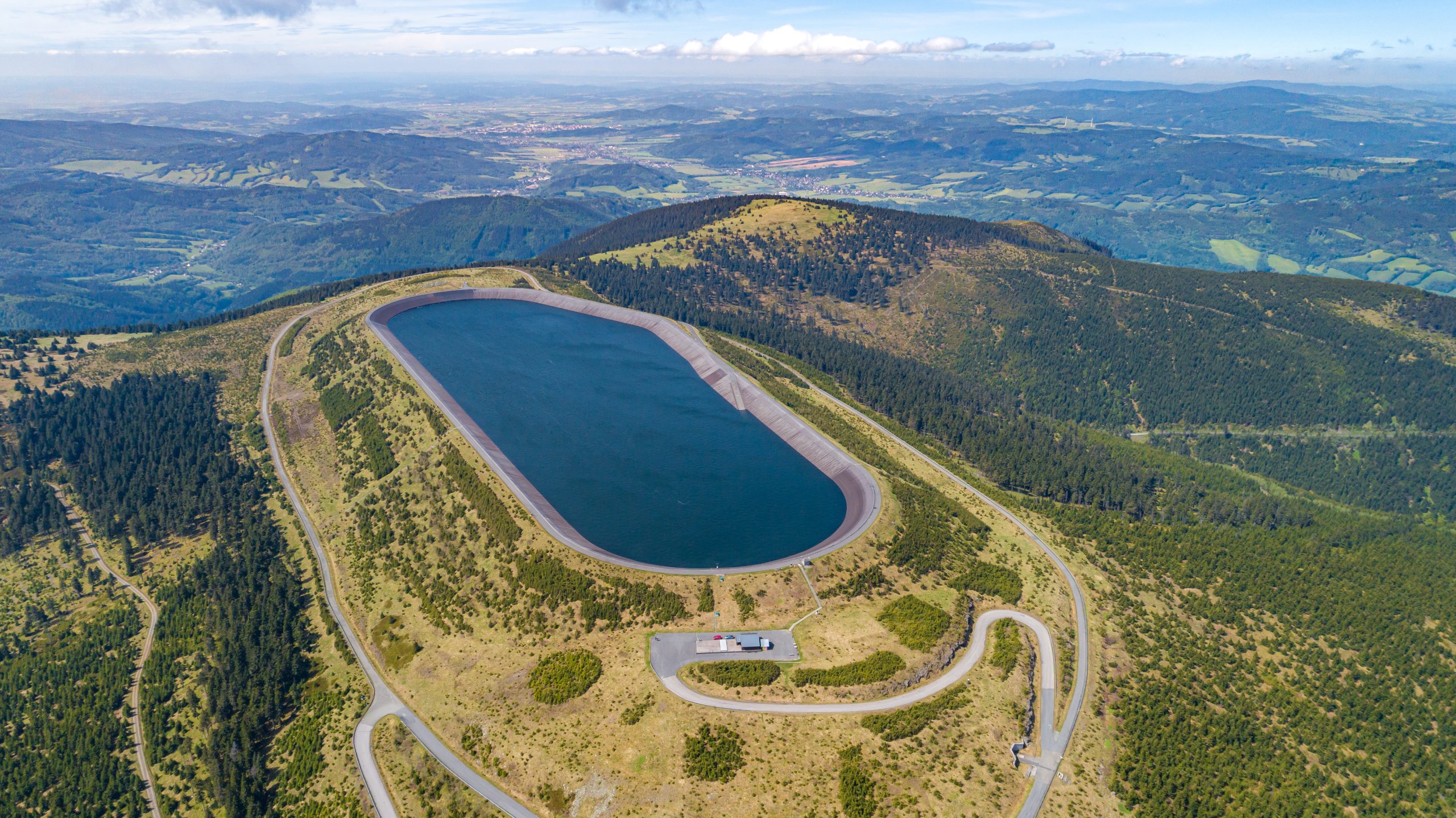
 As India’s renewable energy capacity continues to expand rapidly, pumped storage projects (PSPs) are emerging as a critical component of the country’s long-duration energy storage strategy. While battery energy storage systems are expected to meet short-duration balancing requirements, PSPs are increasingly being positioned to provide peak power, renewable energy integration, ancillary services and long-duration grid flexibility. Over the past two years, the sector has witnessed unprecedented momentum, with the introduction of competitive bidding frameworks, streamlined detailed project report (DPR) approvals and dedicated policy support. At the same time, developers continue to grapple with challenges related to land aggregation, forest and environmental clearances, community engagement, long construction timelines and revenue uncertainty. Against this backdrop, at the 4th edition of Renewable Watch’s “Pumped Hydro Storage in India” conference, senior representatives from leading developers and state utilities discussed their execution experiences, evolving procurement trends, and the policy measures needed to strengthen revenue certainty in the sector. Edited excerpts…
Rajneesh Agarwal
 India’s pumped storage sector is entering a defining phase, and NHPC is positioning itself as one of the key public sector developers in this space. However, while private developers are moving quickly, public sector organisations have their own set of institutional processes that influence project timelines. Unlike private developers, we cannot move ahead through direct negotiations or faster commercial decisions. Every major approval requires multiple institutional clearances, board approvals, and competitive procurement processes. Open competitive bidding remains mandatory, even in situations where timelines are critical, and this often affects project execution schedules.
Another challenge is the availability of capable contractors and equipment suppliers. With dozens of PSPs entering construction simultaneously, the industry will inevitably face supply chain constraints. Civil contractors, electromechanical suppliers and specialised construction agencies will all be under pressure as project awards accelerate over the next few years.
From a financing perspective, however, public sector companies enjoy certain advantages. We are relatively better placed to raise long-term capital at competitive rates. The larger challenge is delivering projects within the four-year construction schedules that are increasingly becoming the industry benchmark. Every developer is now designing projects around compressed implementation timelines, and the public sector must demonstrate that it can deliver within similar schedules. Cost competitiveness is, hence, receiving considerable attention. Aggressive tariff discovery through competitive bidding has significantly altered market expectations. We are finding it difficult to meet that benchmark. However, we are carefully evaluating project costs while ensuring long-term reliability and quality are not compromised.
Looking ahead, the evolution of ancillary service markets will become important. Ancillary services alone could eventually contribute close to one-fifth of total project revenues, provided necessary market mechanisms evolve. Revenue diversification beyond conventional power purchase agreements (PPAs) will therefore be essential for ensuring the long-term commercial viability of large PSPs.
P.M. Nanda
One of our flagship projects is the Pinnapuram PSP in Andhra Pradesh. It was initially designed to provide round-the-clock (RTC) renewable power. However, market requirements evolved considerably during project development. We recognised that demand was shifting towards flexible peak power rather than conventional RTC supply, prompting us to redesign the project configuration to better  match emerging market requirements. Moreover, we wanted to demonstrate that PSPs could actually be delivered within commercially acceptable timelines and costs. At that time, many stakeholders believed hydropower projects invariably required six to seven years for construction and capital costs exceeding Rs 100 million per MW.
The Pinnapuram project execution coincided almost entirely with the Covid-19 pandemic, creating unprecedented logistical and administrative challenges. The land registration process slowed considerably. Nevertheless, strong coordination with both state and central governments enabled construction to continue. It also brought technical surprises. During underground excavation, geological conditions differed from initial assessments, requiring redesign of the stabilisation systems. Beyond engineering challenges, stakeholder engagement has become increasingly important. Community perceptions have changed noticeably over the past few years. In some locations, local communities actively encouraged project development. In other areas, however, organised resistance has emerged even within neighbouring districts. The government should, hence, create greater public awareness regarding the benefits of PSPs while ensuring environmentally responsible project execution.
Rajib Lochan Panda
 Odisha possesses one of the country’s largest untapped pumped storage opportunities, with an estimated technical potential of nearly 41 GW. At present, three major PSPs are under active development: the 600 MW Upper Indravati project, the 600 MW Upper Kolab project, and the 500 MW Balimela project.
The Upper Indravati PSP has had a long gestation period. Although the concept was first explored more than a decade ago, project development progressed slowly because pumped storage had not yet emerged as a strategic priority. Another major factor contributing to the delay was the preparation of DPRs and feasibility studies. Since the sector itself was still evolving, the approval process required repeated technical reviews and multiple rounds of consultations. The formal PSP guidelines introduced by the government finally brought clarity. Procurement also took longer than anticipated because bidders sought extensive clarifications during the tendering stage, necessitating detailed responses before bids could be finalised.
Today, however, the situation is substantially different. Construction activities have commenced at the Upper Indravati site, and the remaining projects are progressing through various stages of implementation. At the same time, project execution continues to be constrained by statutory approvals. Getting forest clearance and environment clearance is a tedious process. Although online portals and single-window mechanisms have improved transparency, approvals still involve multiple agencies, sequential reviews, and repeated compliance requirements. Even relatively minor observations during the appraisal process can send proposals back to earlier stages, substantially extending approval timelines.
Environmental clearances, especially from the Ministry of Environment, Forest and Climate Change, present similar challenges. Compliance issues raised during project reviews often require additional studies and documentation before approvals are granted. This ultimately delays the entire clearance process. Streamlining coordination between agencies, while keeping environmental safeguards in place, would therefore significantly reduce implementation timelines for future PSPs.
Kumar Pritam
One of the most encouraging developments over the past two years has been the transformation in the regulatory environment. The Central Electricity Authority (CEA) has taken a series of initiatives aimed at simplifying project development, strengthening technical scrutiny and accelerating approvals. These changes have significantly improved developer confidence across the sector. Moreover, faster DPR approvals,  closer coordination with technical agencies, and continuous interaction with developers have all contributed towards creating a far more enabling ecosystem.
Equally important has been the collaborative approach adopted by regulators. Rather than limiting interactions to formal approvals, authorities are now engaging regularly with project developers to understand implementation challenges and identify practical solutions. This continuous dialogue has made the approval process more predictable. Looking ahead, policy support must continue evolving alongside the industry’s requirements. Several incentive mechanisms are already under discussion, and their timely implementation will further strengthen investor confidence.
While battery energy storage systems (BESSs) have rapidly gained market acceptance, both PSPs and BESS will continue to play complementary roles. Unlike batteries, PSPs are almost entirely based on indigenous civil works and equipment. Their operating life extends well beyond five decades, with relatively limited degradation over time. BESSs, although becoming increasingly competitive, will eventually require replacement and recycling.
Vivek Shrivastava
 The dedicated monitoring framework established by the CEA has created greater visibility regarding project progress across the country. Government agencies are now actively identifying bottlenecks and working alongside developers to resolve them instead of merely functioning as approval authorities. This collaborative approach has substantially improved project execution.
Nevertheless, certain challenges remain unavoidable because they are embedded within statutory processes rather than caused by administrative delays. Environmental and forest clearances require detailed scientific studies that naturally consume time. Similarly, land aggregation continues to be one of the most complex aspects in project implementation. Large PSPs often require the acquisition of extensive land parcels where ownership records may not accurately reflect ground realities. Resolving ownership disputes, consolidating fragmented holdings, and completing statutory acquisition procedures inevitably extend project schedules. However, these are structural issues rather than bureaucratic obstacles. A practical solution would be greater coordination among state-level agencies. Instead of developers independently approaching multiple forest divisions, district administrations and other departments, regular state-level review mechanisms could significantly accelerate decision-making.
Ankur Vashishtha
We have focused on selecting projects with strong technical fundamentals, securing DPR approvals, and ensuring that projects under implementation have firm PPAs. Project execution involves land acquisition, stakeholder engagement, obtaining statutory approvals, and coordinating with multiple government agencies. Successfully managing these aspects often determines whether a project stays on schedule.
 The central government has already created a supportive policy framework for PSPs. The next stage of development requires greater participation from state governments. While there is strong policy intent at the national level, implementation at the state level still varies considerably. Greater institutional coordination across departments responsible for land, water resources, forests and local administration would substantially improve execution timelines. One possible solution is the adoption of state support agreements similar to those implemented successfully for other large infrastructure projects. Such agreements would clearly define the responsibilities of individual departments and establish timelines for delivering statutory approvals and supporting infrastructure.
Revenue certainty also remains one of the most important requirements for attracting long-term investment. Nevertheless, long-gestation projects require predictable cash flows extending well beyond construction. There has to be certainty in the investment. PPAs, therefore, remain fundamental to project bankability. While merchant markets, ancillary services, and evolving market mechanisms will undoubtedly contribute additional revenues over time, developers and lenders continue to require confidence regarding long-term offtake before making investments. Equally important is timely project execution. Civil works account for nearly half of the total project cost, while electromechanical equipment constitutes another significant share. Delays inevitably lead to cost escalation and reduce project viability, consequently lowering developer confidence. Delivering projects on schedule is therefore as important as securing policy support.
Sumit Verma
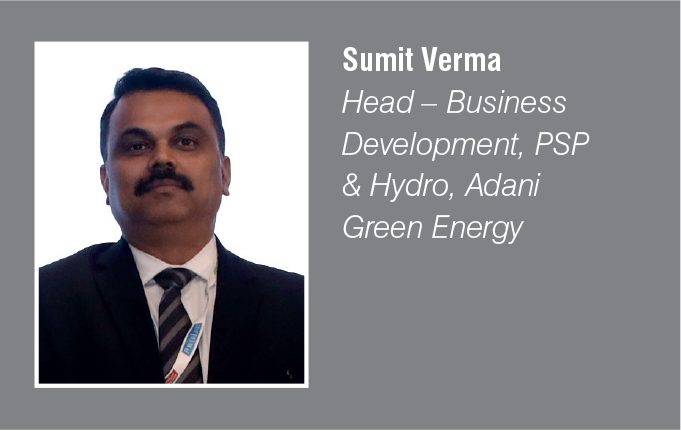 As renewable penetration increases, developers are beginning to see demand from industrial consumers, data centres and other large commercial users for reliable peak power. This is opening entirely new opportunities for developers. At the same time, emerging market mechanisms such as ancillary services and the day-ahead market are expected to create additional monetisation opportunities as regulatory frameworks mature.
Several of our projects continue to be supported through conventional PPAs with state utilities. However, we view these as only one component of a much broader market that will gradually evolve as renewable energy penetration increases. Storage assets will increasingly derive value from multiple revenue streams rather than depending upon a single contractual arrangement.
From a project development perspective, current capital costs remain broadly in the range of Rs 50 million to Rs 70 million per MW, with approximately Rs 60 million per MW representing a reasonable industry average. Depending upon project configuration, utilisation profile and input energy costs, tariffs generally fall within the range of Rs 3 per kWh to Rs 5 per kWh, making PSPs increasingly competitive for long-duration storage applications.
Even so, project execution continues to require stronger state-level coordination. While central agencies now regularly review project progress, similar monitoring mechanisms need to be institutionalised at the state level. Monthly coordination meetings involving forest departments, district administrations, land authorities, police, utilities and developers would allow implementation bottlenecks to be identified and resolved much more quickly. Forest clearances provide a good example of why such coordination is essential. A single project may require approvals from multiple forest divisions and different administrative jurisdictions. Without a common platform bringing all stakeholders together, relatively small procedural issues can consume several months before being resolved.