 By Vaibhav Singh, Head of Strategy, and Swatilekha Dutta, Group Head – Strategy, Tata Power
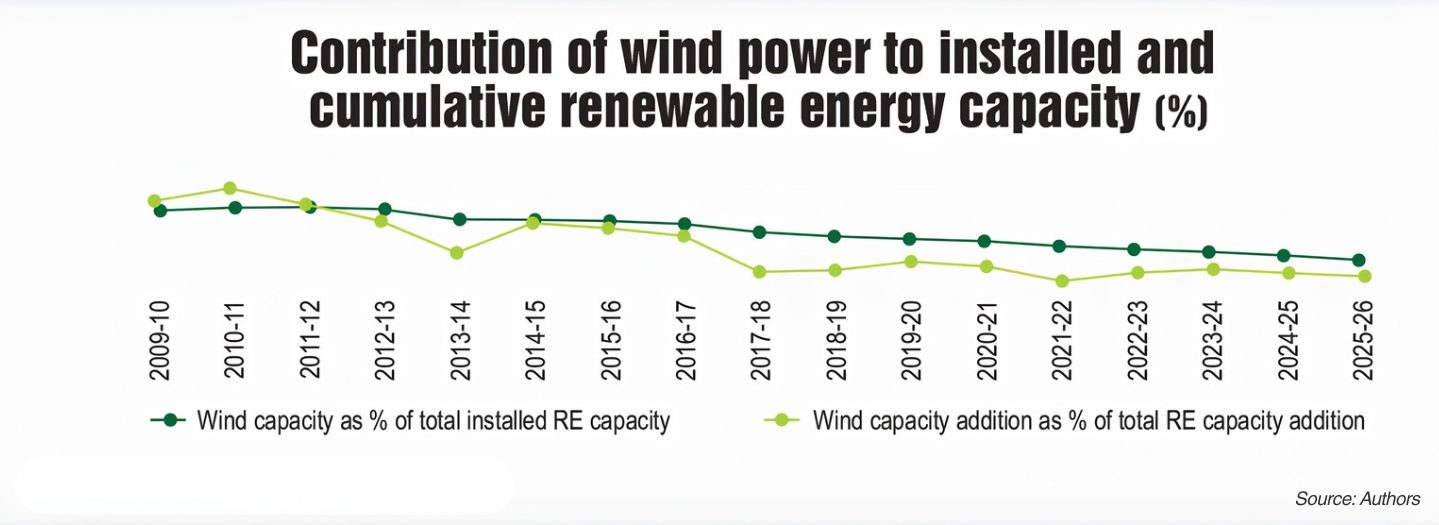
For many years, wind energy stood as the cornerstone of India’s renewable energy journey, enjoying early policy support, established technology maturity and widespread deployment across resource-rich regions. However, as solar installations expanded, wind energy increasingly assumed a secondary role, no longer leading the renewable mix as it once did. Consequently, even as wind capacity continues to grow in absolute terms, its share within the overall renewable portfolio has been steadily declining, reflecting a relative loss of prominence in the face of solar’s accelerating expansion.
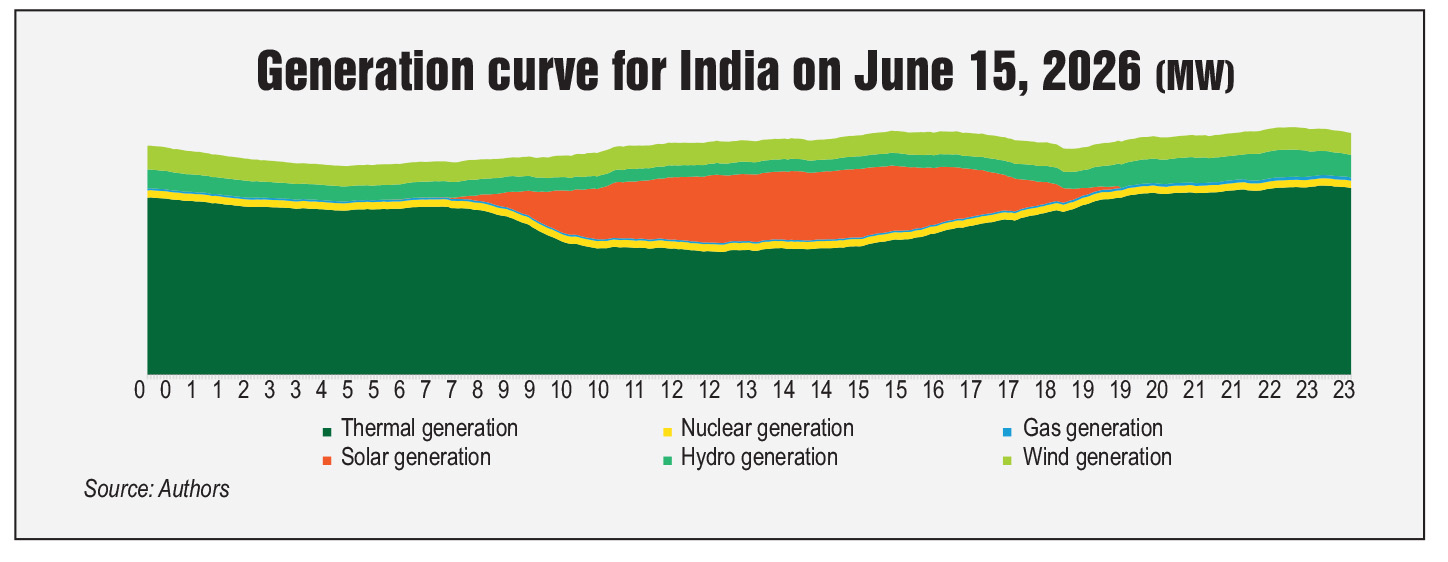
Post a period of slowdown for India’s wind sector, it is now showing signs of revival, with a record capacity addition of over 6 GW in 2025, thereby taking the installed capacity to 56 GW in FY 2026. To support the increasing deployment of solar power through hybrid and round-the-clock (RTC) projects, higher penetration of wind power has become essential due to its complementary nature. While solar power is highest during the day, wind energy peaks during the evening, thereby balancing generation during non-solar hours. It also provides seasonal stability, especially during the monsoon, when solar power drops significantly. An analysis of daily generation curves highlights the concern of accommodating solar generation, where wind has been playing a supportive role with significant non-solar-hour generation, including peak-hour generation.
 Looking ahead, the growth trajectory remains inadequate relative to the National Electricity Plan targets of 72 GW by FY 2027 and 122 GW by FY 2032. Bridging this gap will require concerted efforts across multiple dimensions, including policy and regulatory reforms, financial aid, market creation, demand stimulation and infrastructure enablement, alongside other interventions required to spur the second phase of growth in the wind sector.
One of the major challenges hindering the growth of the sector today is land acquisition and right-of-way (RoW) issues. To address these hurdles, especially for RoW-related bottlenecks, a standardised and unified framework with time-bound clearances, similar to the Telecom RoW Rules, 2024, can be adopted for wind projects. The introduction of digital single-window clearance systems and well-defined dispute resolution mechanisms can significantly improve coordination among stakeholders and streamline the approval process.
The second challenge is the slow pace of transmission build-out as compared to renewable capacities. Last year, India added about 12,000 ckt km of transmission lines and approximately 113,000 MVA of substation capacity between March 2025 and March 2026, but progress fell short of the Central Electricity Authority’s targets, with 80 per cent of transmission lines and 90 per cent of transformation capacity target achievement in FY 2026. This gap, combined with the concentration of renewable projects in a few renewable energy-rich states and ever-increasing adoption of solar, has led to grid congestion issues, resulting in the curtailment of renewable power. In addition to the loss of effective generation, developers find it difficult to recover payments for deemed generation from the cash-strapped discoms. As a short-term measure, the tertiary reserve ancillary services-linked compensation mechanism can be extended to intra-state transmission system (InSTS) projects too, to partially relieve the concentration of interstate transmission system (ISTS) corridors. Further, to ensure the recovery of deemed generation, the contract for difference mechanism can be explored. With market coupling under consideration, better pooling and utilisation of resources is expected to help mitigate these challenges.
Furthermore, the development of wind parks, akin to solar parks, should be actively pursued. While wind capacity clusters are present in a few renewable energy-rich states today, they are decentralised and managed by developers. A more structured, government-led approach on the lines of the solar park model with pre-approved land and connectivity can significantly accelerate the growth of the sector. This initiative will assist in clearing the backlogs of awarded projects where power purchase agreements are yet to be signed and will provide support to the deployment of upcoming hybrid and RTC tenders.
In open access projects, wind continues to receive differential treatment as compared to solar. Cross-subsidy charges for wind are often higher and less predictable across states than solar projects. Additionally, there have been frequent changes in wind open access exemptions, especially in InSTS projects, making it unfavourable relative to solar. Although a 100 per cent waiver for both solar and wind projects ended in June 2025, provisions were made to extend waiver benefits for delayed solar projects affected by transmission constraints. A similar approach on extension of the ISTS waiver can be adopted for delayed wind projects to improve overall sector viability.
In 2023, the Ministry of New and Renewable Energy issued guidelines for the repowering and life extension of wind projects, aimed at enhancing generation from old and inefficient assets. Around 25 GW of such capacity stands to benefit from this initiative; however, progress on the ground remains slow. To accelerate repowering, there is a need to introduce a separate auction bucket/tariff premium for repowering projects, strengthen the grid and allow PPA renegotiation with clear guidelines or migration to market-based or open access.
With the recent changes in the demand-side mechanism regulations, accurate forecasting has become all the more critical. Alongside the Bharat Forecasting System tool, generating companies should now be leveraging advanced analytics and artificial intelligence/machine learning to further strengthen their forecasting abilities. The availability of real-time data remains fragmented, making analysis and learning more challenging. Establishing a centralised system for publishing real-time data on a common platform can significantly enhance visibility and accessibility, enabling better insights and supporting accurate forecasting and scheduling.

 From a supply-side perspective, India’s wind turbine manufacturing capacity has increased significantly from around 10 GW in 2014 to approximately 24 GW as of March 2026, with domestic manufacturing achieving 70-80 per cent indigenisation and the capability to produce advanced turbines of up to 5.2 MW capacity. To enhance global competitiveness, the production-linked incentive scheme or modernisation scheme can be considered for select high-tech components that are currently being imported. Such targeted support would help improve cost competitiveness, boost exports and enhance the utilisation of existing nameplate capacities. Although industry players have been investing significantly in indigenous research and development in pursuit of higher efficiency turbines, a sustained push from the government is equally essential.
While new entrants have forayed into the manufacturing space today, the market remains largely consolidated. Generating companies find the operations and maintenance of wind turbines challenging without adequate support from the original equipment manufacturers. Going ahead, it will be critical to develop and train manpower for the maintenance of wind turbines, as this skill is niche and highly specialised and is not easily replaceable.
The volume of renewable energy certificates (RECs) traded in May 2026 dropped 65 per cent year on year to 610,000 certificates. Moreover, price volatility over the years has weakened developer confidence in RECs as a reliable revenue stream. Stricter enforcement of renewable purchase obligation (RPO) obligations can play a pivotal role in improving REC market stability, thereby also providing the much-needed boost towards achieving RPO targets.
Furthermore, the introduction of a pre-declared bidding calendar can significantly improve the visibility of project pipelines, enabling developers to plan ahead. This is particularly critical for the wind sector, which involves longer gestation periods and higher execution complexities compared to solar projects. As the sector prepares to scale up, synchronous efforts across the entire ecosystem will be imperative to ensure the sustained growth of the wind sector and achieve the long-term targets.