

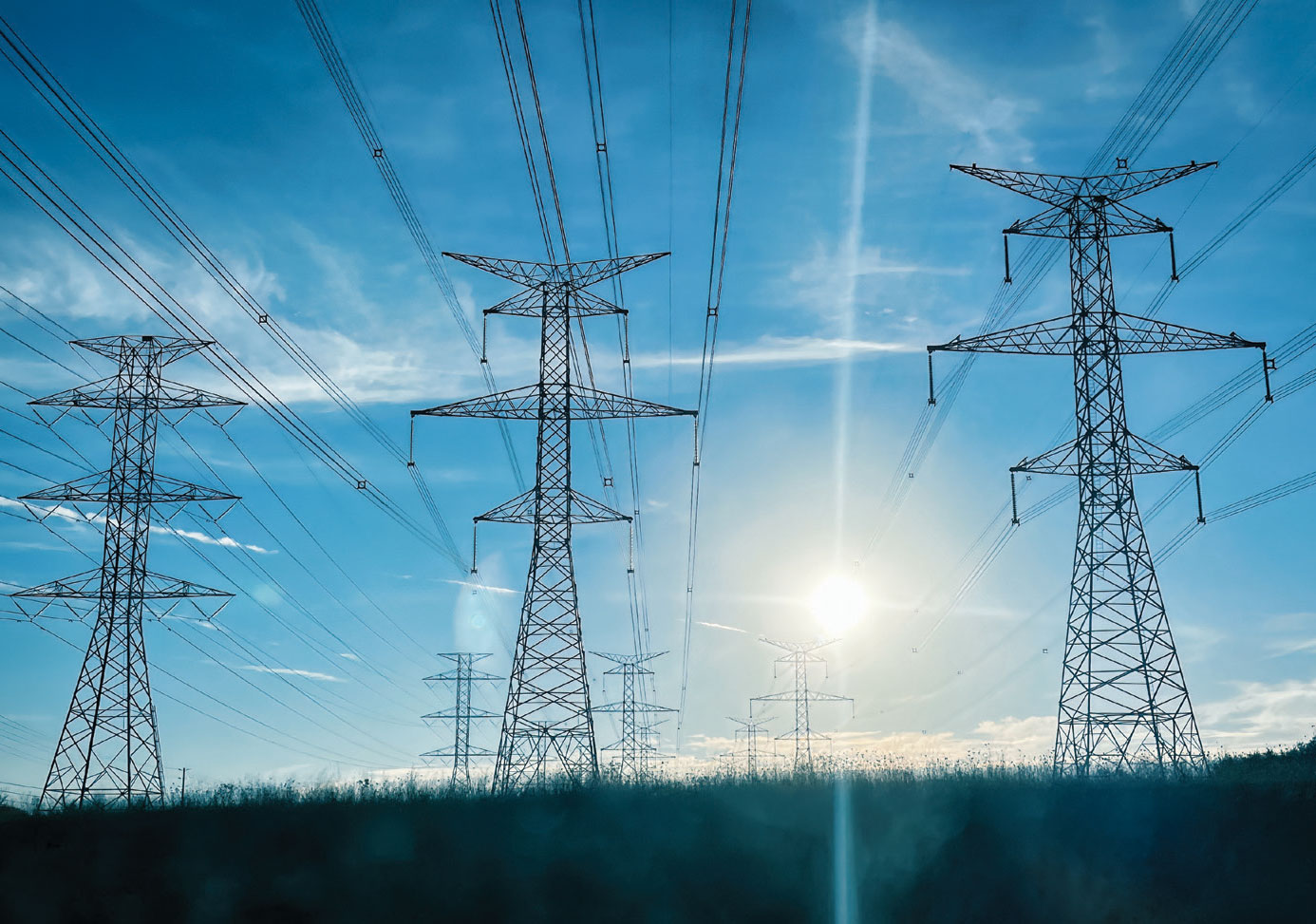
 Canada is positioning electricity infrastructure as a central pillar of its economic, energy security and industrial strategy, with transmission emerging as one of the most important areas for investment. In May 2026, the country’s prime minister announced the National Electricity Strategy, setting an ambition to double the capacity of Canada’s electricity grid by 2050 through new infrastructure and accelerate electrification to support competitiveness and decarbonisation, while maintaining Canada’s existing advantage of a predominantly non-emitting and relatively low-cost electricity system.
The transmission sector is particularly important because Canada’s electricity system remains highly fragmented. Provincial and territorial grids are planned and operated largely independently, with many provinces trading more electricity with the US than with neighbouring Canadian jurisdictions. The National Electricity Strategy, therefore, goes beyond simply adding generation. It identifies stronger transmission connections, interprovincial interties and grid modernisation as essential to creating a more resilient and economically integrated electricity system.
The strategy estimates that interprovincial transmission capacity could increase by around 27 per cent by 2035 and 70 per cent by 2050. This would allow greater movement of electricity between regions with different generation mixes and demand profiles. Greater connectivity would also reduce the need for each province to build generation and network capacity to meet its own peak demand, while enabling surplus electricity in one region to support shortages elsewhere. This growth is especially relevant to meeting new power demands from artificial intelligence data centres, critical minerals development, advanced manufacturing and liquefied natural gas, alongside broader goals for clean growth and industrial electrification.
From fragmented grids to East-West-North connectivity
The federal government’s key policy shift is to connect Canada’s electricity “islands” through stronger East-West-North links, reducing reliance on provincial systems and Canada-US interconnections. Natural Resources Canada (NRCan) estimates that CAD1.7 billion in interprovincial transmission investment could attract CAD6.6 billion in private funding for transmission and CAD92.5 billion in renewable investment over 10 years. A separate 2025 study found that doubling the British Columbia (BC)–Alberta interconnection could generate CAD1.7 billion in net benefits by 2050, while tripling Manitoba–Saskatchewan capacity could deliver CAD2.3 billion.
The government is exploring a federal-provincial-territorial framework to overcome differences in markets, ownership, planning, cost allocation and regulation. Proposed measures include data sharing, regional grid modelling, standardised cost allocation, greater Canada Energy Regulator (CER) involvement, long-term planning and dispute resolution, while respecting provincial and territorial jurisdiction. The strategy caps federal regulatory reviews at one year, directly supporting faster transmission project delivery.
A new Transmission InterConnect Investment Strategy takes shape
A major institutional development is the Transmission InterConnect Investment Strategy, referred to as the Major Projects Office (MPO) in May 2026. It aims to identify priority transmission projects and financing mechanisms, including high-value intra-provincial projects that can unlock new generation or economic development.
The MPO will work with the federal ministry, provinces and territories, Indigenous Peoples, industry and Crown corporations to coordinate project financing and delivery, reflecting a shift toward treating transmission as strategic national infrastructure rather than solely provincial utility projects. The strategy is already driving action. In June 2026, governments identified five priority interties: Yukon–BC, Alberta–BC, Alberta–Saskatchewan, Saskatchewan–Manitoba and Prince Edward Island (PEI)–New Brunswick (NB).
Western Canada and the North emerge as major transmission corridors
Western and northern Canada is likely to benefit significantly from the strategy, with several interconnections aimed at improving reliability and using regional generation more efficiently.
Proposed upgrades could increase Alberta–BC transfer capacity by about 150 MW, Alberta–Saskatchewan by 250 MW and Saskatchewan–Manitoba capacity along the Regina–Winnipeg corridor by up to 2 GW.
Northern connectivity offers an even greater opportunity. Many remote communities rely on costly diesel or ageing local hydro, with electricity costs in some areas reaching six to ten times the national average. Better transmission could reduce diesel dependence while delivering economic and social benefits.
The Yukon–BC Grid Connect is particularly significant, with support for pre-feasibility work on an approximately 800-km, ±200-kV high-voltage direct current (HVDC) line. The broader Northwest Critical Conservation Corridor could also support mining, critical minerals and industrial development, while improving northern electricity access.
Tax credit set to expand for high-value intra-provincial transmission
The federal strategy extends beyond interprovincial interties, with plans to expand the Clean Electricity Investment Tax Credit (ITC) to major high-voltage intra-provincial projects. This reflects the need for stronger internal networks to connect new generation, support industrial loads, enable interties and improve resilience.
The North Coast Transmission Line (NCTL) in BC will strengthen northwestern electricity infrastructure, support industrial development and more than double regional clean-electricity availability. In July 2026, Canada and BC committed CAD3.9 billion to its first two phases. The PEI–NB Interconnection Expansion similarly shows how targeted support can advance strategic links. It includes two 200 MW, 138 kV submarine cables, transmission upgrades and substation modernisation. A CAD5.9 million federal investment will support engineering, environmental assessment, Indigenous engagement and preliminary design, with construction targeted for 2028.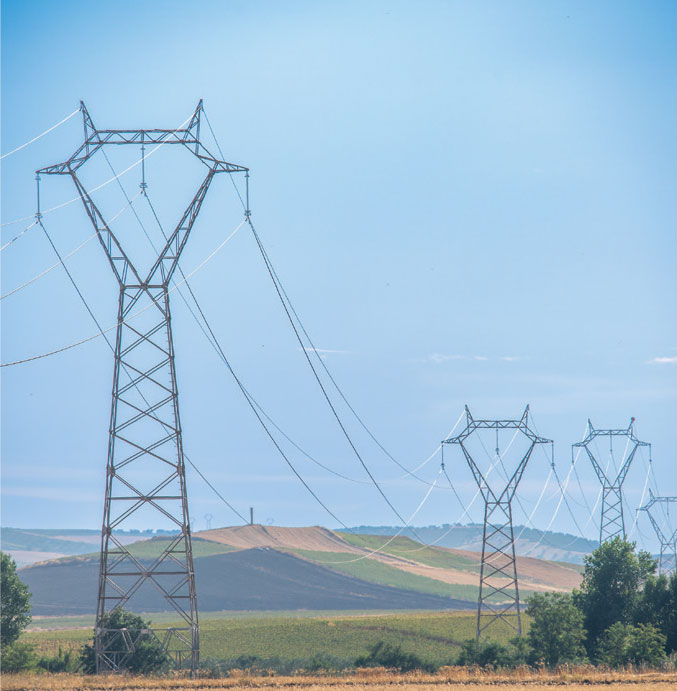
Financing will determine the pace of transmission expansion
The scale of investment required means transmission policy cannot rely solely on conventional utility financing. The federal government is combining tax incentives, public financing and project-development support.
The Canada Infrastructure Bank (CIB) has a clean-energy investment target of at least CAD20 billion, while its portfolio includes transmission and interconnection projects. The Canada Growth Fund and CAD4.5 billion Smart Renewables and Electrification Pathways Program also support grid modernisation, storage and transmission.
The CIB has committed CAD285 million in equity to the Nova Scotia (NS)–NB Wasoqonatl Reliability Intertie, including CAD54 million through its Indigenous Equity Initiative, while the federal ministry has provided CAD24.7 million for pre-development.
These mechanisms matter because interprovincial transmission can create benefits beyond the jurisdiction funding the asset, making standardised cost allocation a potentially critical part of the national framework.
Supply chains and workforce become transmission priorities
Grid expansion will require more transformers, cables, switchgear and specialised equipment, but long global lead times and declining domestic supply share – from 58 per cent in 2018 to 52 per cent in 2023 – cause supply-chain risks. The government is supporting domestic manufacturing through a CAD40 million investment in Hitachi Energy Canada’s Quebec transformer facility and an HVDC simulation and collaboration centre. Workforce shortages are another constraint, with over 130,000 skilled workers needed in the electricity sector under a net-zero scenario by 2050, making apprenticeships and skilled-trades training critical.
A more integrated transmission system
Canada’s National Electricity Strategy shifts transmission from a primarily provincial responsibility toward a national economic priority. The immediate challenge is turning this vision into a bankable project pipeline through provincial agreement on planning, cost allocation and markets, faster permitting, federal support and indigenous participation.
Stronger interprovincial links could improve resilience, resource integration, energy security and industrial growth, while reducing duplicate investment.
Ultimately, Canada’s electricity transition will depend as much on connecting power as generating it. The challenge is to build the transmission infrastructure needed to support a doubled electricity system by 2050.
