By Nidhi Dua
Delhi’s electricity demand has risen alongside its expanding consumer base, with power consumption increasing from 29,415.87 MUs in 2015-16 to 30,996.29 MUs in 2025-26 (up to December 2025). Demand is expected to grow further due to extreme temperatures, persistent air pollution and continued migration to the national capital for better job opportunities. Despite this rising demand, Delhi’s power sector has demonstrated steady improvements in reliability and efficiency. This is evident from the sharp decline in power shedding, which reduced from 42 MUs in 2015-16 to just 11.358 MUs in 2024-25. A key factor underpinning this progress is the increasing policy focus and financial commitment to the sector. Government expenditure on the energy sector rose significantly from Rs 2.35 billion in 2015-16 to Rs 36.45 billion in 2024-25, an increase of about Rs 34.10 billion.
Delhi’s total installed power capacity has increased rapidly over the years, reaching 7,390.69 MW as of March 2026, according to the Central Electricity Authority. Thermal power contributed 5,656.91 MW, nuclear 153.38 MW and renewables 1,580.40 MW, including 1,074.03 MW from hydropower and 506.37 MW from other renewables. Non-hydro renewables capacity consists of 85.17 MW of biopower and 421.20 MW of solar. Delhi’s solar portfolio includes 9.84 MW of ground-mounted solar, 409.9 MW of rooftop solar installations (including those under the PM Surya Ghar: Muft Bijli Yojana) and 1.46 MW under off-grid/Pradhan Mantri Kisan Urja Suraksha evam Utthaan Mahabhiyaan Component B. Delhi’s biopower capacity consists of 84 MW of waste-to-energy (WtE) and 1.17 MW of off-grid WtE capacity.
Solar uptake
Solar energy has emerged as a key renewable energy source in Delhi, given the city’s limited geographical area, high population density and scarcity of open land. The dense urban infrastructure has further constrained the deployment of large-scale renewable projects, positioning solar as the primary source with the highest technical potential in the capital. Consequently, Delhi has focused on rooftop solar deployment. Under the PM Surya Ghar scheme, Delhi has witnessed steady consumer interest in rooftop solar. As of May 2026, a total of 159,947 applications have been received, of which 17,481 installations have been completed, covering 27,159 households. This translates into a conversion rate of 10.93 per cent, with a cumulative installed capacity of 69.81 MW.
To further accelerate solar deployment, the Delhi government notified the Delhi Solar Policy, 2023, in March 2024, setting a target to scale solar capacity to 4,500 MW by 2026-27. The target includes 750 MW of rooftop solar within the city and approximately 3,750 MW of utility-scale solar to be sourced from outside Delhi. The policy also introduced mechanisms such as group net metering, community solar and peer-to-peer (P2P) energy trading. It also proposed business models such as the renewable energy service company (RESCO) and hybrid RESCO to address upfront cost barriers and enable wider adoption without capital investment. The policy was subsequently amended in July 2025. Under the revision, the capital subsidy was increased to Rs 10,000 per kW, capped at Rs 30,000 for systems up to 3 kW, and is being disbursed directly to consumers through the direct benefit transfer mechanism.
In parallel, public sector entities have expanded their renewable energy adoption. According to the Delhi Metro Rail Corporation’s (DMRC) annual report 2024-25, the corporation installed and commissioned 50 kWp of vertical bifacial solar panels on a viaduct section between Okhla Vihar and Jamia Millia Islamia metro stations on Line 8. It also procured 354 MUs of solar power from the Rewa Ultra Mega Solar Project in Madhya Pradesh, meeting around 31.5 per cent of its total energy requirement from renewable sources. DMRC’s cumulative rooftop solar capacity has reached 51.40 MWp, including a 10 MW installation on the Okhla-Greater Noida (Aqua Line) corridor, and it is exploring round-the-clock (RTC) renewable supply through battery energy storage systems (BESS).
Meanwhile, the capital is also gradually shifting away from conventional thermal generation towards cleaner and more flexible energy solutions. The planned 750 MW gas-based combined cycle gas turbine Pragati-II Power Project at Bamnauli has been put on hold due to the non-availability of gas. The government is now considering a solar-based BESS at the site, indicating a shift towards cleaner and more flexible energy solutions in Delhi.
WtE initiatives
Delhi continues to face a significant waste management challenge, with mounting landfill pressures often resulting in hazardous fires and environmental concerns. In response, the state has been scaling up WtE infrastructure to convert municipal solid waste into electricity. At present, the city has four operational WtE plants with a cumulative waste processing capacity of 6,550 tonnes per day (tpd) and an installed generation capacity of 84 MW. These facilities are located at Okhla, Ghazipur, Bawana and Tehkhand.
The Okhla WtE plant was commissioned in 2012. It processes around 1,950 tpd of waste and has a generation capacity of 23 MW. The Bawana facility was commissioned in 2017 as part of an integrated solid waste management complex comprising a compost plant and an engineered sanitary landfill. It processes 1,300 tpd of waste and has an installed capacity of 24 MW. The Ghazipur plant, commissioned in 2017, processes 1,300 tpd of waste and has a generation capacity of 12 MW. The Tehkhand WtE plant, the most recent addition, was commissioned in 2023. It processes 2,000 tpd of waste and has a generation capacity of 25 MW.
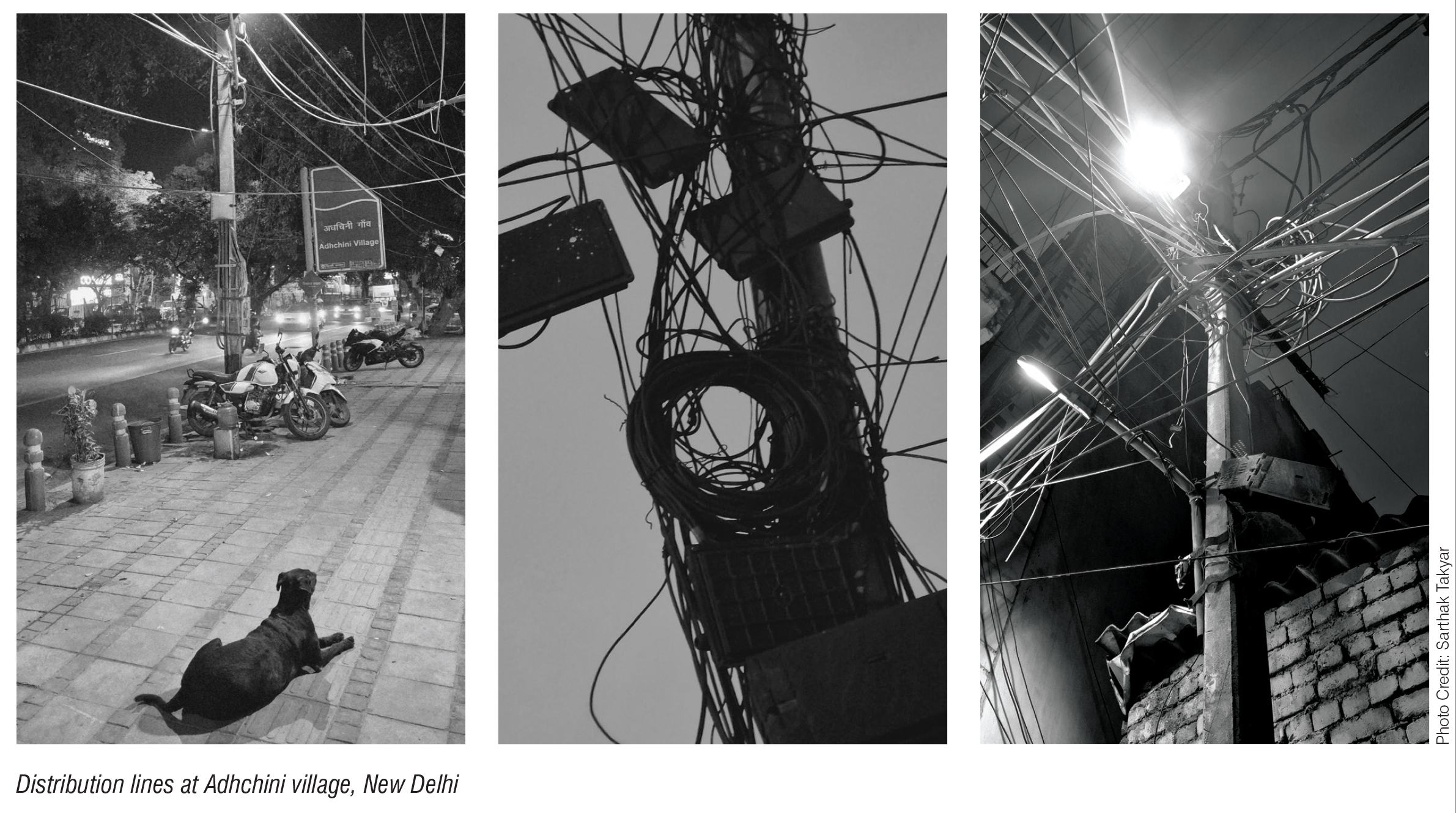 Furthermore, the expansion of Delhi’s WtE and waste processing ecosystem is currently under way, with multiple projects at various stages of planning and regulatory approval. In total, seven new facilities – four WtE projects and three compressed biogas plants – have been proposed to add a cumulative processing capacity of 7,750 tpd by December 2028. Of this, 7,000 tpd is expected to come from new WtE plants and the expansion of existing facilities. The proposed WtE developments are concentrated in Narela-Bawana and Ghazipur. The new WtE plant proposed at Narela-Bawana will have a capacity of 3,000 tpd. It is expected to be commissioned by December 2027. Another WtE facility with a capacity of 2,000 tpd has been proposed at Ghazipur. The plant is likely to be completed by December 2028. In addition to new projects, capacity expansion plans have been proposed for existing WtE facilities at Okhla and Tehkhand. The Okhla plant is proposed to be expanded from 1,950 tpd (23 MW) to 2,950 tpd (40 MW). The completion deadline has been set for March 2027. Similarly, the Tehkhand WtE plant is proposed to be expanded from 2,000 tpd to 3,000 tpd. The project is targeted for completion by December 2027.
Promoting green transportation
Vehicular emissions continue to be a major contributor to Delhi’s air pollution problem. To address this, the Delhi government has been promoting electric vehicles (EVs) to bring down emissions in the transport sector.
According to the Delhi Economic Survey 2025-26, as of March 19, 2026, a total of 470,104 EVs have been registered in Delhi. In terms of financial support, 91,031 beneficiaries have received subsidies amounting to Rs 2.03 billion under the Delhi EV incentive portal as of March 2026. In the public transport segment, the electrification of bus fleets has gained traction. As of March 2026, the total number of e-buses, including those operated by the Delhi Transport Corporation (DTC) and the Department of Transport, stood at 4,338. Further, 1,610 additional buses, including 50 metro feeder buses, are expected to be inducted by 2026-27. Moreover, demand has been placed for 2,800 e-buses under the PM E-DRIVE scheme, comprising 1,380 buses for DTC and 1,420 buses for the Department of Transport. Additionally, a further 3,330 e-buses have been requested under the same scheme.
 To further promote EV adoption, the state issued the draft Delhi EV Policy 2026-2030 in April 2026. The policy outlines a structured and time-bound incentive framework across vehicle segments, with benefits tapering over a three-year period. For electric two-wheelers, the policy sets an eligibility cap of Rs 225,000 (ex-factory price). Incentives will be provided on a declining basis over three years. This includes Rs 10,000 per kWh (up to Rs 30,000) in the first year, Rs 6,600 per kWh (up to Rs 20,000) in the second year, and Rs 3,300 per kWh (up to Rs 10,000) in the third year. For electric three-wheeler auto-rickshaws, fixed incentives of Rs 50,000, Rs 40,000, and Rs 30,000 will be offered in the first, second and third years, respectively. Meanwhile, electric four-wheeler goods vehicles will receive incentives of Rs 100,000 in the first year, Rs 75,000 in the second year, and Rs 50,000 in the third year.
State of the sector
Delhi’s power sector has witnessed significant improvement following the implementation of power sector reforms. One of the most notable outcomes has been the sharp decline in load shedding, which has reduced to just 0.014 per cent of total consumption, among the lowest levels recorded in the past two decades. On the renewable energy front, total generation in Delhi reached 753.44 MUs in FY 2025-26, reflecting the city’s gradual shift towards cleaner energy sources.
Over the past decade, Delhi’s total power purchase, including both local generation and procurement from other states, increased from 33,615 MUs in 2015-16 to 43,534.52 MUs in 2024-25, registering a growth of about 29.5 per cent. This increase has been largely driven by a rise in power procurement from other states, which grew from 27,940 MUs to 39,825.06 MUs during the same period. In contrast, local generation declined from 5,675 MUs to 3,709.46 MUs.
On the distribution side, several measures were undertaken to reduce aggregate technical and commercial (AT&C) losses, which had been one of the key constraints in improving distribution efficiency. Around a decade ago, AT&C losses for Delhi’s discoms, including BSES Yamuna Power Limited (BYPL), BSES Rajdhani Power Limited (BRPL) and Tata Power Delhi Distribution Limited (TPDDL), stood at 15.66 per cent, 12.08 per cent and 9.37 per cent, respectively in 2015-16. These have since declined significantly to 6.02 per cent, 6.13 per cent and 5.54 per cent respectively in 2024-25.
Remarks by Murthi Thandavaran, Additional Vice-President, BSES Rajdhani Power, and Nihal Meena, Vice-President, BSES Yamuna Power, at Renewable Watch’s AI in Renewables Conference, highlighted the key drivers behind this improvement. The losses were primarily attributed to power theft, overloading of distribution transformers, stressed cables and overloaded feeders. In response, utilities implemented proactive measures such as predictive maintenance, load balancing, identification of theft-prone areas and removal of illegal connections. Improvements in metering, billing and collection systems have also contributed to the reduction in losses.
They also discussed the evolving role of technology and operational strategies in strengthening Delhi’s power distribution system. On the consumer and market sides, mechanisms such as P2P energy trading are being explored as an opportunity to support decentralised renewable energy adoption. With the expansion of green open access to smaller consumers and the presence of virtual and group net metering frameworks in Delhi, P2P platforms can enable direct transactions between buyers and sellers. Pilot initiatives are already under way, with efforts focused on developing guidelines and financial settlement mechanisms to scale these models.
Building on this, the utilities have also implemented pilot projects using digital twin technology. This has enabled the integration of multiple data streams, such as consumer complaints, transformer loading and outage data, onto a unified platform. As a result, faults can be identified more accurately and addressed promptly, allowing field teams to be deployed immediately for quicker resolution.
Further, drone-based inspections are being utilised to monitor overhead infrastructure, particularly in areas that are difficult to access manually. These drones capture detailed images, enabling the identification of potential hotspots and weak points in the network. Based on these insights, targeted maintenance can be carried out more efficiently. These initiatives have already been piloted and are now being scaled up to enhance operational efficiency and network reliability.
The distributed electricity in Delhi is largely consumed across the domestic, commercial and industrial segments, with domestic demand continuing to dominate. Domestic consumption increased steadily from 12,560 MUs in 2015-16 to 19,538 MUs in 2024-25, reflecting its central role in driving overall demand growth. Commercial consumption also recorded an increase, rising from 6,053 MUs to 8,040 MUs over the same period. However, this segment experienced fluctuations, including a notable decline to 5,314 MUs in 2020-21, before recovering in subsequent years. In contrast, industrial consumption remained relatively stable, declining slightly from 3,135 MUs in 2015-16 to 2,927 MUs in 2024-25, with minor variations over the years.
As electricity demand continues to rise in Delhi, the need for robust and reliable power infrastructure has become increasingly critical. To address this, the city’s discoms have undertaken sustained capital investments in strengthening and expanding the network. These investments have focused on key areas such as power transformers, extra-high voltage cables, feeder augmentation and the installation of shunt capacitors, all of which contribute to improved supply reliability and system efficiency. Over the years, capex by the discoms has shown an overall increasing trend. In 2024-25, total capital investment reached Rs 20.08 billion, marking a significant increase compared to previous years. Among the discoms, BRPL recorded the highest investment at Rs 9.31 billion, followed by TPDDL at Rs 6.47 billion and BYPL at Rs 4.29 billion. This substantial rise in investment highlights the intensified efforts by all three utilities to enhance network capacity, improve service quality and support Delhi’s expanding electricity requirements.
Future outlook
Since the implementation of power sector reforms in 2002, Delhi has significantly improved the efficiency and financial health of its discoms. AT&C losses have declined sharply from over 50 per cent at the time of privatisation, and nearly 65 per cent in some pockets, to around 6 per cent in recent years. This is well below the national average of 15.04 per cent in 2024-25. The performance is expected to improve further with the adoption of digital and artificial intelligence-based solutions. Delhi’s discoms have started deploying digital twin technology in the power distribution network to detect potential faults before they occur. The first large-scale roll-out is being undertaken by BRPL. For consumers, this is expected to result in fewer and shorter power cuts, faster fault restoration and improved voltage stability during peak demand. Lessons from the project may support wider adoption across the city. If scaled further, the technology could enhance service reliability, strengthen grid resilience and support Delhi’s broader smart city plans.
Furthermore, the state is scaling its renewable energy infrastructure in line with its potential and available resources. Rooftop solar adoption is increasing gradually, and expansion plans for WtE infrastructure are also under way. In addition, efforts are being ramped up to scale energy storage for ensuring RTC power supply. In October 2025, the Delhi Metro Rail Corporation invited bids to procure 170 MW of solar power from an interstate transmission system-connected captive project, along with a 680 MWh BESS. In December 2025, The Energy and Resources Institute issued two tenders for setting up 12.5 MW/25 MWh and 43 MW/86 MWh BESS at key grid substations in Delhi. In February 2026, Delhi’s chief minister laid the foundation stones for four standalone utility-scale BESS projects across South and West Delhi, with a total capacity of 55.5 MW/111 MWh. The most notable achievement in the BESS space is the commissioning of the stand-alone utility-scale 20 MW/40 MWh BESS at Kilokri. “The project demonstrates how storage can help manage peak demand, improve grid flexibility and enhance supply reliability in dense urban networks. We see this as an important template for the future. We have also advanced decentralised storage initiatives through the community BESS project, which highlights the potential of neighbourhood-level energy storage to strengthen local reliability, support distributed energy integration and create more resilient urban power systems,” says Abhishek Ranjan, Chief Executive Officer, BRPL, in a recent interview with Renewable Watch.
Overall, the state government is taking steady steps to increase the share of renewables in the city’s power mix. However, scaling up clean energy and reducing emissions is not the responsibility of the government alone. Residents also have a key role to play by adopting rooftop solar, shifting to EVs and using public transport more frequently. Collective action at the individual level can significantly contribute to making Delhi a cleaner and more sustainable city.