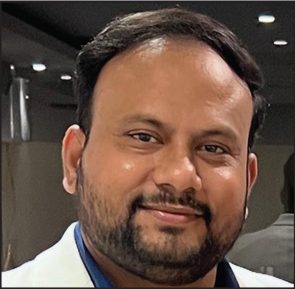
 Rahul Shelke began his career at a state utility company, where he developed a strong understanding of large-scale grid operations and utility infrastructure. Shelke’s foundation in engineering, combined with a passion for energy systems, has shaped his entire professional journey in the power sector. Over the last two decades, he has worked across the complete electricity value chain from generation and transmission to distribution, gaining hands-on experience in thermal, hydro, solar, wind and biogas technologies. Today, as the co-founder and managing director of AmpereHour Energy, he leverages this blend of engineering rigour and on-ground experience to build resilient, future-ready power infrastructure and support India’s clean energy transition.
The most exciting part of his current role is the opportunity to help shape the future of energy storage in India at a time when it is becoming critical to grid reliability and large-scale renewable energy integration. “At AmpereHour Energy, I am closely involved in strategy, technology development and the execution of complex projects, which provides me a first-hand view of how storage solutions are being deployed at scale across the country,” he says.
According to Shelke, a key barrier in the sector is the limited understanding of BESS among developers, utilities and financiers; this slows decision-making compared to more mature technologies such as solar PV. Also, India’s standards and safety frameworks are still evolving. Absence of fully enforceable national codes for system design, testing, certification and grid compliance, particularly for tropical conditions involving high heat, humidity and dust impacts project bankability and investor confidence. As regulatory clarity around tariff structures for standalone storage, revenue-stacking mechanisms and grid ancillary frameworks is still emerging, financing for capital-intensive BESS projects remains complex.
“I enjoy exploring new places and cultures, as travel provides fresh perspective that often sparks new ways of thinking about infrastructure, communities and development. Driving is another passion of mine, offering time to reflect and recharge amid a demanding schedule. Equally important to me is giving back to society; I actively support initiatives for girls’ education through NGOs and encourage young people, especially engineering students, to consider careers in the energy sector. I occasionally take up lecturing and mentoring because nurturing the next generation of engineers is just as critical as building today’s infrastructure,” he says. Above all, Shelke values time with family and friends, as maintaining that balance keeps him grounded and helps him lead with clarity, purpose and a long-term vision.