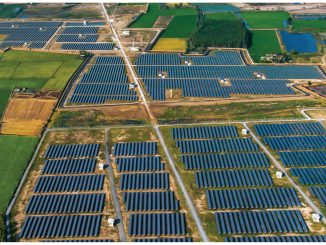
 The Union Budget 2026-27 focuses on customs duty rationalisation, carbon capture, utilisation and storage (CCUS), domestic manufacturing, and energy sector financing. There has been a significant increase in budgetary allocations for the Ministry of New and Renewable Energy (MNRE). For 2026-27, it has received an outlay of Rs 329.14 billion, up from Rs 265.49 billion in 2025-26. Solar energy remains the primary focus, with allocations increasing to Rs 305.39 billion, up from Rs 242.24 billion in the previous year. This apportioned amount includes Rs 220 billion for the PM Surya Ghar: Muft Bijli Yojana and Rs 50 billion for the PM-KUSUM scheme. Other key allocations include Rs 6 billion for the National Green Hydrogen Mission, Rs 5.51 billion for wind/hydro, Rs 2.75 billion for bioenergy and Rs 5.99 billion for green energy corridors. Senior industry experts share their views on the Union Budget 2026-27 for the clean energy sector. Edited excerpts…
Sanjeev Aggarwal, Founder and Executive Chairman, Hexa Climate
Budget 2026 is a decisive “execution budget” that correctly identifies storage and finance as the twin pillars of India’s energy transition. The extension of customs duty exemption for battery energy storage system (BESS) manufacturing is a game changer; it signals that the government views storage not as a luxury but as essential grid infrastructure.
Furthermore, the historic capital expenditure target of Rs 12.2 trillion, combined with the restructuring of the Power Finance Corporation (PFC) and Rural Electrification Corporation (REC) to improve efficiency, provides the financial backbone we need to scale. By lowering input costs for solar glass and securing the supply chain for critical minerals, this budget gives the private sector the confidence to move from planning to aggressive deployment.
Mahesh Girdhar, MD and CEO, EverEnviro Resource Management Private Limited
The Union Budget 2026-27 marks a defining step in India’s gas-based energy transition. The decision to mandate phased blending of CBG with CNG and PNG is a systems-level reform that embeds CBG into the mainstream gas ecosystem.
The exclusion of the biogas component from central excise duty on biogas-blended CNG significantly improves price competitiveness, and CBG blending delivers clear gains, lower carbon emissions, assured offtake and stable income opportunities for farmers through agri-residue utilisation. Together, these measures provide the certainty needed to scale renewable gas infrastructure across India.
Surendra K. Gupta, Executive Director and CFO, AMPIN Energy Transition
The Union Budget reiterates the government’s continued focus on energy transition, with specific emphasis on renewable energy and allied sectors. While certain positive measures have been announced on customs duty rationalisation, CCUS and energy sector financing, some concerns of the renewable energy industry have not been addressed.
The industry believes that certain critical issues still need to be resolved through suitable amendments in the final budgetary provisions to accelerate renewable energy deployment in the country. We request the government to consider it positively:
- Clarity on delays in the signing of PPAs and PSAs, particularly for centrally bid and state-level projects. The uncertainty is affecting the sentiments of investors and lenders. We request the government to specifically address this.
- Introduction of a dedicated PLI scheme for BESS component manufacturing to strengthen domestic supply chains.
- Extension of ALMM applicability to solar cells for a further period of two years till March 2028, considering the current mismatch between cell demand and domestic availability.
- Extension of the concessional 15 per cent corporate tax rate for new renewable energy manufacturing entities for a minimum of five years.
- A reduction in GST rates on BESSs and corporate guarantees from 18 per cent to nil, to help improve project viability.
Devansh Jain, Executive Director, INOXGFL Group
The continued policy support for BESSs, including customs duty exemption for lithium-ion cell manufacturing, along with duty relief for key solar manufacturing inputs, will play an important role in strengthening grid stability and accelerating large-scale renewable energy integration. These measures are particularly relevant for developers and manufacturers working to build end-to-end domestic clean energy value chains.
The budget outlay of Rs 200 billion for CCUS further complements India’s energy transition by offering a pragmatic decarbonisation pathway for energy-intensive industries, while preserving industrial competitiveness and energy security. Overall, it reflects a balanced and forward-looking energy vision – one that combines clean energy deployment with infrastructure expansion, manufacturing depth and self-reliance. We commend the government for laying a strong and credible foundation to support the country’s long-term clean energy growth and industrial transformation.
Naveen Khandelwal, CEO, Yanara India
Not all budgets are designed to deliver immediate stimulus. However, this one is clearly about strengthening the foundations and extending an invitation for foreign partnerships. Domestically, with relief front-loaded last year, limited room remained for near-term adjustments. The modest 9 per cent increase in public capex reflects a commitment to fiscal consolidation over expansionary measures.
On the energy front, the budget opts for structural depth over spectacle by easing duties on battery storage and solar inputs, extending support for nuclear capacity, and backing critical minerals. By committing Rs 200 billion to CCUS across carbon-intensive sectors, and realigning the PFC and REC, the budget consolidates the foundations of a resilient, domestically anchored clean energy ecosystem.
While the emphasis on opening markets to foreign investments, scaling MSMEs, and advancing rare earth ecosystems will gradually lift power and manufacturing supply chains, the near-term impact will be incremental. Notably, in a volatile global environment, a stronger consumption push to complement previous year’s income tax measures has been absent.
Having said that, the budget rests on a base of strong growth, low inflation and macro stability. It prioritises reform over rhetoric and resilience over short-termism. While more could have been done on demand support, the intent and direction remain positive.
Prashant Mathur, CEO, Saatvik Green Energy Limited
The budget sends a strong and well-balanced signal for India’s clean energy manufacturing ecosystem and marks a major step forward for India’s solar manufacturing story. By locking in long-term domestic demand through a record
Rs 12.21 trillion capital expenditure outlay and a nearly 29 per cent increase in allocation for the PM Surya Ghar: Muft Bijli Yojana, the government has created the much-needed visibility for large-scale investments across the solar value chain. The extension of customs duty exemptions for lithium-ion cell manufacturing to BESSs directly strengthens both energy transition and energy security, while the removal of basic customs duty (BCD) on critical inputs such as sodium antimonate for solar glass is likely to improve cost competitiveness and accelerate domestic capacity creation in a strategically vital segment.
At the same time, the rationalisation of customs duty exemptions and the correction of duty inversions signal a shift from protection to performance, supporting domestic manufacturing while enhancing export competitiveness. A continued focus on carbon capture technologies and long-term support for nuclear power underline a technology-agnostic approach to decarbonisation. For manufacturers like us, this policy clarity serves as a green light to scale to multi-GW capacities, invest in deep backward integration, and position India as a credible China+1 alternative and a globally competitive, export-ready clean energy manufacturing hub.
Rajiv Ranjan Mishra, Managing Director, Apraava Energy
The Union Budget reflects a balanced and forward-looking approach to bolster India’s energy ecosystem, with a clear focus on reliability, sustainability and long-term system resilience.
Policy support for battery energy storage directly addresses the priority requirements of grid reliability and renewable energy integration. The extension of customs duty exemptions on capital goods used for manufacturing lithium-ion cells to include
BESSs, along with duty relief on key inputs such as sodium antimonate for solar glass, will help improve cost structures and support the scale-up of grid-level storage infrastructure that is essential for a flexible power system.
The Rs 200 billion outlay proposed for CCUS over five years further strengthens the transition pathway for emission-intensive sectors such as power, steel, cement, refineries and chemicals. Enabling CCUS at scale allows critical infrastructure to decarbonise while continuing to meet the growing energy and industrial demand.
Complementing these measures, the government has launched the India Semiconductor Mission 2.0 with an outlay of Rs 400 billion, reinforcing the development of enabling technologies and domestic manufacturing capabilities that underpin modern energy systems.
Rahul Munjal, CMD, Hero Future Energies
The government’s reform agenda marks a decisive shift from improving the “ease of doing business” to accelerating “the speed of doing business”, through simplified regulations and technology-enabled approvals.
Targeted customs duty exemptions on lithium-ion cells, BESSs and key clean energy manufacturing inputs will scale domestic capacity and improve project viability. Further, the monetary commitment to CCUS provides necessary, credible transition pathways for sectors such as power, steel, cement and refining, while long-term support for nuclear energy creates a stable framework for capital-intensive investments.
Kushagra Nandan, Co-Founder, LNK Energy
The exemption of BCD on sodium antimonate, used in solar glass manufacturing, addresses a critical input constraint, while the extension of BCD exemption on capital goods used for manufacturing lithium-ion cells to BESSs, supports domestic capability creation in energy storage manufacturing.
While exemptions continue for critical components such as EVA/PoE encapsulants, backsheets and copper used in photovoltaic ribbons, the scheduled lapse of certain silicon-related exemptions from April 1, 2026 sends an important signal for manufacturers to accelerate domestic capacity creation and strengthen supply chain readiness. These measures provide long-term direction for investors looking to build scale and depth in India’s solar manufacturing value chain.
In parallel, the decision to exclude the full value of biogas when calculating excise duty on biogas-blended CNG is a practical step to improve affordability and accelerate the adoption of sustainable fuels.
The Solar Power (Grid) scheme, with an allocation of Rs 17.75 billion, targets the commissioning of 7,000 MW through solar parks and 1,100 MW through CPSU-led projects, providing visibility on utility-scale capacity addition. Similarly, strengthening the PM-KUSUM scheme with an outlay of Rs 50 billion will increase decentralised and agricultural solar uptake.
From a financing perspective, the proposed restructuring of PFC and REC to improve credit disbursement and efficiency is a positive development. A faster and more predictable flow of capital from these institutions can support renewable energy developers and manufacturers alike.
The budget also makes provision for enabling infrastructure. The green energy corridor allocation of Rs 5.99 billion, aimed at constructing additional intra-state transmission lines, is designed to facilitate the integration of more renewable energy capacity.
Bikesh Ogra, Vice Chairman and Global CEO, Jakson Green Limited
This budget clearly places India on the international map as a serious long-term player in the global clean energy and manufacturing chain. The focus on capital expenditure, domestic manufacturing, critical minerals and energy security indicates a clear shift from capacity building to global competitiveness.
From a corporate perspective, the policy consistency in infrastructure-driven growth and sustainable energy is a strong message to global investors and MNCs seeking stable, scalable and technology-driven markets. With the diversification of global supply chains and the acceleration of energy transition globally, India is poised to be a consumption market as well as a solutions destination for renewable energy, green manufacturing, and integrated EPC solutions.
For corporations operating at the nexus of clean energy and infrastructure, this budget has further reinforced confidence in India’s ability to deliver large-scale, export quality and future-ready energy solutions.
Sumant Sinha, Founder, Chairman and CEO, ReNew
The budget balances the immediate need for employment generation among the youth with disciplined fiscal consolidation, ensuring stability without slowing the industry momentum. By lowering or removing import duties on essential inputs and machinery, the budget makes it cheaper and easier for India to build domestic manufacturing for strategic and export-oriented products like batteries, semiconductor chips and apparels. Its focus on critical minerals, carbon capture and utilisation and next-generation nuclear technologies marks a decisive shift to the energy transition. Together, these measures signal a clear intent to build a resilient, competitive and opportunity-ready economy poised to lead in the next-generation clean energy sectors.
Girish Tanti, Co-Founder and Vice Chairman, Suzlon Group, and Chairman, Indian Wind Turbine Manufacturers Association
Budget 2026 is a testament to our nation’s resilience and commitment to growth, even amidst global uncertainty. With a significant increase in capital expenditure to Rs 12 trillion and energy spending to Rs 1 trillion, we are laying the foundation for a sustainable future. Focus on renewable energy growth, grid modernisation and energy security will accelerate India’s energy transition. Bond market reforms will further boost our economic momentum. This inclusive and comprehensive budget ensures that we are on course for continued growth and prosperity.
Chandra Kishore Thakur, Global CEO, Sterling and Wilson Renewable Energy Group
The relief in customs duty for the import of sodium antimonate, used in the manufacture of solar glass, is a step in the right direction. This move will reduce input costs for solar panel manufacturers and augment domestic solar equipment production, giving an impetus to the entire sector in terms of atmanirbharta.
The extension of BCD exemption for capital goods used for manufacturing lithium-ion cells for batteries, and to those used for manufacturing lithium-ion cells for BESSs is also a welcome decision. We must remember that BESSs significantly enhance the viability of solar power by addressing intermittency issues, in turn enabling efficient energy management.