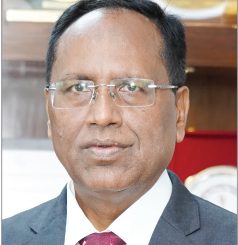
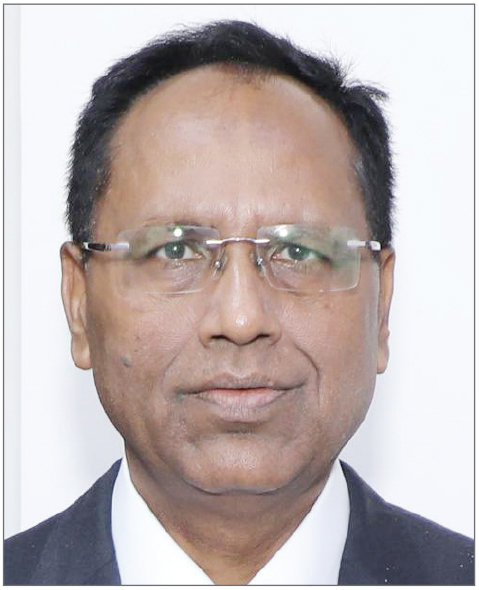
 At the 22nd Annual Conference on Hydropower, Raj Kumar Chaudhary, Chairman and Managing Director, NHPC and SJVN Limited, highlighted the crucial role of hydropower in India’s energy transition. He emphasised the sector’s untapped potential, ongoing projects and the need for accelerated development. With a focus on pumped storage, regional water security and renewable energy integration, his address underscored NHPC’s commitment to sustainable growth and energy resilience. He also stressed the importance of collaboration and innovation in driving the sector forward. Edited excerpts…
Today we meet at a pivotal juncture in India’s power sector, one marked by rapid advancements, ambitious goals and pressing challenges. The hydropower sector stands as a critical pillar in the energy transition, uniquely positioned to ensure a greener, more resilient and sustainable future for generations to come.
India’s total power generation capacity is now at an impressive 466.25 GW, encompassing a diverse energy mix that includes over 245.9 GW from thermal, 100.33 GW from solar, 48.37 GW from wind, 11.4 GW from biomass, around 5.1 GW from small hydro, 8.18 GW from nuclear and more than 47 GW from conventional hydropower, including 4,750 MW from pumped storage schemes. Hydropower, including pumped storage, presently contributes only 10 per cent of today’s energy basket. While this is a significant figure, it also highlights the immense untapped potential of this renewable energy source.
As per the reassessment study carried out by the Central Electricity Authority (CEA), the total potential of conventional hydropower is 133 GW, while the identified pumped storage potential is estimated at around 176 GW. However, with the addition of off-stream closed-loop pump storage schemes, the pumped storage potential is almost 181.4 GW. Despite huge resources, only around 35 per cent of conventional hydropower potential has been harnessed so far.
One of the oldest pumped storage project in the country is the Purulia PSP in West Bengal which was developed many years ago and today, the 900 MW project is successfully running.
Although the development of PSP hydropower has not progressed at the desired pace, there is a strong inclination among developers towards this segment. Currently, 28 large hydroelectric projects totalling 13,998 MW are under construction across India. Additionally, six PSPs with a combined capacity of 7,970 MW are also under construction. However, a few hydro projects with a total capacity of 1,236 MW are currently stalled. Resolving the challenges for these projects will help unlock the much-needed clean energy for the nation.
Looking ahead, the CEA has already concurred 11 hydroelectric schemes, including PSP with an aggregate capacity of over 9,000 MW, over the past five years. Furthermore, 11 hydroelectric schemes totalling 8,036 MW and 44 PSPs aggregating over 60,000 MW are at the survey and investigation stage for detailed project report preparation.
The all-India peak electricity demand and electrical energy requirement is projected to reach 334.8 GW and 2,280 BUs respectively by 2029-30. As per the Optimal Generation Mix Report prepared by the CEA, a generation capacity of 777 GW is projected by 2030, with hydropower accounting for 53,860 MW of capacity, or around 6.93 per cent of the energy basket. Pumped storage capacity is projected to rise to around 19,000 MW, or 2.44 per cent of the total energy basket. Achieving these targets is crucial for meeting India’s commitment under the Nationally Determined Contributions by 2030, including the target of 50 per cent of installed capacity from non-fossil fuel sources as declared by our Honourable Prime Minister during COP26.
Hydropower offers unmatched advantages, including its long operational life, low carbon footprint, and capability to provide peak power and ancillary services.
Projects such as the Bhakra Beas dam, more than 37-38 years old till date, continue to generate more than their design energy. Hydropower plants not only produce clean energy but represent a multidimensional strategy for regional growth, addressing a range of national and local priorities. It provides water security and strategic importance. For instance, projects such as the Subansiri Lower hydroelectric project (HEP) at the Assam-Arunachal Pradesh border, the Dibang multipurpose project in Arunachal Pradesh, and the Siang multipurpose project in Arunachal Pradesh will not only generate green energy but also address national concerns, especially in the light of planned upstream dams in the Tibet region. The Upper Siang multipurpose project is being planned mainly for water security. The dam is expected to mitigate the adverse effects of reduced water availability during the lean season. The project is primarily aimed at ensuring flood moderation and water security in the area, and enhancing the safety of the downstream population.
NHPC has 28 power stations with over 7,200 MW currently in operation. As of now, we are constructing various hydro projects with a capacity of 9,314 MW, which are at different stages of construction and are expected to be commissioned progressively by 2032. The 2,880 MW Dibang project will be commissioned in 2032.
While NHPC has been present in the conventional hydropower project segment, we have also diversified into solar power, wind power and green hydrogen over the past few years.
The 2,000 MW Subansiri Lower HEP is the second largest project under construction after Dibang multi purpose project. Three units of the project are expected to be commissioned by May 2025, with full commissioning planned for March 2026. We also plan to commission all four units (200 MW each) of the 800 MW Parbati II HEP this year. The tailwater from the Parbati II project will flow into the reservoir of the Parbati III project. With the commissioning of the Parbati II project, energy generation at Parbati III will increase by more than 1,200 MUs a year. We are also constructing conventional hydropower projects under joint ventures with Jammu & Kashmir.
NHPC, along with other key public sector undertakings (PSUs) such as SJVN Limited, THDC Limited and North Eastern Electric Power Corporation Limited, has also been allotted 12-14 GW of projects in Arunachal Pradesh. The state has a hydro potential of over 50,000 MW, most of which is untapped. Earlier, from 2004 to 2010, projects whose pre-feasibility reports (PFRs) were under preparation were transferred to various private developers for execution. Unfortunately, due to high risks and long gestation periods, as well as various other reasons, the projects could not be initiated. The government has therefore decided to take all those projects back. In 2022, 13 HEPs were assigned to the four hydro central PSUs. The largest of these projects is the 3,097 MW Etalin project, which is assigned to SJVN Limited. We are expediting work on the ground for this project and aim to award all packages within the next one to two years.
For PSPs, several State Governments have approached us. We have formed a joint venture with Andhra Pradesh Power Generation Corporation Limited (APGENCO), and the Andhra Pradesh government has assigned five PSPs to the joint venture company, APGENCO NHPC Green Energy Limited (ANGEL). In Gujarat, we are preparing the PFR for one PSP. In Maharashtra, we are preparing the PFR and DPR for four PSPs. In addition, we are taking up one PSP project each in Tripura and Chhattisgarh. Cumulatively, we are pursuing a total of around 20 GW of PSP projects, which are at different stages.
Currently, 4,750 MW of PSPs have been commissioned in India. However, of this capacity, 1,200 MW at the Sardar Sarovar project is not operating in the pumping mode. We are working with the Gujarat government to operationalise this project, and our team is determined to make it functional by collaborating with the equipment manufacturer.
We are also helping states in diagnosing and addressing performance-related issues in their projects. For instance, we have rectified issues in one of the hydropower projects (of 50 MW capacity) in Kerala, which was operating at 25 MW capacity. Recently, the Jammu & Kashmir government, during a meeting with the Ministry of Power, requested the power minister to direct NHPC to survey its projects. In response, we have formed a team to visit each hydropower plant and the team has conducted surveys, identified issues and submitted a report to the state government for remedial measures.
There is immense potential for hydropower in India. Collaboration between various stakeholders and the spirit of innovation is the need of the hour. This will help in driving the sector forward and achieve faster growth of hydropower and PSP capacity.