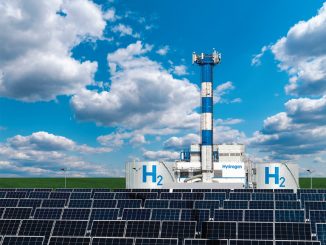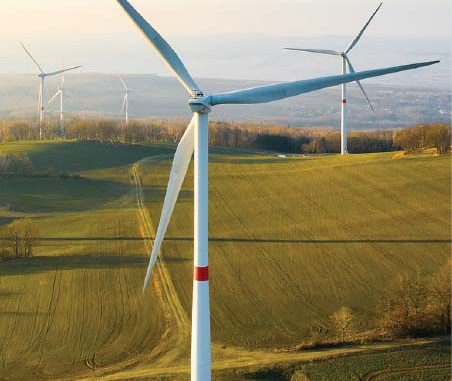
In order to reach their renewable energy targets, various nations aim to add large wind power capacities in the coming years. This will entail more, larger projects; increased hybridisation with other renewable energy sources such as solar power; and adoption of offshore wind. The increasing scale, size and complexity of projects will make manual operation and maintenance (O&M) of wind turbines quite cumbersome and inefficient, given the infrastructural requirements of wind plants and turbine hub heights.
Thus, the wind industry’s focus is on wider integration of automation and digital tools to improve efficiency, and save time and manpower costs. Particularly in the case of offshore wind projects, digitalisation can be extremely useful, as it might not be possible to carry out routine manual O&M. “Digitalisation” covers various aspects such as advanced computers, cloud computing, extensions such as sensors, the actual data and the connectivity between computers and equipment. Only data collection is not sufficient – it is equally important to interpret that data with AI-enabled analytics systems.
Wind turbines, unlike solar power plants, have many moving components such as gears and motors, that are prone to breakdowns. It is important to regularly monitor their health and performance, and this is where advanced remote monitoring tools can play a major role. These monitoring systems can not only monitor the plant yield, but also assist in timely diagnosis and rectification of faults, so as to prevent plant downtime. They are often integrated with advanced AI-based analytical tools integrated with machine learning to carry out predictive maintenance. Thus, generation patterns and equipment health can be monitored, and AI can now help predict faults well in advance. As data volumes increase and become more complex, big data analytics can handle huge volumes of a large variety of data at high velocities.
As in other infrastructure sectors, digital twin technology is being increasingly experimented with in the wind O&M space. A digital twin is essentially a virtual copy of a physical wind power plant, with processes, systems, conditions and equipment accessible on the virtual screen. There are several benefits of creating a digital twin, from minimising downtime through remote monitoring, to decreasing the cost of production and increasing profit margins. This enables proactive processes and helps eliminate the need for manpower at the generation site. It involves real-time remote monitoring of the asset, helping the operator predict equipment failures and increase operational efficiency by providing insights that are otherwise hard to achieve. It can also help ascertain the remaining life of components to help plan replacement schedules and optimise generation.
Along with AI-based analysis and remote monitoring, drones are also increasingly being used at wind power project sites to reduce manpower requirements. Flying drones help provide greater detail than ground crews, and are often used for site assessment and O&M. While the initial costs of fully automatic drones may be high, they greatly help in saving on operation time and costs. Integrating these autonomous drones with AI and complex analytics can help in further improving O&M efficiency and reduce project downtime.
In addition to drones, various robots are also being deployed at wind power project sites to automate certain operations. For example, crawling robots approach a structure’s surface and detect faults in materials by using radiation, while driving robots manage the supply chain, right from transporting equipment to unloading and installing it.
Traditionally, most wind power plants have relied on manpower for routine O&M tasks. Further, in most cases, original equipment manufacturers of wind turbines have been responsible for the O&M of wind power plants. However, owing to the advancements in digitalisation, and in order to optimise costs, developers and owners of large project portfolios are now resorting to self O&M.
Going forward, more wind power plants are expected to integrate advanced digital tools and automation technologies to reduce the dependence on manpower. This will help them reduce project downtime and improve generation. For developers or operators with multiple projects at various locations, remote monitoring through a central control hub can help manage all assets with limited physical interference.
Net, net, automation and digitalisation will completely transform the wind O&M space in the years to come.