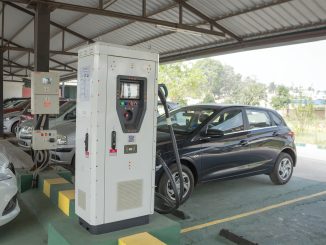
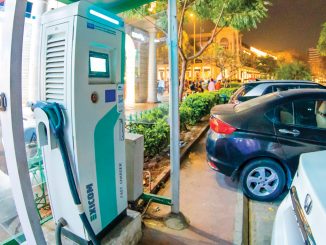
The Government of the National Capital Territory of Delhi (GNCTD) has issued the draft Delhi EV Policy 2026-2030. The policy aims to improve air quality and create a supportive ecosystem for electric mobility in the national capital. The policy outlines key objectives to accelerate the adoption of electric vehicles (EVs) across all major vehicle segments and support the development of a comprehensive public and private charging network across Delhi. It also focuses on building a robust EV supply chain, including battery recycling, servicing, and component recovery.
Additionally, the policy aims to improve air quality by reducing dependence on internal combustion engine vehicles, while ensuring fiscal efficiency and transparent implementation. Under the policy, purchase incentives will be disbursed through direct benefit transfer to eligible buyers, including individuals, firms, and companies that are residents of Delhi and register their vehicles in the city. Beneficiaries will be required to apply for subsidies through a mechanism notified by the Transport Department, GNCTD.
For electric two-wheelers, the policy sets an eligibility cap of Rs 225,000 (ex-factory price). Incentives will be provided on a declining basis over three years. This includes Rs 10,000 per kWh (up to Rs 30,000) in the first year, Rs 6,600 per kWh (up to Rs 20,000) in the second year, and Rs 3,300 per kWh (up to Rs 10,000) in the third year. For electric three-wheeler auto-rickshaws (L5M), fixed incentives of Rs 50,000, Rs 40,000, and Rs 30,000 will be offered in the first, second, and third years, respectively. Meanwhile, electric four-wheeler goods vehicles (N1) will receive incentives of Rs 100,000 in the first year, Rs 75,000 in the second year, and Rs 50,000 in the third year.
The policy further states that the eligibility of EV models for purchase incentives will be aligned with the PM E-DRIVE scheme and any subsequent schemes notified by the Government of India.