The densely populated eastern state of West Bengal relies heavily on thermal power to meet its power requirements. The state has one of the largest coal reserves in India, with rich deposits concentrated in districts such as Darjeeling, Bardhman, Jalpaiguri, Bankura and Purulia, which makes it a suitable choice for power generation. In fact, thermal power makes up 9,197 MW of the total 11,180 MW of installed power capacity in the state.
In contrast, renewable energy development in the state has been lagging. West Bengal has a moderate solar power potential of 6,260 MW, of which barely 166 MW has been installed as of February 2022. The state has not fared better with other renewable energy sources either, with just 98 MW of small hydro and 322 MW of bioenergy having been deployed till date, leading to a total installed renewable energy capacity of 587 MW. It also has about 1,400 MW of hydropower capacity, which takes the entire non-fossil fuel power capacity to roughly 2,000 MW.
Thus, the state has a long journey ahead in expanding its renewable energy capacity, especially when compared to some of the other states that have already amassed double-digit GW renewable energy portfolios. On the plus side, the state’s renewable energy capacity is greater than that of its neighbours Bihar (387 MW) and Jharkhand (96 MW) and almost at par with another neighbouring state, Odisha (597 MW).
Moreover, in recent years, West Bengal’s authorities have been making efforts to shed some of its dependence on coal. This is partly due to the thrust of the central government and corporates on clean energy deployment as well as the increasing cost viability of renewable energy, particularly solar power. Thus, small but encouraging developments have occurred, which present a not-so-gloomy picture of the state’s clean energy sector.
This article highlights the key recent project announcements and regulatory updates, as well as the outlook for the future of renewable energy development in West Bengal…
Recent tenders and projects
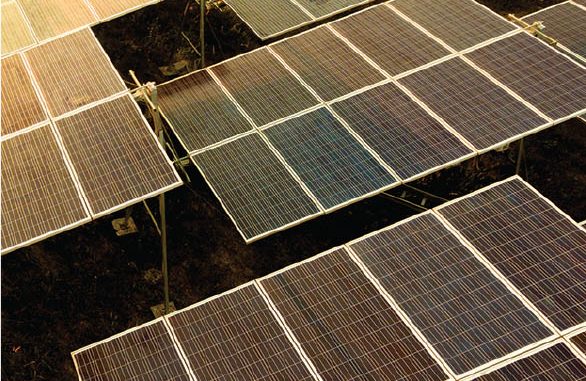
Many tenders and projects have been announced in West Bengal’s renewable energy space in the past few months. Most of these projects are small compared to the larger solar farms being built across the country. Moreover, much of the development has been limited to solar power, owing to its cost-competitiveness and versatility. Recent solar projects in the state include a mix of ground-mounted, rooftop and floating solar assets.
The recent project announcements (in chronological order):
- June 2021: Ciel & Terre India, a subsidiary of Ciel & Terre International commissioned a 5.4 MWp floating solar project at the Sagardighi thermal power plant. The project is owned by West Bengal Power Development Corporation Limited (WBPDCL), and Bharat Heavy Electricals Limited (BHEL) is the engineering, procurement and construction (EPC) partner. Ciel & Terre India has completed the plant engineering, float supply, anchoring and mooring, and supervision of the project. The project is spread over an area of 10.22 hectares and has been constructed using Ciel & Terre India’s Hydrelio® patent Equato floats, along with BHEL’s 16,880 solar PV panels with 320 Wp capacity.
- August 2021: West Bengal State Electricity Distribution Company Limited (WBSEDCL) invited bids to empanel agencies to install 50 MW of grid-connected rooftop solar projects on residential buildings across West Bengal.
- October 2021: WBPDCL issued a tender to select an EPC contractors to set up two 10 MW grid-connected ground-mounted solar projects on a turnkey basis. These projects will be installed in two phases at the Santaldih thermal power station, Purulia. In the same month, Vikram Solar commissioned a 1 MW ground-mounted solar power plant for the Kolkata Port Trust, located at the Haldia Dock Complex. The solar power generated from the project would be used to power around 1,400 staff quarters within the port’s township.
- November 2021: Durgapur Projects Limited (DPL) issued a bid to construct a 7 MW ground-mounted solar project in Durgapur.
- December 2021: The Steel Authority of India issued a request for proposal for a turnkey 4 MW floating solar project at its IISCO steel plant in West Bengal’s Paschim Bardhaman district. Further, WBPDCL issued a tender for the development of 8 MW of solar plants in Durgapur. In addition, WBPDCL invited bids for the installation of 22.5 MW of floating solar projects. The capacity will be split across three locations – 10 MW at Bakreshwar, 7.5 MW at Santaldih and 5 MW at Sagardighi.
- January 2022: The West Bengal government-run DPL issued a tender for setting up a 5 MW grid-connected solar power plant at its premises on a turnkey basis.
- March 2022: CIL Navikarniya Urja Limited, on behalf of Bharat Coking Coal Limited (BCCL), invited bids to set up a 25 MW solar power plant on EPC basis. The project will be deployed at the Bhojudih coal washery, BCCL, in Purulia. The solar power from this project will be used to meet the captive requirements of different locations in Jharkhand.
In addition, SJVN recently signed an agreement with the Damodar Valley Corporation (DVC) for setting up 2 GW of solar projects. The development of renewable energy projects is proposed to occur at different locations within the command areas of SJVN and DVC. The Kolkata-headquartered DVC has many large waterbodies under its management in the state of West Bengal, which can be used to set up floating solar farms.
Tackling grid concerns
Setting up adequate transmission systems for transporting solar power remains a concern across the country. While some progress has been made, there remains a lot of room for upgradation and expansion. West Bengal, like many other Indian states, suffers from grid-related concerns. On the positive side, many of the proposed solar projects are being set up at existing power generation or related facilities, thus minimising the need for significant transmission augmentation.
To further improve grid conditions, a $135 million loan from the World Bank has been recently sanctioned for improving the operational efficiency and electricity supply in selected areas in West Bengal. The funds will be used to improve the state’s grid systems and the institutional capacity of WBSEDCL.
The state still has many remote areas that receive erratic power supply and even suffer from prolonged power cuts. To ensure quality and cost-effective power supply in such locations, solar minigrids are being considered as a feasible option. For instance, West Bengal’s Sunshine Schools project aims to bring solar power to 25,000 remote schools with 250 MW of clean energy deployment by 2030. The project has a target to install solar systems at 1,000 schools a year and is run by the West Bengal Renewable Energy Development Agency. As of June 2021, solar-based minigrids had been deployed at 1,800 schools across the state. Similarly, a 250 kW solar power plant is also being set up in the remote island of Gharomara in the Sunderbans. This off-grid facility is being set up by experts from IIT-Kharagpur and will provide power to about 5,000 people. The project is being funded by the Ministry of Science and Technology and will be completed by the end of the year.
Regulatory developments
There have been a slew of regulatory developments in West Bengal’s solar power space that put a positive spin in the state’s present clean energy procurement situation. In January 2021, the West Bengal Electricity Regulatory Commission (WBERC) announced amendments to its Cogeneration and Electricity Generation from Renewable Sources Regulations, 2013. Among notable amendments was the mandate of implementing gross metering for rooftop systems, with a capacity of above 5 kW. Net metering was also permitted for agricultural consumers. Solar systems are eligible for net metering if they have a capacity in the range of 1 kW to 5 kW.
Existing net metering connections will be allowed to operate, but in case of additional capacity installations, their eligibility will be reconsidered. In March 2021, the WBERC had ordered that only solar projects installed before June 30, 2021 were eligible for net metering. In October 2021, the date was extended to December 31, 2021.
A feed-in tariff of Rs 3.20 per unit was also set for projects of up to 5 MW capacity in October 2021. The said tariff is to be reviewed on an annual basis. This generic tariff was calculated based on the average power purchase cost.
Further, renewable purchase obligations (RPOs) of the state were also amended. The RPO percentage of the total power consumption for 2020-21 is 12 per cent; 3 per cent through solar and the rest through non-solar sources. For 2021-22 the RPO percentage is 14.5 per cent, of which 4.5 per cent will be through solar; and for 2022-23, the RPO target is set at 17 per cent, of which the solar target is 6 per cent. After 2022-23, RPO targets will be set by the regulator through a separate order.
Outlook
The small installed renewable energy capacity of West Bengal entails a mammoth task for the state authorities in terms of diversifying the energy mix and adopting cleaner power sources. However, on the positive side, many new projects have been announced and regulatory interventions made in the past few months to promote further development. Interestingly, unlike many other states, most upcoming projects in West Bengal are small scale and distributed rather than very large solar parks. This might help the state avoid various issues such as land constraints or grid concerns, which hamper project development in other states.
Net, net, West Bengal is moving slowly towards greening its energy basket, with small but steady steps.
By Khushboo Goyal