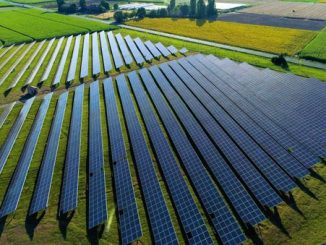
The solar energy industry in India is expanding, with the installed capacity increasing by 11 times between 2014 and 2019, according to the statistics provided by the Ministry of New and Renewable Energy (MNRE). With a total installed capacity of 40 GW, India is now ranked fifth in the world for solar power deployment. Further, the country has quite competitive solar tariffs.
Testing standards are extremely significant, since the quality of the balance of systems (BoS), along with the other components, determines the quality of solar projects. Solar modules, solar batteries and inverters, like other forms of electronics, go through extensive testing before being installed. These tests are essential not only for establishing the quality and performance of such equipment under various environmental conditions, but also to ensure that they meet all safety regulations.
The Bureau of Indian Standards (BIS) is engaged in the activities of standardisation, conformity assessment and quality assurance of goods, articles, processes, systems and services. The Indian standards established by BIS form the basis for the product certification schemes, which provide third-party assurance of quality, safety and reliability of products to consumers.
When it comes to more industry-specific solar standards, the International Electrotechnical Commission (IEC) provides useful guidance for both manufacturers and installers of solar power units. The IEC is a non-profit organisation that creates international assessment standards for a variety of electrical products, including PV panels. Importantly, the IEC does not test or certify solar panels; instead, it provides the standards for other testing institutions to follow when evaluating their quality. Underwriters Laboratory (UL) creates safety standards that are recognised by Nationally Recognized Testing Laboratories, and allows manufacturers to use the UL listing designation on their products that have passed the relevant tests. The American Society for Testing and Materials certification programme encompasses products (including materials, processes and services) and personnel for industries that desire an independent third-party demonstration of compliance to standards and/or are under regulatory pressures to demonstrate standard compliance.
Status and the way forward
India has been a thriving market for solar components, and demand for BoS equipment such as inverters is expected to rise. A solar inverter’s quality is significant because it’s usually the first component in a solar power system that needs to be replaced. Aside from durability, the efficiency of the solar inverter in converting the power produced by the solar panels (DC) to electricity used by the loads (AC) is critical, since it has a direct impact on the solar system’s performance. Given that a solar project has a 25-year lifespan, the government has begun to pay attention to quality issues. On September 5, 2017, the MNRE announced rules for testing power inverters for solar systems and utility-interconnected PV inverters. For mandatory registration with the BIS, the government ordered that the tests be undertaken by labs. However, the entire process remains unclear, and the deadline has been extended multiple times since then.
The MNRE has issued a new notification extending the self-certification of solar PV inverters from June 30, 2021, to December 31, 2021, subject to manufacturers having valid IEC certificates and test reports from international test labs. The MNRE had previously issued a notification in January 2021, extending the deadline for self-certification of solar PV inverters from December 31, 2020 to June 30, 2021. On September 5, 2017, the government published the Solar PV Systems, Devices, and Components Goods Order, 2017, notifying the requirements of mandatory registration with six goods in the schedule. The injunction was extended till April 16, 2018 after negotiations with several stakeholders, including the BIS.
Standards also exist for batteries, which are extremely crucial in off-grid systems. IS:16270 is the stated standard for storage batteries, which are mostly used in solar applications and are lead acid batteries. However, as lithium batteries have grown in popularity, the BIS has already produced standards for evaluating lithium batteries. These lithium batteries have been tested according to the IS:16046 and IS:16047 standards.
While testing, certification and standardisation are critical to ensure the quality of solar power equipment, progress has been slow on this end in India despite the rapid scaling up of solar installations. Manufacturers continue to struggle to get certifications due to the time-consuming process with high testing fees and unavailability of testing facilities, as well as lack of clarity on proper guidelines. Overall, a lot needs to be done in this area, as India moves ahead with its ambitious solar targets to ensure quality equipment for world-class assets.