By Pankhudi Jha
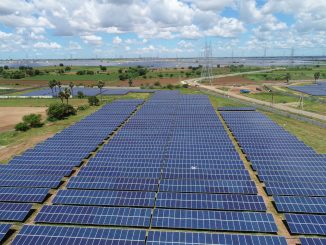
 Solar energy has firmly established itself as the backbone of India’s renewable energy mix, growing from a marginal contributor a decade ago to the single largest source of clean power capacity in the country. As of May 31, 2026, India’s cumulative solar capacity stood at 157.05 GW, with sustained momentum across utility-scale generation, rooftop adoption, and hybrid and off-grid applications.
Solar has been contributing a lion’s share to installed renewable capacity additions. India added approximately 2.8 GW of solar capacity in May 2026, which resulted in around 3.4 GW of renewable capacity addition. Within the cumulative solar capacity of 157.05 GW, ground-mounted utility-scale solar plants account for the major share at 118.79 GW, followed by grid-connected rooftop solar at 27.88 GW, off-grid and PM KUSUM-linked solar at 6.31 GW, and the solar component of hybrid projects at 4.06 GW. State-wise data as of May 31, 2026, shows capacity remains concentrated in a handful of resource-rich states. Rajasthan leads with over 42 GW of solar capacity, followed by Gujarat at over 32 GW, Maharashtra at over 20 GW, Tamil Nadu at nearly 14 GW and Karnataka at over 11 GW.
No segment has shaped India’s renewable story more than solar power. Annual solar installations surged from just 5,658 MW in 2016-17 to 44,614 MW added during 2025-26. This growth momentum is likely to continue with the strong pipeline of upcoming projects. A total of 54 solar parks have been sanctioned, out of which roughly 50 per cent is yet to be developed. In addition, 14 utility-scale solar auctions with 13.92 GW capacity were conducted between August 2024 and March 2026. Meanwhile, rooftop solar has reached 25 GW and is expanding steadily as distributed energy adoption grows. Increasing emphasis is being placed on solar-plus-storage projects to ensure round-the-clock renewable power supply and grid stability.
Recent tariff trends
Recent auction outcomes and pricing trends indicate continued competitiveness in India’s solar market, supported by declining equipment costs and expanding domestic manufacturing capacity. Utility-scale solar tariffs remained low, with Gujarat Urja Vikas Nigam Limited’s 625 MW March 2026 auction discovering a tariff of Rs 2.34 per kWh, while Punjab State Power Corporation Limited’s 500 MW auction in April 2026 saw SAEL Industries secure 250 MW at Rs 3.05 per kWh and the remaining capacity at Rs 3.07 per kWh. Rooftop solar tariffs ranged from Rs 2.97 per kWh to Rs 4.11 per kWh, with the lowest bid recorded in the Solar Energy Corporation of India’s renewable energy service company auction in April 2026. Meanwhile, storage-backed and despatchable renewable energy projects continued to command a premium, with solar-plus-storage tariffs at Rs 3.12-Rs 5.51 per kWh and firm and despatchable renewable energy tariffs at Rs 6.27-Rs 6.28 per kWh, reflecting the increasing value placed on reliability and grid flexibility.
MNRE announces several policy notifications around the ALMM
The Ministry of New and Renewable Energy (MNRE) has notified several updates to the Approved List of Models and Manufacturers (ALMM) framework in recent months.
One, the ministry has relaxed the ALMM requirements for solar module manufacturers by allowing the enlistment of higher-wattage module variants up to 3 per cent above an already approved model without requiring fresh factory inspections, provided there are no changes to manufacturing facilities, production lines, machinery, module design, size, configuration or bill of materials. For variants exceeding the 3 per cent threshold, the National Institute of Solar Energy (NISE) will conduct online I-V curve performance verification before considering enlistment.
Two, the MNRE has clarified that residential rooftop solar consumers participating in the PM Surya Ghar: Muft Bijli Yojana can opt out of central financial assistance under the scheme’s “give it up” provision. Such consumers, if using net metering and applying through the scheme portal, will remain exempt from ALMM-II requirements until March 31, 2027.
Three, the ministry confirmed that there will be no blanket extension of the June 1, 2026, deadline for mandatory ALMM-II compliance for solar PV cells. Projects commissioned on or after that date must procure modules from ALMM-I and cells from ALMM List-II, although limited project-specific relief may be considered for projects that had substantially progressed before the deadline.
Four, the MNRE has also introduced a one-time, one-month transitional exemption from ALMM-II for rooftop solar projects that were installed before June 1, 2026, but net metering commissioning was delayed by discoms for valid reasons. To claim this exemption, developers must apply through a designated portal with supporting evidence, including geographic information system-tagged photographs and invoices, while local discoms handle the strict verification and certification process. During this review period, discoms can permit project commissioning using ALMM-I modules. This relaxation expires one month after issuance, and serves only as a temporary buffer for eligible pending installations, and does not extend the official June 1, 2026, effective date for broader ALMM-II applicability.
Five, the ministry has proposed introducing ALMM-III for solar wafers from June 1, 2028. The proposed framework would require approved wafer manufacturers to operate at least three independent manufacturing units with a combined annual capacity of 15 GW and matching ingot manufacturing capacity. Future ALMM-covered projects would be required to source modules, cells, and wafers from ALMM-I, II and III, respectively, subject to specified exemptions for certain ongoing and previously bid projects.
Domestic manufacturing capacity surges on the back of tariff and non-tariff barriers and PLI
Domestic manufacturing capacity has scaled rapidly on the back of ALMM, basic customs duties and the production-linked incentive (PLI) scheme. Module manufacturing capacity enlisted under the ALMM surged to around 194 GW by May 2026, up from roughly 67 GW in February 2025. Cell manufacturing capacity, currently at around 30 GW, is projected to exceed 70 GW by March 2027 and reach 100 GW by December 2027, backed by investments exceeding Rs 350 billion from companies expanding their cell lines. Wafer and ingot manufacturing, however, continues to lag because of high capital intensity, and intense competition from established Chinese suppliers, leaving the value chain skewed toward modules and cells while upstream wafer and polysilicon capacity remains a constraint.
The risk of supply glut remains in the manufacturing segment. Industry participants at the 19th edition of the Solar Power in India conference organised by Renewable Watch in May 2026 noted that India now has surplus module manufacturing capacity relative to the pace of project awards, PPA signing and actual deployment, creating underutilisation risk for several manufacturers. Several companies are pursuing backward integration, investing in cell production, glass, junction boxes and other balance-of-system components to reduce import dependence, but the risk of not attracting enough domestic demand remains for them.
Geopolitical risks impacting module and battery prices
Global supply chains for solar equipment have faced renewed disruption. The West Asia conflict has driven volatility in crude oil prices and in metals such as aluminium and copper, prompting a rethink of supply chain resilience. India’s solar module exports, particularly to the US, declined by 42 per cent in FY 2025 due to stricter US scrutiny of Chinese-origin inputs and higher tariffs on Indian modules, diverting export volumes back into the domestic market.
The speakers at the conference flagged that while the PLI programme has been a commendable step, the manufacturing value chain remains structurally unbalanced, with module capacity growing faster than cell capacity and wafers and polysilicon remaining the principal bottleneck. Battery prices have also risen by close to 20 per cent in recent months due to global demand pressures, a trend that could affect the economics of upcoming storage-linked solar auctions if global uncertainty persists.
Growing focus on decentralised solar applications
The country’s long-term energy transition goals are ambitious. India aims to install 500 GW of non-fossil fuel capacity by 2030 and achieve net-zero emissions by 2070. Solar power is expected to contribute the largest share of this expansion. However, achieving these targets sustainably will require the deployment of decentralised solar applications as well. Significant budget allocation for PM-KUSUM and PM Surya Ghar points to the importance of decentralised solar applications. Conventional utility-scale solar parks alone cannot accommodate the scale of capacity required without creating significant land-use conflicts. By 2050, solar deployment could require up to 93 million hectares of land, equivalent to nearly 2.84 per cent of India’s geographical area. Given that agriculture already occupies approximately 58.7 per cent of the country’s land, future solar growth will increasingly depend on integrated land-use approaches that combine energy generation with existing economic activities.
This is driving growing interest in agrivoltaics (agri-PV), floating solar and decentralised solar systems. Agrivoltaics, which allows agricultural production and solar power generation to coexist on the same land parcel, represents one of India’s largest untapped renewable energy opportunities. India’s agrivoltaics potential ranges between 1,192 GW and 2,129 GW, depending on power density assumptions of 0.42 MW to 0.75 MW per hectare and approximately 2.835 million hectares of agricultural land across selected crop categories have been identified as suitable for agri-PV deployment after accounting for state-wise cropping intensity and agricultural practices. Beyond addressing land constraints, agrivoltaics can enhance farmer incomes, improve water-use efficiency and strengthen rural energy access, making it a critical component of India’s long-term solar strategy.
Similarly, floating solar is emerging as another significant growth avenue. The MNRE, through a study conducted by the NISE and IIT Roorkee, recently assessed India’s floating solar PV potential at more than 102 GWp. This raises India’s total assessed solar potential to approximately 3,445 GWp. Maharashtra, Madhya Pradesh, Karnataka, Odisha and Telangana were identified as the states with the highest floating solar potential. Recognising the segment’s ability to reduce land acquisition requirements while improving reservoir utilisation, the MNRE is currently working on a dedicated scheme to accelerate floating solar deployment across the country.
Under PM-KUSUM, substantial progress has been made across all components as of May 2026. Under Component A, which supports decentralised grid-connected solar plants, 1,437.77 MW of capacity has been installed against a sanctioned capacity of 10,000 MW. Under Component B, 1,124,704 standalone solar pumps have been installed against the sanctioned deployment of 1,307,190 pumps. Under Component C (individual pump solarisation), 15,405 pumps have been solarised against sanctioned installations of 55,392 pumps. Meanwhile, under Component C (feeder-level solarisation), 1,589,432 agricultural feeders and pumps have been solarised against the sanctioned deployment of 3,536,602. These deployments are gradually reducing farmers’ dependence on subsidised grid electricity and diesel irrigation.
 At the same time, the PM Surya Ghar programme is further accelerating rooftop solar adoption among residential consumers. As of May 2026, more than 1.12 million applications had been received, while 325,479 subsidy disbursements had been processed and 300,234 rooftop systems had been installed. The scheme is expected to play a pivotal role in mainstreaming household solar adoption, reducing electricity bills, and creating a more decentralised and resilient electricity system.
Market outlook
Despite strong growth momentum, several structural challenges continue to constrain sector expansion. One of the most pressing issues remains transmission infrastructure. Renewable energy capacity additions have consistently outpaced the development of transmission networks and storage infrastructure, creating grid bottlenecks in several states. Curtailment remains a concern, particularly during periods of high renewable generation, while transmission evacuation constraints continue to affect project viability.
Additionally, more than 44 GW of renewable energy capacity remains stranded due to unsigned power purchase agreements and power sale agreements, despite many projects having already secured letters of award. This reflects growing mismatches between generation capacity development and power procurement planning by distribution companies. To address this issue, MNRE has proposed a one-time, non-subsidised relief package combining both demand-side and supply-side interventions.
Land acquisition challenges, right-of-way costs for transmission infrastructure, community acceptance issues and financing constraints also remain persistent barriers. In the rooftop solar segment, consumer concerns regarding system quality, vendor reliability and access to affordable financing continue, leading to slow adoption in certain markets despite generous subsidy support.
Nevertheless, the sector’s long-term outlook remains highly positive. The market is diversifying beyond traditional utility-scale solar parks toward distributed generation, commercial and industrial open access projects, floating solar installations, agrivoltaic systems and storage-backed renewable energy procurement models. New tender structures for contracts-for-difference will create new pathways for renewable integration.
The next phase of solar growth will be defined not merely by the addition of gigawatts but by the creation of a more flexible, decentralised, land-efficient and storage-enabled renewable energy ecosystem. The convergence of agrivoltaics, floating solar, distributed generation, battery storage and grid modernisation will ultimately determine the pace and sustainability of India’s clean energy transition.