 Urban India is facing growing challenges in managing municipal solid waste (MSW) as rapid urbanisation, population growth and changing consumption patterns continue to increase the volume of waste generated in cities. Many urban centres struggle with issues related to waste segregation, collection, processing and disposal. Landfills remain the dominant method of waste disposal in several cities, often leading to environmental and health concerns. In this context, policymakers and urban administrators are increasingly exploring ways to extract value from waste streams while reducing landfill dependence. Waste-to-energy (WtE) has emerged as one of the approaches being considered within this broader framework. By converting suitable fractions of municipal waste into electricity or other forms of energy, such projects seek to address both waste management and energy generation challenges. However, the feasibility and effectiveness of such systems depend on multiple factors, including waste composition, segregation practices, technology choices and economic viability.
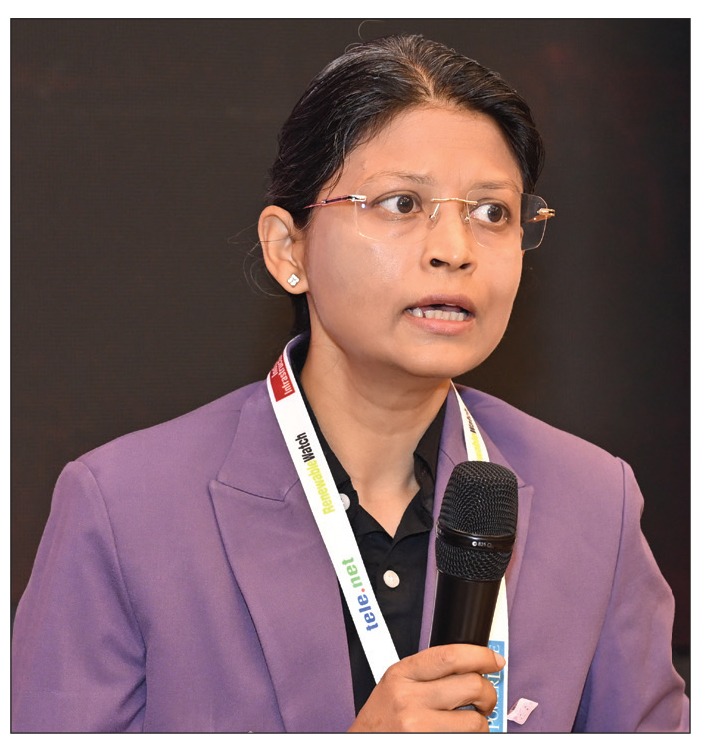
Speaking at the “Solid Waste Management in India” conference, organised by Renewable Watch, Padma Jaiswal, IAS, Secretary to the Government of the National Capital Territory of Delhi, discussed the role of WtE within India’s urban waste management landscape. She emphasised the need to examine solutions in the context of local waste characteristics, energy policy developments, economics of power generation and environmental impact. Edited excerpts…
Decentralised approach for WtE projects
The Indian government’s evolving energy policy is placing significant emphasis on non-fossil and decentralised sources of energy. In addition to large-scale renewable projects, distributed energy systems such as rooftop solar, bioenergy and WtE plants are being encouraged to support grid resilience and diversification of the energy mix.
The power sector is gradually moving towards a decentralised model in which small energy producers, including households and community-level projects, can contribute electricity to the grid. Initiatives such as rooftop solar programmes have already enabled consumers to become “prosumers”, generating electricity for their own use while feeding surplus power into the grid.
The same decentralised approach can be applied to WtE projects. However, the viability of such projects depends heavily on the economics of energy generation. The cost of producing electricity from waste must be evaluated in comparison with other renewable sources such as solar, wind and bioenergy. Ultimately, energy pricing determines whether WtE projects can create a sustainable value chain for producers, utilities and consumers.
One of the key challenges in scaling WtE projects in India is the diversity of waste characteristics across regions. Waste composition can vary significantly even within short geographic distances due to differences in consumption patterns, climate conditions and urban density. Waste management policies therefore cannot follow a one-size-fits-all approach. Instead, they must be designed around local conditions, particularly in terms of waste composition, population density and available infrastructure.
Large metropolitan areas may be able to sustain large-scale WtE plants. However, such projects may not always be suitable for smaller municipalities. Smaller cities often lack sufficient waste volumes, financial resources and grid integration infrastructure to support large projects. In such cases, decentralised systems or smaller hybrid models may provide more practical solutions.
Economic viability and the importance of end-to-end planning
Evaluating the complete value chain of WtE projects is essential. Generating electricity from waste alone does not guarantee the success of such projects. Viable markets for the energy produced must be identified, and appropriate transmission, distribution and pricing mechanisms must be in place. In many situations, energy generated from waste may need to be utilised locally rather than exported to the grid. To this end, decentralised WtE plants, for example, could supply electricity for applications such as electric vehicle charging stations or nearby industrial activities.
In sum, WtE projects may face challenges in achieving financial sustainability without a clear plan for energy utilisation and pricing. A thorough assessment of both production costs and potential revenue streams is therefore necessary before implementing such facilities.
Waste segregation as a prerequisite for the success of WtE projects
Waste segregation is a critical factor determining the success of WtE projects. In many Indian cities, inadequate segregation practices result in mixed waste reaching processing facilities. Waste ideally needs to be segregated within 48 hours of generation. When segregation is delayed, moisture content increases and the calorific value of the waste declines. This reduces the efficiency of WtE plants and can also lead to higher emissions when incineration-based technology is used. Improving waste segregation practices is therefore essential for ensuring the operational efficiency of WtE facilities.
The absence of proper segregation can also create environmental and public health concerns. Poorly processed waste may release hazardous pollutants, including heavy metals, which can affect nearby communities. Several studies have indicated elevated levels of toxic substances in areas surrounding certain waste processing facilities, highlighting the need for improved waste management practices.
Integrating the informal sector into waste management systems
The informal sector has historically played a significant role in India’s waste management ecosystem. Informal waste collectors and recyclers contribute substantially to resource recovery and recycling activities. These workers possess considerable practical knowledge about waste streams and material recovery processes. Integrating them into formal waste management systems can improve operational efficiency and enhance recycling outcomes. Formalising their role within organised waste management frameworks could also create stable livelihood opportunities for thousands of workers who currently operate in the informal economy.
Addressing legacy waste and landfill challenges
Many major Indian cities are dealing with large volumes of legacy waste accumulated at landfill sites. Processing these waste piles requires specialised technologies and long-term remediation strategies. In some cases, waste recovered from landfills is being utilised as refuse-derived fuel or supplied to cement and industrial plants for energy recovery.
However, large-scale remediation of legacy waste remains a complex and resource-intensive undertaking. The broader objective is to gradually reduce dependence on landfills and move towards a “zero landfill” approach through improved segregation, recycling and waste processing technologies.
Emerging policy and market mechanisms
Several policy initiatives are being developed to support the growth of WtE and other alternative energy systems. One such initiative is the India Energy Stack, a digital platform intended to integrate energy assets and enable peer-to-peer energy transactions. The platform is expected to allow decentralised energy producers to trade electricity in a manner similar to digital payment systems.
Other mechanisms such as carbon markets and environmental, social and governance (ESG) frameworks are also being promoted. These initiatives could create additional revenue opportunities for projects that reduce emissions or generate renewable energy from waste. Encouraging carbon trading and ESG-based investments may help attract greater private sector participation in sustainable infrastructure projects.
Outlook
The future of waste management in India will likely involve a combination of large-scale infrastructure and decentralised systems. Large WtE plants may continue to play an important role in major urban centres, but smaller distributed solutions are also necessary to address the diverse waste management requirements of different regions.
Hybrid models that combine centralised processing facilities with decentralised waste treatment systems can offer a more balanced and resilient approach. Such systems allow cities to adapt waste management strategies to local conditions while maintaining overall efficiency.
Public participation will also remain essential for achieving sustainable waste management outcomes. Improved segregation practices, community engagement and collaboration between government agencies, private developers and civil society organisations will play a crucial role in building a circular and resource-efficient waste management ecosystem in India.