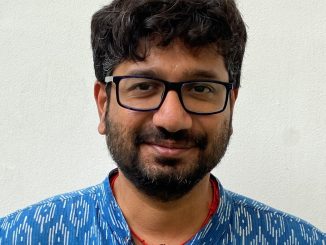
India’s waste management sector is moving through a phase of formalisation, driven by stronger segregation norms, traceability requirements and extended producer responsibility (EPR). Founded in 2006, Eco Wise Waste Management operates across multiple waste streams over the entire value chain. In an interview with Renewable Watch, Manik Thapar, Founder and Chairman, Eco Wise Waste Management, discussed the changing regulatory landscape under the Solid Waste Management (SWM) Rules, 2026, the evolution of the organised waste management market, and the growing role of circular economy models and EPR frameworks. Edited excerpts…
Could you briefly outline Eco Wise’s current business focus and the main services driving growth today?
Eco Wise is a full-spectrum waste management company. We do not focus on one waste stream alone; we manage the full chain from collection and segregation to processing, recycling and safe disposal through vendor networks. Our services also include product destruction, confidential paper shredding, e-waste management, asset dismantling, sludge removal and EPR certificate generation.
Growth is currently being driven by corporate compliance packages under the SWM Rules, 2026; EPR certificates for paper, plastic, glass and metal; and product destruction for FMCGs and consumer electronics brands. Since April 1, 2026, every bulk waste generator in India is personally liable for its waste. This has shifted waste management from a facilities issue to a legal risk issue for corporates. We process over 100,000 tonnes annually across more than 25 cities and divert 100 tonnes from the landfill every day.
What motivated you to build a full-service waste management platform rather than focus on just one waste stream?
Reality. Waste does not arrive in neat categories. A corporate client generates wet waste from the cafeteria, paper from offices, e-waste from IT, plastic and cardboard from packaging, hazardous waste from maintenance, and sometimes biomedical waste too. You cannot solve this by saying you only handle one material.
Clients want one partner that can handle all their waste streams, compliance requirements and reporting obligations. No two clients generate the same waste profile, so no two service packages are identical. That is why we built a platform rather than a niche business. The informal sector already works this way instinctively. The kabadiwala collects everything and sorts it later. We formalised that logic into a multi-service company with trained manpower, compliance documentation and a branded fleet.
How do you see the Indian waste management market evolving?
The SWM Rules have been the most significant regulatory shift in Indian waste management in a decade. Mandatory four-stream segregation, digital tracking on the Central Pollution Control Board (CPCB) portal, quarterly compliance reporting and environmental compensation by the polluter are not incremental changes. They are a complete overhaul.
The old model of hiring someone cheap to take the waste and not asking where it went is over. Every kg of waste now needs a paper trail from generation to disposal. The companies that can provide traceability, weighment data, vehicle tracking, processing certificates and portal-ready compliance documentation will survive and command a premium.
The market is moving from commodity waste hauling to compliance-as-a-service. India is following the same curve that the US and Europe moved through earlier, only later and at a much larger scale. The organised segment alone is heading towards about Rs 380 billion by FY 2030 at a CAGR of 14 per cent, and that growth is being driven mainly by compliance.
What are the biggest operational challenges in waste collection, sorting and disposal today?
Four challenges stand out. First is the control of informal cartels and mafia over collection territories in most Indian cities. Try to operate in a new area and you will find your trucks blocked and your staff threatened, making entry into new territories difficult and unsafe. Second is the tipping fee model, which is structurally broken. It rewards dumping, not recycling. When revenue rises with the volume sent to landfills, there is little incentive to build processing capacity. Third is working capital. Clients pay in 90-120 days, but we incur daily expenses. Without industry status, there is no priority lending in this sector, so waste businesses are often building infrastructure-heavy operations on micro, small and medium enterprise (MSME) balance sheets at commercial rates. Fourth is manpower. Waste sorting in 45-degree heat is not easy work, and the dignity deficit in this sector is real. We address that through uniforms, training, housing support and by treating workers as employees of a professional company rather than as labour.
What strategies can operators of WtE plants adopt to streamline the supply and quality of waste?
The waste-to-energy (WtE) model in India has an input problem. Indian municipal solid waste has a much lower calorific value than European waste because of high organic content, moisture and informal-sector pre-sorting. Plants end up trying to burn wet, low-energy waste and the economics suffer. The answer is to work with the informal sector, not against it. Kabadiwalas and aggregators are the most efficient pre-sorting network available. They should be integrated as formal supply chain partners, not pushed out. They can recover recyclables better than most mechanical systems and channel the residual fraction to WtE.
WtE plants also need refuse-derived fuel (RDF) preparation infrastructure, including drying, shredding and densification. Long-term offtake agreements with large bulk waste generators are equally important. Spot-market procurement creates operational chaos. The SWM Rules, which mandate the gradual substitution of solid fuel with RDF, should help, but plants will only succeed if they solve the feedstock quality problem.
How do you see the role of circular economy models growing in India?
The circular economy in India already exists; it is just largely informal. Kabadiwalas, raddi dealers and small recyclers have been recovering material for decades without subsidies or formal recognition. The issue is that this ecosystem lacks traceability, quality standards and access to higher-value recycling channels. The circular economy will grow because regulation is now forcing economics into alignment. Once recycled content requirements become mandatory, circularity stops being a philosophy and becomes a supply chain requirement.
How is EPR shaping opportunities in the waste management sector?
EPR creates mandatory demand for recycled material that does not depend on commodity cycles. When EPR certificates are purchased from registered recyclers, and targets rise over time, a price floor is created for recycling. That matters because historically, when virgin plastic was cheap, recycled plastic lost value. EPR changes that. The expansion to paper, glass, metal and sanitary products is especially significant. It creates a dual revenue stream: one from processing material and another from certificate value. However, the main risk is that the system gets captured by certificate traders who never touch the waste. The CPCB will need strong verification if the system is to retain credibility.
What are the key market risks that you face, and how are you navigating them?
Four risks stand out. First is uneven enforcement. The SWM Rules are a strong framework, but if implementation is strict in one city and weak in another, the compliance-led demand becomes unreliable. We deal with that by diversifying geographically. Second is the monopoly-tender structure. Contracts often favour incumbents over capable operators. That limits competition and keeps better operators out.
Third is working capital. Waste companies generally end up financing clients’ waste management interest-free for long periods. Without industry status, access to cheap credit remains limited, and margins are compressed to 8-12 per cent. Fourth is vendor dependence. Around 81 per cent of our operations still run through third-party networks. This gives coverage, but it also compresses margins and creates quality control issues. We are steadily increasing in-house operations in our highest-volume cities.
What policy measures should be implemented for waste management?
One, waste management needs industry status. It lacks a dedicated ministry and priority lending. A dedicated ministry would help bring one national framework, rather than scattered jurisdiction across multiple bodies. Two, the sector needs more competition and outcome-based contracts instead of disposal-led contracts. Three, a reduction in GST rate from 18 per cent to 5 per cent on waste services is required because formal operators are structurally disadvantaged against the informal sector, which operates outside the tax net. Four, waste management MSMEs require subsidised credit access. The sector is capital-intensive, but has no access to priority sector lending. Five, the informal sector should be integrated into the EPR value chain as registered entities, not left outside the system. Kabadiwalas are not the problem. The policy framework that keeps them informal is.
What are your growth plans?
We are targeting Rs 3 billion-Rs 5 billion in revenue by FY 2030. That growth will come from three engines. One, compliance packages under the SWM Rules for corporates, IT parks, malls, hospitals and large housing societies. Two, EPR certificate generation, supported by our processing infrastructure for paper, plastic, glass and metal. Three, increasing in-house operations so we reduce vendor dependence and improve margins. Our immediate focus is Greater Noida and Bengaluru, followed by Hyderabad, Chennai and Pune.
Beyond the business targets, we are building our Meerut plantation further. The aim is to keep scaling as a professional, transparent and impactful waste management company.