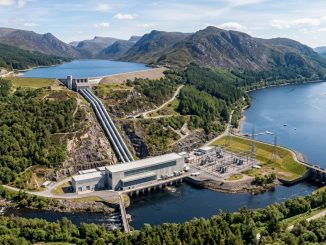
 In a panel discussion on “Private Developers’ Perspective” at Renewable Watch’s Hydro Power in India conference, panellists discussed the pipeline of hydropower projects with a focus on the rapid shift towards pumped storage projects (PSPs). They also highlighted persistent constraints around hydrology assessment, clearances, land acquisition and financing, and outlined the reforms needed to ensure timely delivery.
The panellists included Manoj Kumar Dixit, Chief Operating Officer, Hydro Business, GMR Energy; Pritam Kumar, Chief-Hydro, Tata Power; Vivek Shrivastava, Consultant (PSP&Hydro), Torrent Power; Naresh Telgu, Chief Operating Officer, Adani Green Energy; and Ankur Vashishtha, Senior Vice President, Hydro and PSP, JSW Energy. Key takeaways from the session…
Project pipeline
The hydropower segment continues to maintain a strong and geographically diversified project pipeline across India and neighbouring countries. Conventional hydro capacity is under various stages of development, including projects in Uttarakhand and Arunachal Pradesh, alongside cross-border assets in Nepal and Bhutan. In parallel, several legacy hydro stations, some over a century old, continue to operate efficiently owing to periodic refurbishment, renovation and modernisation measures. This underscores the long asset life and resilience of hydro infrastructure when supported by sustained maintenance and upgrades. Cross-border development remains a strategic priority, particularly in Nepal and Bhutan. In Bhutan, multiple large hydro projects are being pursued under intergovernmental arrangements, reinforcing the long-standing bilateral energy partnership. Joint venture structures involving Indian developers and PSUs are increasingly emerging as the preferred implementation model, enabling risk sharing, capital mobilisation and execution support. While temporary socio-political disturbances have been observed in certain geographies, developers indicated that these are not expected to materially disrupt long-term capacity addition plans.
A prominent structural shift within the pipeline is the accelerated push toward PSPs. Developers that historically focused on conventional hydro are now actively diversifying into long-duration storage assets. At the corporate strategy level, mandates have been issued to build significant PSP portfolios in anticipation of rising grid flexibility requirements driven by renewable energy integration. Several multi-gigawatt PSP portfolios are currently under development across Maharashtra, Uttar Pradesh and Gujarat. State governments have entered into project development agreements in several cases, signalling policy support. Concurrence timelines have improved markedly, with approvals being granted within compressed timeframes.
Focus on PSPs
The discussion highlighted that that the rising share of variable renewable energy in the grid requires a commensurate expansion in storage capacity. Without storage, renewable capacity addition cannot be sustained at scale, particularly as intermittency and intra-day variability begin to significantly impact grid operations. In this context, PSPs were positioned as the only currently viable option for long-duration storage, given their ability to store energy and dispatch it selectively during peak demand hours. A clear trend identified is the increasing preference for off-stream and closed-loop PSP configurations, largely due to their ability to expedite project development and approvals. Developers indicated that these projects offer a relatively smoother clearance pathway. In such cases, the development process is streamlined, with only detailed project report (DPR) clearance requirements, which have been waived for off-stream and closed-loop projects. Beyond this regulatory advantage, off-stream configurations provide benefits from a design and engineering perspective during construction, without major differences in the fundamental project proposition.
The panel also drew a sharp distinction between PSPs and battery energy storage systems in terms of storage duration and asset life. While batteries can provide short-duration storage, typically in the range of two to three hours, PSPs are better positioned to meet long-duration storage requirements of six to eight hours. Batteries were viewed as useful for near-term balancing needs or marginal capacity supplementation, but less suitable as the backbone of long-duration storage at scale. Another comparative advantage highlighted was domestic value chain readiness. India currently lacks adequate technology and raw material access for battery manufacturing, and a significant proportion of battery systems continues to be imported or dependent on global supply chains. In contrast, much of the equipment required for PSP development is manufactured domestically, improving supply reliability and supporting localisation objectives. From a lifecycle perspective as well, PSPs are seen as structurally stronger assets. Batteries typically require replacement within 12-20 years, whereas PSPs can operate for 40 years or more without equipment replacement, with renovation and modernisation programmes further extending operational life. In view of this, the panellists emphasised that PSPs are more economically rational at gigawatt-scale, particularly when assessed over the full asset life rather than on upfront costs alone. Finally, PSPs were positioned not only as storage assets but also as critical grid infrastructure. In addition to dispatch flexibility, they provide inertia and grid stability, functions that are increasingly valuable as conventional synchronous generation declines.
Key challenges
While the risk profile of hydropower projects has improved in certain respects, important structural challenges remain. Geological and hydrological risk mitigation frameworks have evolved over time, yet hydrological risks remain a grey area. In several river basins, actual discharge levels have diverged from the discharge projections approved by the Central Electricity Authority, impacting project planning, generation forecasting and long-term operational performance. Such uncertainties directly affect revenue assumptions and financial modelling. Skill availability was identified as another pressing constraint. The limited pool of competent civil, hydromechanical and electromechanical contractors poses execution risks, particularly for large and complex hydro and pumped storage projects. Developers emphasised the importance of building strong domestic technical capabilities and companies have started inducting large numbers of graduate trainees specifically for hydro. For instance, JSW Energy Limited has developed specialised training programmes, including a structured six-month course to build sector-specific expertise. At the same time, selected operations and maintenance functions are being outsourced to specialised third-party agencies to bridge immediate capability gaps. The financial health of contractors was also highlighted as a systemic concern. Stretched balance sheets and working capital constraints often delay construction timelines. Timely fund flows and structured financial support mechanisms for contractors are essential to ensure adherence to project schedules.
Forest and environmental clearances are also a major cause for delays. International comparisons illustrate the magnitude of the issue. In India, securing all required clearances often takes around two years before construction can commence, followed by land acquisition-related delays. Suggestions such as permitting limited early works or allowing sample collection during the investigation stage, which is currently restricted, were discussed as potential measures to compress timelines. The central concern remains execution certainty. For PSPs, commercial viability is closely linked to time-bound delivery. If a PSP is not completed within approximately four years, its economics may deteriorate significantly.
Land acquisition remains an under-discussed but critical bottleneck. Mismatches and inconsistencies in land records across generations frequently result in prolonged administrative processes. There is a growing view that such processes could be handled more efficiently if government agencies assume greater responsibility once a project is formally notified. This could include clearly specifying the quantum of forest and non-forest land required and establishing a single-window mechanism with predefined compensation frameworks. Such an approach would allow developers to focus on engineering and execution rather than navigating procedural complexities.
Access to affordable financing also remains a structural constraint. Hydro projects continue to attract lending rates in the range of 10-12 per cent, which materially affects viability given their capital-intensive nature and long gestation periods. Additionally, concerns were expressed regarding the current viability gap funding (VGF) framework for battery energy storage systems, which will create an uneven playing field for pumped storage projects.
The way forward
Addressing these challenges will require a coordinated policy and institutional response. Reducing approval timelines through streamlined and parallel processing of clearances is essential to improve execution certainty. Mechanisms that enable early preparatory works, where feasible, could significantly shorten development cycles. Strengthening contractor capacity and financial resilience is equally important. Further, structured support for working capital requirements and improved payment discipline would help stabilise the supply chain and mitigate schedule risk.
On the financing front, targeted government intervention to lower the cost of capital for hydro and pumped storage projects could significantly improve investor confidence. There is a case for providing VGF or equivalent fiscal support to indigenous pumped storage technology, particularly considering the emphasis on domestic manufacturing and the strategic importance of long-duration storage. More broadly, policy support should remain technology-neutral while recognising the strategic value of pumped storage in ensuring grid stability and long-term energy security.
While several supportive measures are already in place and additional reforms are under consideration, enhancing project viability and compressing execution timelines remain central to unlocking greater private sector participation in the hydro and pumped storage segments.