

By Sarthak Takyar
The live air quality index (AQI) at IIT Delhi’s monitoring station registered 341, 319, 323, 319, 427, 379 and 337 at 9 a.m. from January 14-20, 2026, respectively, around the time this article was written. These numbers are either in the “Severe” or “Very Poor” categories and have serious health implications, as per the Central Pollution Control Board.
The average AQI for Delhi in December 2025 was 351, an increase from 294 and 348 in the same month of 2024 and 2023, respectively. In November 2025, it was even higher at 354. In the same month of 2024 and 2023, it was 374 and 373, respectively. Select data has been drawn from press releases issued by the Commission for Air Quality Management (CAQM) in the National Capital Region and Adjoining Areas, which largely highlight only positive developments.
According to the Swiss company IQAir’s World Air Quality Report 2024, which collected particulate matter (PM) 2.5 data from 8,954 cities across 138 countries, regions and territories, India is ranked fifth among the most polluted countries in the world, with an annual average PM2.5 of 50.6 µg/m3, more than 10 times higher than the World Health Organization’s PM2.5 annual guideline of 5 µg/m3. India was home to the most polluted metropolitan area in 2024: Byrnihat, with an annual average PM2.5 concentration of 128.2 µg/m3. Further, according to the report, six of the nine most polluted global cities were in India.
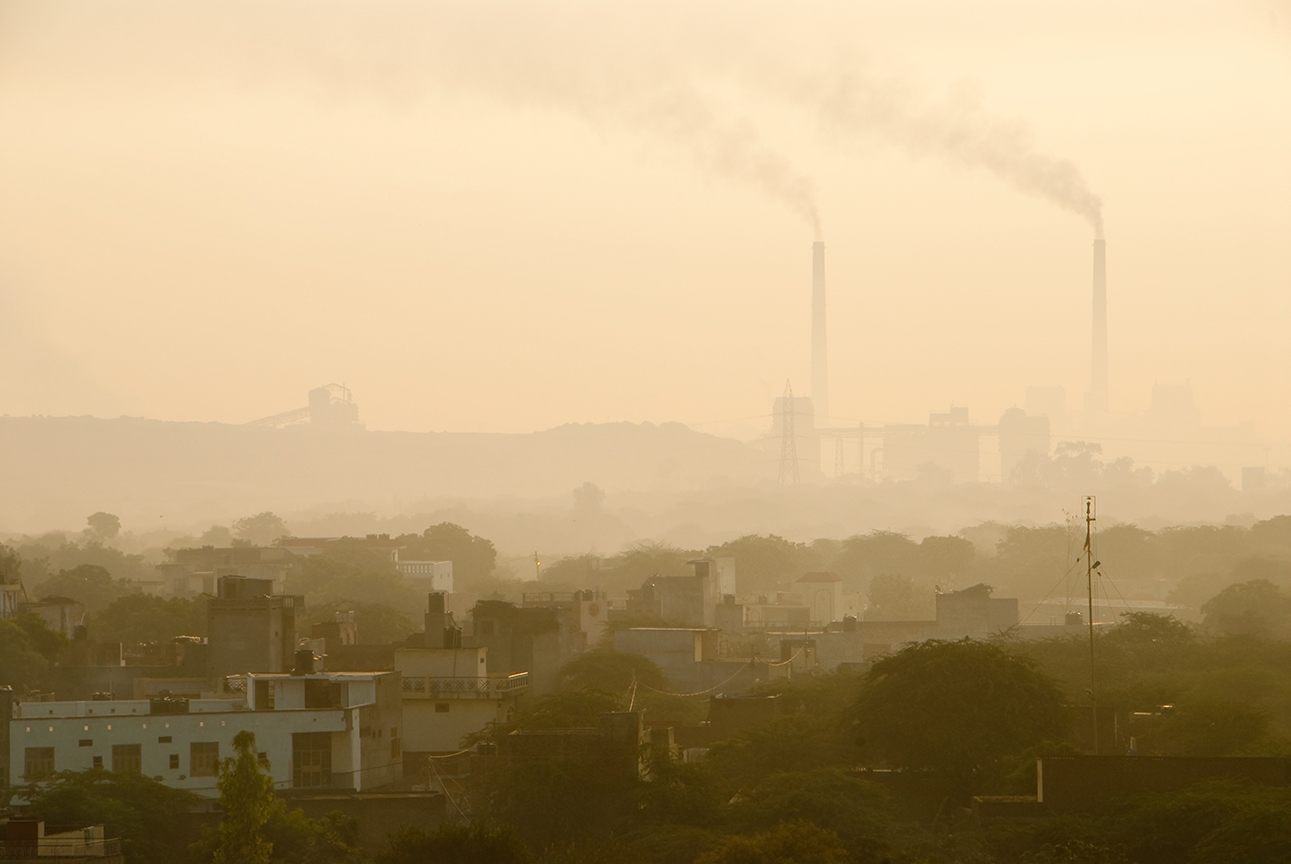
An Indian company’s report points to a similar serious situation. AQI.in’s Worldwide Air Quality Report 2024, based on PM2.5 and AQI data (US standard) across 5,750 cities in 140 countries and regions, puts India third (after Bangladesh and Pakistan). New Delhi is ranked as the most polluted city. Not just that, the top 10 cities with the highest AQI are all in India, primarily from the NCR. Further, 92 of the top 100 cities are from India.
Reasons behind severe air pollution in Delhi-NCR
It is key to nip the issue in the bud and thus find the exact causes for air pollution in Delhi-NCR. Several think tanks have undertaken research in this space. According to The Energy and Resources Institute (TERI)-Automotive Research Association of India’s study titled “Source Apportionment of PM2.5 & PM10 of Delhi NCR for Identification of Major Sources” conducted in 2018, the key contributors in winter are: secondary ions like ammonium, nitrate and sulphate (26 per cent); vehicles (20-23 per cent); biomass burning (22 per cent); dust (15 per cent); industry (10-13 per cent); and diesel generator sets (less than 5 per cent). These factors also contribute to the release of PM10 in varying percentages.
As per the International Forum for Environment, Sustainability and Technology (iFOREST), biomass burning (residential and agricultural) contributes to more than 60 per cent of PM2.5 in Delhi-NCR, followed by industry (25 per cent) and transport (around 6 per cent). Even the March 2023 collaborative study led by the IIT Kanpur found that the high amount of particulate pollution in Delhi during night hours was caused by biomass burning emissions. The study added that “uncontrolled biomass burning for residential heating and cooking in the Indo-Gangetic plain gives rise to ultrafine particles, affecting the health of 5 per cent of the world’s population and impacting the regional climate”.
Research conducted by the Center for Study of Science, Technology and Policy (CSTEP) points to vehicular emissions as the dominant source. “We have conducted modelling studies using global emission inventories and developed sectoral inventories for heavy commercial vehicles (HCVs) and diesel generator (DG) sets. Within the NCR, vehicular emissions are the dominant source of air pollution. Our study on HCVs suggests that older polluting commercial vehicles are a major contributor. Regarding emissions from DG sets, our study shows that Noida is among the top contributors to DG set emissions in India. We also find that nearly 30 per cent of Delhi-NCR’s air pollution is locally generated annually, while the remainder originates outside NCR”, says Swagata Dey, Policy Specialist, Air Quality Sector, CSTEP, in an email interaction with Renewable Watch.
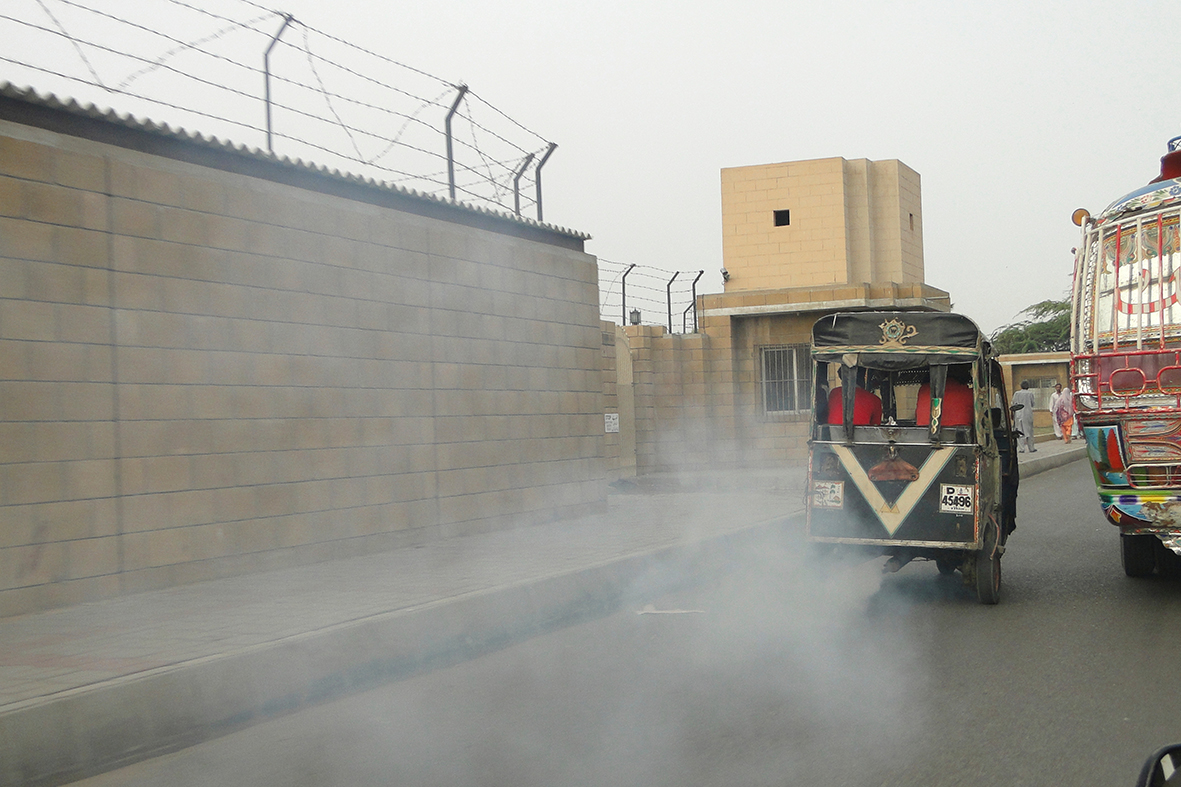
In another email interaction with Renewable Watch, Mohammad Rafiuddin, Programme Lead, Council on Energy, Environment and Water (CEEW), shared that the air pollution problem in Delhi-NCR is a multi-sectoral problem, with transportation, industrial emissions, construction, road dust, waste and open biomass burning being the major year-round culprits. Crop residue burning is a major contributor for around two weeks in late October and early November. “According to CEEW’s analysis of the data from Delhi’s Decision Support System, Delhi’s transportation accounts for 50 per cent of the city’s own PM2.5 levels. Accounting for sources from outside Delhi, too, transport’s contribution to Delhi’s PM2.5 is at least 20 per cent throughout the year. Industrial emissions from units on the periphery and outside Delhi contribute around 10 per cent to the city’s PM2.5 levels in winter. During its peak, crop residue burning’s contribution can be as high as 40 per cent. Clearly, the air pollution problem cannot be solved by solving Delhi’s pollution sources alone. Delhi is part of the larger airshed and thus requires airshed-level air quality management,” adds Rafiuddin.
Meanwhile, a recent analysis by the Centre for Research on Energy and Clean Air (CREA) finds that as much as 42 per cent of PM2.5 pollution nationwide, and nearly one-third of Delhi’s annual load, is attributed to secondary PM, dominated by ammonium sulfate. It forms in the atmosphere from sulphur dioxide (SO2). India is the world’s largest SO2 emitter, with coal-fired power plants alone accounting for at least 60 per cent of these emissions.
Overall, the burning of coal in thermal power plants (TPPs), residential and agriculture burning of biomass, and vehicular emissions are the primary contributors, pointing to solutions within the clean energy and mobility sector. On its part, the government has worked on many fronts to solve the menace of air pollution. These efforts include reducing stubble burning by sourcing excess biomass from farms for bioenergy/bio-ethanol production or for co-firing at TPPs, promoting clean cooking, transitioning to clean fuels for industries and enabling clean mobility. In addition, the Graded Response Action Plan has also been implemented across the NCR in different stages based on air quality, and actions under these stages include the use of anti-smog guns, sprinklers, regulated operation of DG sets and deployment of mechanical road sweeping machines.
Progress under the National Clean Air Programme: Slow implementation and low fund utilisation limit progress
On the policy front, a broader policy initiative across India is the Ministry of Environment, Forest and Climate Change’s National Clean Air Programme (NCAP), which was launched in January 2019. It aims to improve air quality across 130 cities (non-attainment cities and million-plus cities) across 24 states/union territories. NCAP’s initial target was for a reduction of 20-30 per cent in PM10 concentrations by 2024-25 compared to the baseline year of 2017-18. The target was increased to up to 40 per cent or to meet PM10 National Ambient Air Quality Standards (NAAQS), set at 60 μg/m³, by 2025-26. In addition, city-specific targets ranging from 4-15 per cent are also present for reducing annual PM10 concentrations.
Progress under the programme has not been impressive. As per CREA’s recent report “Tracing the Hazy Air 2026: Progress Report on National Clean Air Programme (NCAP)” released in January 2026, of 130 cities under NCAP, 28 still do not have continuous ambient air quality monitoring stations. Moreover, an increase in PM10 concentrations was recorded across 23 cities. In fact, only 51 cities achieved the initial NCAP target of 20-30 per cent reduction in PM10 levels, and only 23 achieved the revised NCAP target of 40 per cent reduction in PM10. While 77 cities reported a reduction in PM10 concentrations, 68 of these still had PM10 concentrations exceeding the NAAQS. Based on PM10 concentration, Delhi, Ghaziabad and Greater Noida are the three most polluted cities. Delhi and Ghaziabad are the second- and third-most polluted cities, respectively, based on PM2.5 concentration.

Apart from the slow pace of execution, the low utilisation rate of funds is another concern. According to the Portal for Regulation of Air Pollution in Non-Attainment Cities, in Delhi, of the total Rs 813.6 million released, only Rs 141 million has been utilised. For select cities in the NCR, a similar trend can be seen. In Faridabad, Haryana, the utilisation is just Rs 532.6 million against a total of Rs 1,071.4 million released. In Ghaziabad (Rs 2,219 million utilised against Rs 2,578.9 million released) and Noida (Rs 315.4 million utilised against Rs 557 million released), the utilisation rate is still better.
In an email interaction with Renewable Watch, Manoj Kumar, India Analyst, CREA, shared recommendations for the NCAP. “India’s only way forward is to strengthen the country’s air quality governance through targeted, science-based reforms. This means prioritising PM2.5 and its precursor gases (SO2 and NO2) over PM10, revising the list of non-attainment cities under NCAP, setting stricter emission standards for industries and power plants, allocating funding based on source apportionment studies, and adopting an airshed-based approach to address air pollution at a regional scale”, he says.
CAQM’s efforts improve the status quo; however, a lot more remains to be done
The CAQM reported significant progress across key pollution sources. As of November 10, 2025, in the industrial segment, the near-universal adoption of cleaner fuels and tighter emission standards has been achieved. Piped natural gas infrastructure now covers 224 of the 240 industrial areas in the NCR, with more than 96 per cent of industries having shifted to approved fuels.
Measures to curb vehicular pollution have also been scaled up. All inter-city buses entering Delhi from the NCR now operate on cleaner technologies, such as electric, compressed natural gas (CNG) or BS-VI diesel. In addition, from November 1, 2025, the entry of BS-III and older commercial goods vehicles into Delhi has been prohibited, except for those registered within the city.
Waste management remains another area of focus. Over 2.3 million tonnes of legacy waste have been bio-mined from Delhi’s dumpsites. To strengthen capacity further, around 7,000 tonnes per day of additional waste-to-energy capacity and 750 tonnes per day of bio-CNG/compressed biogas facilities are under development.
Encouraging trends have also emerged in agricultural burning. According to CAQM data, as of December 1, 2025, cumulative paddy stubble fire incidents across Punjab, Haryana, Uttar Pradesh (NCR), Rajasthan (NCR) and Delhi declined sharply from 78,550 in 2021 to 6,080 in 2025.
However, the true picture is not that rosy. Several concerns continue to cloud the effectiveness of current interventions. First, claims of declining farm fires and stubble burning remain disputed, with inconsistencies in satellite-based assessments suggesting that actual fire incidents may be underreported. iFOREST’s Stubble Burning Status Report 2025 highlights this issue in detail. To put it simply, the current farm-fire monitoring system’s dependence on polar-orbiting satellites, which observe an area only at fixed times (10:30 a.m. to 1:30 p.m. in this case), underreports the farm fires, as the majority of fires occur after the satellite stops observing, which is after 3 p.m. The research finds that more than 90 per cent of large farm fires in Punjab in 2024 and 2025 occurred after 3 p.m.

Second, the blanket exemption granted to nearly 78 per cent of coal-fired TPPs from installing flue gas desulphurisation (FGD) systems warrants reconsideration, as it significantly dilutes control over SOx and NOx. The implementation of FGD system across TPPs has been slow due to execution hurdles. While FGDs can reduce SO2 emissions, their actual impact on PM2.5 and PM10 levels, coupled with increased CO2 emissions (due to additional energy use, mining, transport and chemical processes), water use and costs, raises questions about their overall efficacy among stakeholders.
Some stakeholders find it a financial burden, fearing higher energy charges will push plants down the merit order despatch. As per a Rajya Sabha question dated February 3, 2025, the cost of installing FGD systems is in the range of Rs 8.5 million-Rs 12 million per MW. At the latter cost, the effective increase in tariff is estimated at Re 0.5572 per kWh (first year) and Re 0.4867 per kWh (levellised). Every pollution control measure entails an added cost, and consumers may have a willingness to pay for such improvements.
Third, biomass co-firing in TPPs remains operationally challenging. Reflecting persistent non-compliance, the CAQM recently issued show-cause notices to six power plants within a 300 km radius of Delhi and proposed environmental compensation amounting to Rs 618.5 million. In response, the Association of Power Producers (APP) has stated that the inability of several TPPs to meet biomass co-firing targets in FY 2024-25 was primarily due to limited biomass availability and technical constraints. It noted that the domestic market for torrefied biomass pellets remains significantly underdeveloped. Insufficient supplier capacity, high rejection rates due to moisture or volatile matter, and the absence of original equipment manufacturer-validated solutions have been cited as the key challenges faced by the industry. According to the association, the shortfall in the co-firing mandate has been due to a lack of a mature market rather than the reluctance of the plant operators. Thus, the APP has suggested relaxation in cases of genuine difficulty, including a one-time waiver of environmental compensation for FY 2025 or allowing carry-forward of compliance to subsequent years.
So, what are the next steps? According to Swagata Dey, Delhi-NCR already has a strong policy and regulatory base. It was among the first cities to introduce BS-VI (way ahead of the rest of India) and among the first to have a list of approved and prohibited fuels. She adds that the CAQM has issued over 80 directives for different sectoral actions. “The focus should now be on implementation and adherence to regulations and directives with periodic verification. That said, because a significant fraction of the pollution comes from the larger airshed, we need regional coordination and integrated policies across all states in the Indo-Gangetic Plain. This could include implementing a common, approved fuel list for industries; developing shared freight corridors; promoting a shift to rail freight; and accelerating the transition from biomass to liquefied petroleum gas. Finally, while most of the current actions are focused on cities, it is time we design inclusive policies that cover rural and peri-urban areas”, says Dey.
Mohammad Rafiuddin outlines a six-point action agenda: expanding and electrifying Delhi’s public transport system, including a larger bus fleet and stronger last-mile connectivity; mandating air pollution control devices and clean fuels across industries in Delhi-NCR; enforcing year-round pollution controls at construction sites; improving road and footpath maintenance to curb dust; ensuring adequate in situ crop-residue machinery and strengthening crop-residue offtake for ex situ uses such as biogas; and curbing open biomass burning by night workers by providing protective gear and electric heating alternatives during extreme cold.
Net, net, solving the air pollution issue in Delhi-NCR through clean energy and mobility solutions is not just important from a health perspective but also has an ideological and political implication. The fact that China was successful in improving the air quality in its cities leads to an often-debated question: Can India do the same in a democracy? There are multiple examples of countries with the largest post-pandemic decreases in annual average PM2.5: Mongolia, Indonesia, Bahrain, Bulgaria, Kyrgyzstan, Greece, Kosovo and Uzbekistan (Statista, IQAir, WHO). Thus, in India, I hope we all prove the naysayers wrong in the coming years.
