Compressed biogas (CBG) is emerging as a critical pillar in India’s transition towards a cleaner and more resilient energy system. Produced through a variety of feedstocks including agricultural residue, municipal solid waste, cattle dung, sewage sludge and food waste, CBG is a renewable and environmentally friendly fuel that directly aligns with the principles of a circular economy. With calorific value and combustion properties comparable to those of compressed natural gas (CNG), CBG can be seamlessly utilised as a green alternative across automotive, industrial and commercial applications, enabling the substitution of fossil-based gas without requiring major changes to end-use infrastructure.
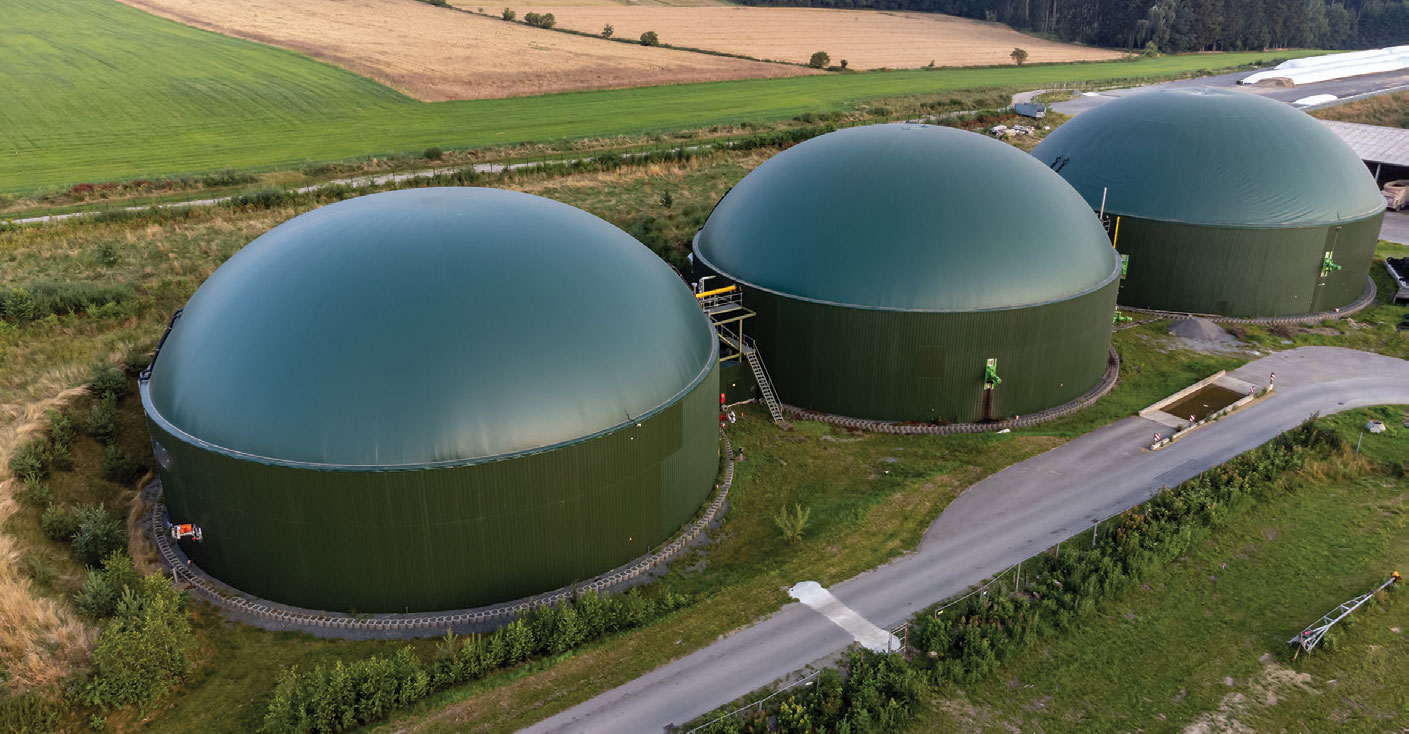 CBG is being increasingly recognised as one of the fastest growing segments within gaseous fuels. After an initial phase marked by technological uncertainty, feedstock constraints and offtake concerns, the domestic CBG ecosystem is gradually stabilising. Policy interventions such as blending mandates, assured procurement mechanisms and financial support for pipeline connectivity, and biomass aggregation have started to address long-standing structural gaps. In addition, improvements in plant design, increase in project sizes and defined quality standards have enhanced both operational reliability and investor confidence. As India seeks to reduce import dependence, manage waste sustainably and decarbonise its gas sector, CBG is no longer a peripheral option. Instead, it is steadily positioning itself as a strategic fuel capable of delivering environmental, economic and energy security benefits.
This article highlights key issues and provides insights shared during a panel discussion among Sanjeev Kumar Bhatia, Executive Director, Indraprastha Gas; Harsh Nupur Joshi, Chief Operating Officer, ONGC Green; and Lav Kumar, Additional Director, Centre for High Technology, Ministry of Petroleum and Natural Gas, at the 25th edition of the “Gas in India” conference organised by India Infrastructure.
Policy initiatives
On the demand side, policy signals are becoming clearer. The government has notified CBG blending obligations starting at 1 per cent in 2026, rising to 3 per cent in 2027, and eventually increasing to 5 per cent. Supporting this demand creation, around 70 per cent of CBG offtake is routed through the CBG-CGD synchronisation scheme, providing a relatively stable market channel.
From a pricing standpoint, the procurement price is currently set at around 85 per cent of the average CNG retail price, which appears adequate at this stage, according to the panellists. Any additional payout to one stakeholder is effectively borne by another. In this context, the existing price level seems justified for now.
The journey under the SATAT scheme has not been without hurdles. Although the mission originally had a target of 5,000 CBG plants by financial year 2023-24, early progress was slow. Initial years were spent understanding the suitability of global biogas technologies for Indian conditions. Unlike Europe or the US, India’s biogas ecosystem is heavily dependent on heterogeneous domestic feedstock, making direct technology replication unviable.
Early plants faced technology failures, low plant load factors and uncertainty around offtake, resulting in several non-performing assets. However, over the past two years, the situation has improved as technology has stabilised and engineering, procurement and construction (EPC) capacity has expanded. Plant sizes have also evolved. While 5-6 tpd units dominated the initial phase, the sector is now converging towards capacities of more than 10 tpd, with newer agri-residue-based plants increasingly targeting 15-20 tpd capacities for better economic viability.
Impact of policies and schemes
Over the past few years, policy interventions have begun translating into tangible outcomes for the CBG sector. Following the launch of the CBG-CGD synchronisation scheme, offtake visibility for CBG has improved significantly. City gas distribution (CGD) companies are now emerging as the primary offtakers, with nearly 70 per cent of CBG volumes being sold through the CBG-CGD synchronisation mechanism. This has helped create a more structured and reliable utilisation ecosystem for CBG producers.
On the feedstock side, the Biomass Aggregation Machinery (BAM) scheme is playing a crucial role in strengthening the biomass supply chain across the country. The scheme focuses on developing an agri-residue-based collection and aggregation system on a pan-India basis. Under the scheme, the government provides financial support of up to 50 per cent of the cost of biomass aggregation machinery, thereby reducing costs. This intervention is regarded as one of the key policy push factors aimed at improving project viability.
Enhanced infrastructure support has also helped address scale-related challenges. Under the revised provisions of the Direct Pipeline Infrastructure scheme, the government has extended financial assistance to cover the injection of CBG into trunk pipelines as well. The incentive covers up to 50 per cent of the project cost.
On the regulatory front, quality assurance has been strengthened. CBG quality is governed by the Bureau of Indian Standards specification IS 16087, which has been recently revised to IS 16087-2025, bringing CBG at par with CNG in terms of pipeline injection requirements. This revision is expected to further ease grid integration and support the large-scale deployment of CBG across the country.
Challenges and the way forward
 The sector’s progress has not been without challenges. For companies such as IGL, while land in Delhi-NCR is available through government bodies such as the MCD and other public agencies, similar access is limited in other regions. This uneven availability makes land procurement a constraint for project development beyond the NCR.
Another critical challenge lies in balancing offtake and input. While offtake arrangements are gradually becoming clearer, securing reliable and affordable feedstock remains a concern. Past experience from the biomass power sector highlights this risk. When biomass-based power projects expanded rapidly in northern India, particularly in Punjab and Haryana, there was a sharp increase in biomass prices. This raised doubts over long-term feedstock availability and cost stability.
Furthermore, the agri-residue-based collection ecosystem is still at a very nascent stage in many parts of the country. In eastern India, for example, awareness around the organised collection of rice straw is limited. Farmers and local stakeholders often lack familiarity with equipment such as balers and rakers, constraining systematic biomass aggregation.
From a CBG perspective, quality has been a major concern. In the initial phase of sector development, there were very few players with adequate technological know-how. The number of capable EPC contractors was limited, and projects were often dependent on imported equipment, adversely affecting both cost and performance reliability.
In response, developers are beginning to adapt their strategies. To address land-related challenges outside Delhi-NCR, companies are increasingly exploring partnerships with other players. These include EPC contractors, technology providers and industries such as sugar companies that already have access to land and feedstock. Such collaborations can help overcome location-specific constraints and support faster project execution.
On the feedstock side, government interventions such as the BAM scheme are expected to play a crucial role. By supporting the development of the biomass aggregation ecosystem, the scheme can help lower aggregation costs for CBG producers and gradually stabilise feedstock supply chains across regions.
Encouragingly, the CBG sector has evolved significantly in recent years. Over the past two years, many more players have entered the market, technology has stabilised and the availability of equipment within India has improved. This reduced dependence on imported machinery has strengthened both the commercial and technical viability of CBG plants.
Together, these developments are addressing earlier challenges and laying the foundation for more sustainable growth, resulting in a more positive outlook for the CBG sector.