 On the sidelines of Windergy 2025, Chennai, the Renewable Watch team interviewed
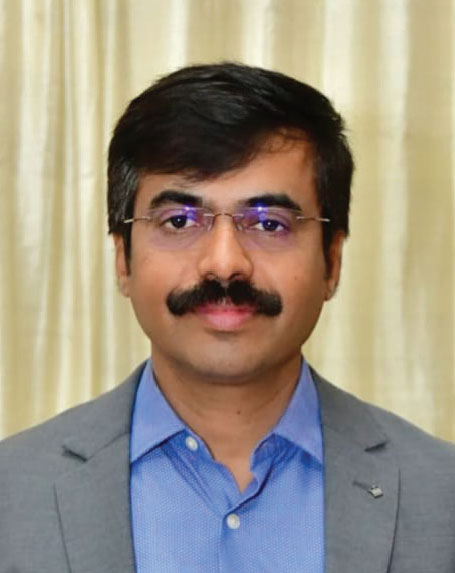
K.P. Rudrappaiah, Managing Director, Karnataka Renewable Energy Development Limited (KREDL). He discussed the state’s renewable energy achievements, capacity addition targets under the resource adequacy plan, upcoming hybrid and distributed projects, and policy initiatives to facilitate green energy and manufacturing. Edited excerpts…
What have been the key achievements of KREDL in the past year?
KREDL was established in 1996 and has been instrumental in driving Karnataka’s renewable energy transition. When the first renewable energy policy was launched in 2009, the state’s installed capacity was 2.5 GW. Under the current 2022-27 policy, Karnataka’s installed renewable capacity has reached 25 GW, out of a total power capacity of 38 GW, meaning that nearly 66 per cent of the state’s power comes from renewable sources. Of this, around 10 GW comprises solar power and over 7 GW comprises wind, with the remaining being accounted for by hydropower and other sources.
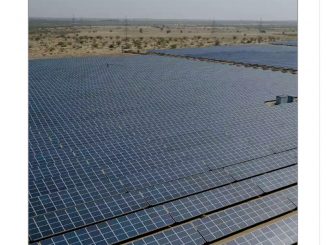
The commissioning of the 2 GW Pavagada Solar Park by KREDL in 2019, one of the largest in the world, marked a major milestone and helped the state in meeting its growing energy demand. However, during the severe drought of 2023, generation from both solar and wind sources dropped sharply, leading to a daily shortage of about 2 GW. This experience prompted Energy Department, Karnataka Government to prepare a resource adequacy plan, which concluded that Karnataka would need to add about 38 GW of renewable capacity by 2035 (including 12 GW by 2030) through solar, wind and battery energy storage systems (BESSs). Karnataka Power Transmission Corporation Limited (KPTCL) has planned around 27 new substations to support this expansion, and KREDL is aligning its tender timelines with
KPTCL’s infrastructure development.
Key developer challenges such as land conversion and evacuation are being addressed.
Is KREDL planning hybrid and round-the-clock renewable energy projects?
Yes. Karnataka is moving decisively towards hybrid and round-the-clock (RTC) renewable energy projects as part of its long-term resource adequacy strategy. The State’s Resource Adequacy Plan outlines a requirement of 38 GW of new renewable capacity by 2035, and the first 12 GW being planned across 27 strategically located substations which will be developed in a hybrid and storage-linked format.
Will these primarily be utility-scale projects?
Yes, these will be utility-scale projects.
Are there any plans for distributed renewable energy initiatives?
Agriculture accounts for nearly 40 per cent of Karnataka’s power demand, especially in regions served by Electricity Supply Company. To meet this, KREDL is promoting distributed renewable energy projects under the Pradhan Mantri Kisan Urja Suraksha evam Utthaan Mahabhiyan scheme (PM-KUSUM), supported by the Ministry of New and Renewable Energy.
Under Component C of PM-KUSUM, letter of acceptance have been issued for about 2,400 MW of capacity out of which 194 MW have been commissioned. Under Component B, off-grid solar pumps are being deployed, with 50 per cent subsidy from the state and 30 per cent from the central government, effectively covering 80 per cent of the cost for farmers. In addition, rooftop solar systems are being implemented under the PM Surya Ghar: Muft Bijli Yojana, with Bangalore Electricity Supply Company Limited as the nodal agency.
Are there specific incentives available for rooftop solar systems?
Yes. Karnataka offers several incentives for rooftop solar, particularly under the central government’s PM Surya Ghar: Muft Bijli Yojana. Households installing rooftop systems can receive subsidies of up to Rs 78,000 for a 3 kW rooftop solar system.
What are the ongoing initiatives in the hydropower segment?
Karnataka already has a strong hydropower base. In addition, the state is developing several pumped storage projects at various identified sites to support renewable energy integration and ensure stability of the grid.
Apart from land and evacuation issues, what are the other challenges faced by developers?
Right of way remains a major issue. The Government of Karnataka is addressing this by involving district-level authorities to facilitate early resolution and ensure smoother project execution.
What other initiatives is KREDL taking to attract investments and build capacity?
KREDL is focusing on skill development, internships and start-up incubation. The organisation is partnering with premier institutions such as IISc, IIM, IIT Dharwad and the University of New South Wales, Sydney, as well as with German firm TUV Rheinland, to conduct regular training and capacity-building programmes. These initiatives aim to develop a skilled workforce to support the state’s large-scale renewable energy expansion.
Karnataka has a strong renewable energy manufacturing base. What is the current status of this segment?
Karnataka has long been recognised as an investor-friendly state with progressive industrial policies. The state hosts major manufacturers, such as LM Wind Power (blades) and Emmvee Solar (modules).
Recently, INOX signed an agreement to manufacture wind turbines in the state, and companies like Suzlon continue to have a strong presence. The state’s robust policy framework and infrastructure continue to attract new investors.
What is KREDL’s outlook for Karnataka’s renewable energy sector and what are your key priorities for the coming years?
India’s national target of 500 GW of renewable energy capacity by 2030 requires strong performance from leading states such as Karnataka, Rajasthan, Gujarat, Maharashtra and Tamil Nadu.
Karnataka aims to play a pivotal role in this by rapidly scaling up renewable energy capacity through hybrid, solar-plus-storage, and emerging technologies such as green hydrogen. The focus will be on accelerating capacity addition, strengthening grid readiness and promoting innovation to support the country’s clean energy transition.
How is Karnataka performing on renewable purchase obligation (RPO) compliance, and is it aligned with the resource adequacy plan?
The resource adequacy plan has been designed in line with the RPO targets. While there may occasionally be small shortfalls, Karnataka continues to be among the leading states in RPO compliance and is well-positioned to meet its future obligations.