

This is an extract from the report “Empowering India: The Clean Energy Growth Opportunity” by RMI
Energy demand and renewable resources
India’s energy demand is growing fast. Electricity demand could triple by 2050, led by the increasing need for space cooling in a warming world. Peak demand is outpacing supply, even if all planned thermal and hydro capacity is built on time. India imports fossil fuels but is self-sufficient in renewable energy. The country is a net importer of coal, gas, and oil, costing 5 per cent of the nation’s GDP. However, renewable energy is a reliable resource, with enough domestic resources and manufacturing to fully supply its solar, wind, and batteries. India could see evening power shortages of 20 to 40 GW by 2027, even with all planned thermal and hydro capacity built on time. Key barriers include local constraints from underestimated load growth, due to cooling demand and new loads including electric vehicles (EVs). Moreover, insufficient storage and transmission leads to stranded renewable energy that cannot reach the grid. Delayed power purchase agreements for renewables exist, due to slow processes and anticipation of lower tariffs. Fuel and generation shortages are rampant, including issues of coal supply, high-cost gas, and drought for hydropower. Utility finance challenges, despite improvement, still exist, particularly for local discoms.
 Clean energy investment and manufacturing
Increased investment is bringing record renewables deployment. Some 93 per cent of investment for power generation is now in clean sources, and solar-plus-storage is already cheaper than coal on a life-cycle basis. Renewables are expected to supply most of India’s new generation. India is a net exporter of wind generators; incentives and investment are enabling the same for solar and batteries.
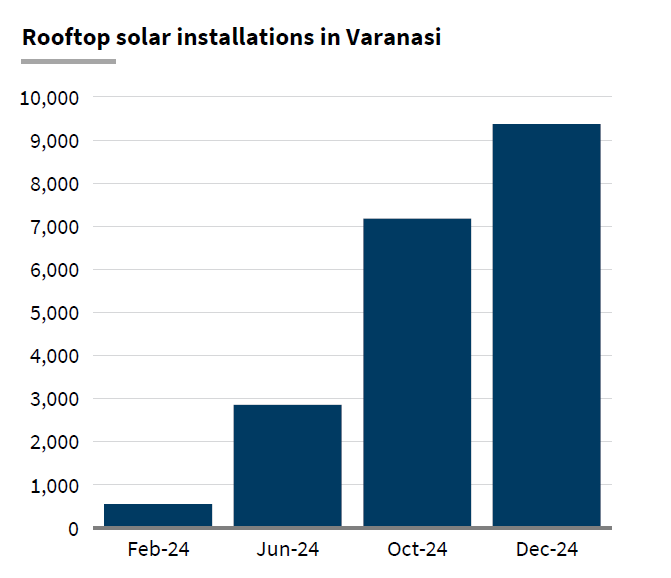
India has nearly doubled the total home rooftop capacity in 10 months, including 15 times growth in Varanasi. PM Surya Ghar: Muft Bijli Yojana (PMSGMBY) scheme from the national government, aimed at solarising 10 million homes by 2027. Various initiatives by the the government were responsible for this success of PMSGMBY. These include:
- Clear local targets and tracking.roughly doubling the national average in solarised households per capita.
- Doubling the umber of market vendors, with banking institutions engaged to ensure access to finance.
- Enhanced consumer outreach, including large-group registrations and awareness efforts on the ground.
- Streamlined digital processes for registration, with portals for low-interest loans and grievance redressal.
Electrification and transport
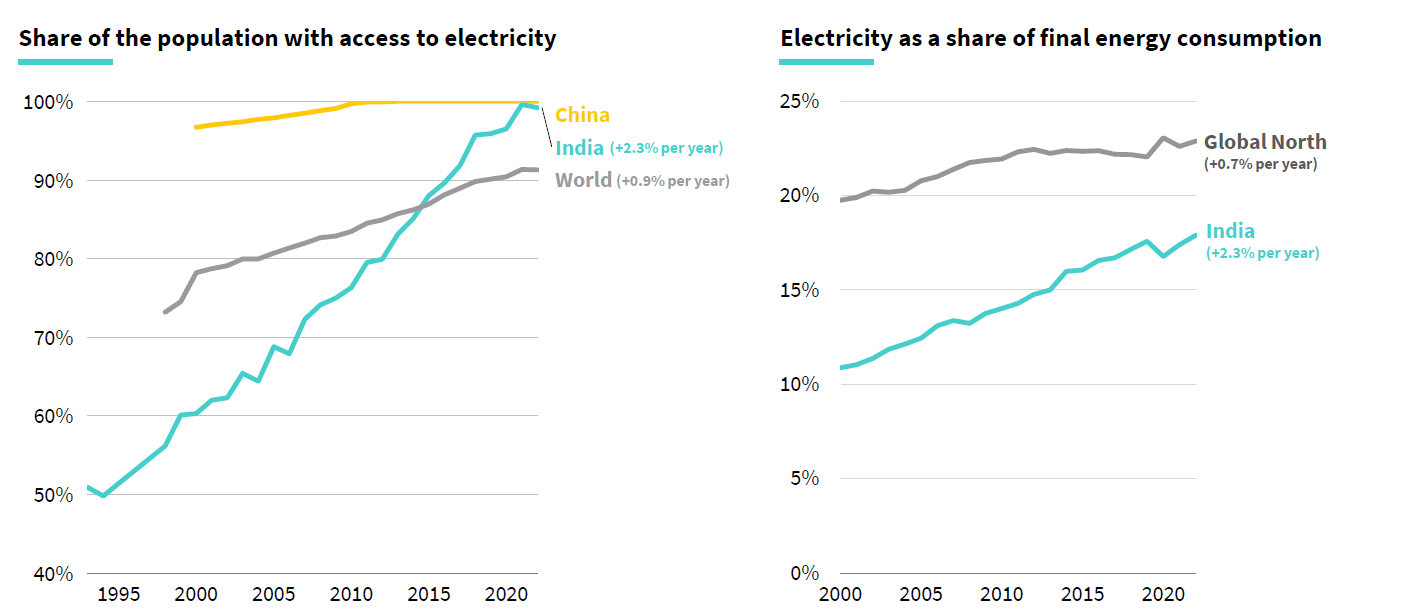
From homes to vehicles, electrification is growing fast. Electricity access has improved 3 times faster than many other regions, while EVs are taking off — led by two- and three-wheelers, which have already reduced costly oil imports. Reportedly, there is a potential target of a 95 per cent EV sales share by 2027, with purchase and replacement incentives across vehicle types. Furthermore, several recent initiatives like policy mandates of a 100 per cent electric sales share for two- and three-wheelers by April 2027 and 2026; purchase, scrappage and retrofitting incentives across vehicle types for faster progress; quadrupling the number of charging stations from March 2025 to 2026, including fast-charging corridors and mandatory stations for new buildings; workforce training efforts through the Delhi Skill & Entrepreneurship University; and a state EV fund to finance these incentives, supported by pollution levies and license fees, are designed to accelerate uptake.
Energy Efficiency
India has prioritised stable policy for clean energy and efficiency. The country has been a leader for recent efficiency improvements, thanks to a suite of policies and market incentives across sectors. Due to market incentives and policies across buildings, industry, and transportation, India is already outpacing many regions in energy efficiency progress. There are several industry wide-initiatives in India. These include:
- UJALA programme, the world’s largest zero-subsidy initiative for LED light bulb production and finance
- Energy Efficiency Services Limited’sinitiatives, which use demand aggregation for efficient appliances
- Energy conservation building codes, which can save 25to 35 per cent of energy demand if fully implemented;
- Perform, Achieve, and Trade scheme, a successful market mechanism for saving energy in industry
- Fuel economy standards and EV incentives, for improving efficiency in the transportation sector.
Moreover, innovations are progressing, like super-efficient air conditioners (ACs). 60 per cent less energy than a typical AC, while meeting the target temperature and relative humidity more consistently. 4.9 times lower climate impact than the Global cooling prize baseline AC, due to efficiency and low-warming refrigerants. 50 per cent savings (or more) on energy bills, leading to a much lower total cost of ownership than a typical AC. 50 per cent lower peak electricity demand if adoption is scaled, helping avoid power outages and costly infrastructure.
 Economic benefits
Growing cleanly has many payoffs — from cutting costs to raising revenue, and from millions of jobs gained to millions of lives saved. Clean sources will add at least 4 times more jobs than fossil fuels might lose. More than half of heat’s global labour effects are in India, but actions can drastically reduce future impacts. Past annual costs of extreme heat (2001–2020 average) are Rs 54 trillion and 259 billion labour hours, as well as thousands of deaths. Furthermore, solutions can also curb air pollution, which causes 1 in 4 deaths in India, with the potential to save 2.2 million lives every year.
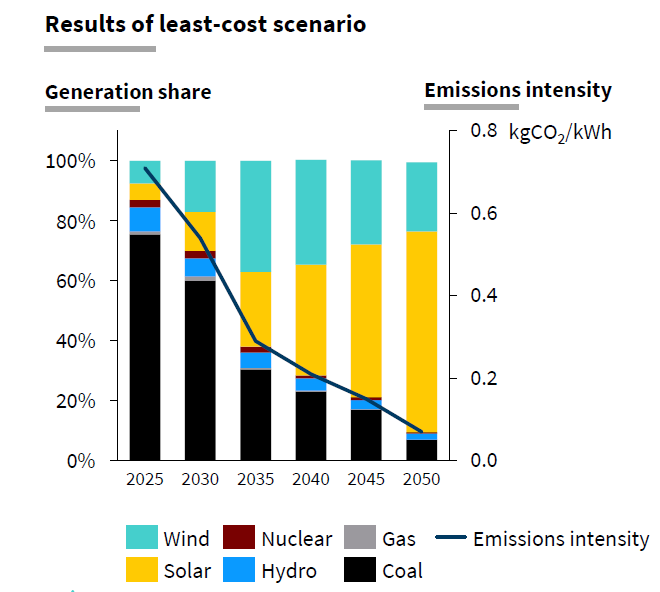
Additionally, Rs 7 trillion in savings from electricity system costs with a cleaner grid; Rs 13 trillion in savings by avoiding oil imports for road transportation; Rs 54,000 billion in revenue from feasible methane reductions in energy production are projected, highlighting the economic upside.
Global Impact
The energy transition can cut costs and raise revenue, while saving more emissions than the US and Europe combined. If India’s share of clean energy investment grows to its share of global impact, there will be broader benefits for all. India’s immense growth is an extraordinary opportunity. From steel production to home construction, India will see more growth than any other region. If that share of growth is met by a similar share of clean energy investment, there will be broader benefits for all.
Access the full report here.
