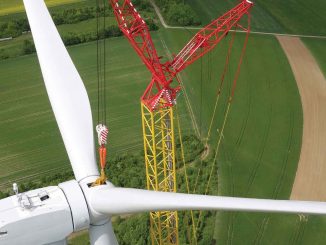
The Ministry of New and Renewable Energy (MNRE) has released revised draft guidelines to regulate the installation and certification of prototype wind turbines in India. These guidelines set the validity of the prototype certificate at three years and apply to all wind turbine manufacturers operating within the country. The National Institute of Wind Energy (NIWE), Chennai, will be responsible for implementing the framework. Manufacturers are required to submit necessary documentation to NIWE to obtain a recommendation for prototype installation and grid synchronisation. The certification process will be carried out by internationally accredited testing and certification bodies, and any changes or modifications, including new components used, must be submitted to NIWE.
The guidelines specify that all prototype wind turbines must be commissioned and grid-synchronised within 18 months from the issuance of the recommendation letter by NIWE. A maximum of three years will be allowed from the date of this letter to complete testing and obtain the type certificate. The prototype certificate will remain valid during this period until the type certificate is granted. A letter regarding routine operation and maintenance must be issued annually by the type certification body. In the absence of this letter, the wind turbines will be disconnected from the grid. Regular maintenance and servicing of installed prototypes are mandated throughout the testing period.
Additionally, the draft guidelines require the manufacturer to immediately provide NIWE with the commissioning certificate and grid synchronisation report issued by the concerned state utility. Since higher-capacity wind turbines such as 5.2 MW are already available in the domestic market, the MNRE has proposed referencing the number of prototype units rather than their capacity. The prototype wind turbines will remain the property of the manufacturer and cannot be sold until their model is listed in the Revised List of Models and Manufacturers. Furthermore, only new and unused components will be permitted in the manufacturing of these turbines. The use of second-hand components or machines is strictly prohibited.