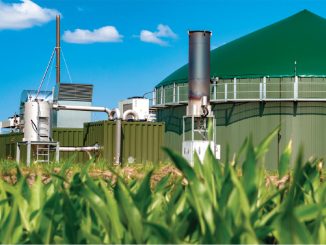
Founded in 2023 by Kushagra Nandan and Varun Karad, seasoned entrepreneurs in the solar and bioenergy spaces, respectively, REnergy Dynamics (RED) specialises in the bioenergy sector, particularly compressed biogas (CBG). It currently operates across four key verticals in the bioenergy space – technology, engineering, procurement and construction (T-EPC), project development, feedstock aggregation and product manufacturing. On the sidelines of the India Energy Week 2025, Renewable Watch interviewed Varun Karad, Co-Founder and Chief Executive Officer, RED, to learn more about the company’s key projects, business model, operational challenges and future plans. Karad also shared the cost economics of CBG projects and policy suggestions to improve the viability of the CBG segment in India. Edited excerpts…
What are the primary business verticals of RED? What are the company’s service offerings?
RED operates in four business verticals – T-EPC, project development, feedstock aggregation and product manufacturing.
T-EPC: This is our largest revenue stream. We are currently setting up three large-scale CBG plants for Reliance Industries Limited, which will generate an output of around 21 tonnes per day per plant. These plants are in Prayagraj (Uttar Pradesh), Nagothane (Maharashtra) and Navsari (Gujarat). RED is working closely with Reliance, offering them a comprehensive package that includes product sales, aggregation services and technological EPC.
Project development: We are in the process of financial closure for our own CBG project, which will be announced in the first week of the new financial year. We are completing some formalities with our bankers.
Feedstock aggregation: We aggregate feedstock for biofuels, including paddy straw, soya husk and cane trash. We own the largest fleet of aggregation machinery in the country, with more than 56 round baler machines.
Product manufacturing: We manufacture biogas holders, low tension panels and automation products at our facilities in Greater Noida and Maharashtra. We have an exclusive partnership with Emerson, specifically for CBG-related automation.
What role do solar and battery storage play in your CBG plants?
Energy costs constitute about 40 per cent of a CBG plant’s expenses. By integrating solar and battery storage solutions, we can reduce energy costs from Rs 9 per unit to Rs 4.50 per unit, significantly improving earnings before interest, taxes, depreciation and amortisation. This integration lowers the opex from 40 per cent to about 20-25 per cent, making CBG plants more financially viable. This is where co-founder Kushagra Nandan’s experience in the solar and storage space comes in handy.
How does RED handle feedstock aggregation, and what challenges do you face?
Feedstock aggregation in India is highly fragmented and driven by small entrepreneurs and local farmers. To meet the demands of large-scale CBG plants, we ensure that 20-30 per cent of our aggregation is done in-house using our own machinery. We also encourage local farmers to buy or lease our equipment and supply feedstock to us. The main challenge in aggregation is the short 30-day window post-harvest before farmers prepare for the next crop. This requires significant capex investment in machinery. We are actively working with international original equipment manufacturers to bring better aggregation machinery to India, and have even introduced a baler leasing model.
Feedstock management remains a challenge in the segment, while legacy issues with respect to technology and offtake are being solved through industry and government initiatives. Within the feedstock management space, the government has started providing incentives for aggregation machinery, reducing the woes of the stakeholders.
What measures do you take to ensure high quality feedstock for the CBG sector?
Quality control in feedstock is crucial for CBG plants, as aggregation remains a challenge despite government policies addressing technology and offtake. Our approach focuses on year-round farmer education on best practices, leveraging drone and satellite mapping for efficient planning, integrating international machinery and technology to streamline operations, and promoting local entrepreneurship through leasing models for feedstock supply ownership.
What business model do you follow for feedstock aggregation and machinery use?
RED supports feedstock aggregation through a combination of in-house operations and a leasing model that promotes local entrepreneurship. Recognising that aggregation requires more than just machinery, we have learned from experienced industry players and refined our approach. Today, we manage end-to-end aggregation while also offering farmers and local entrepreneurs the opportunity to lease baling machines instead of making expensive upfront investments. This allows farmers to first understand the profitability of the process before committing to ownership. Additionally, RED ensures a reliable supply chain by offtaking the feedstock collected through these leased machines.
With each round baler machine capable of aggregating 1,000-2,500 tonnes per season, this model helps create employment for 20-25 individuals per plant, fostering economic growth at the grassroots level.
What is your view on the financial sustainability of the CBG segment? What should be done to make the segment more financially sound?
The CBG segment faces revenue challenges due to fluctuating costs and policies. We actively push for price parity between CBG and compressed natural gas (CNG), as both have similar calorific values. The government currently offers Rs 1,380 per million metric British thermal units, plus compression and transportation costs, translating to around Rs 75-Rs 78 per kg for CBG offtake. We advocate for a price increase to align with CNG market rates. Additionally, we are working on policy interventions for fermented organic manure (FOM) pricing, as it remains a critical by-product but lacks consistent demand.
What kind of financial investment is needed for setting up a large-scale CBG plant?
Setting up a large-scale CBG plant requires approximately Rs 75 million per tonne of output. For a 20 tonne per day plant, the investment required is around Rs 1.5 billion. However, industry players claim lower costs, and it remains to be seen if that cost is viable in reality. I do not recommend small-scale CBG projects, as large-scale ones are more financially viable.
Why has cost reduction in CBG not followed the same trajectory as solar and wind energy?
Unlike solar, which is a single technology with incremental improvements, CBG is an integration of multiple technologies, including pretreatment, anaerobic digestion, digestive management and gas purification. With each stage having multiple technology options, there are different combinations for setting up a CBG plant. This complexity prevents the same kind of rapid cost reduction seen in solar photovoltaic. Additionally, CBG plants require robust infrastructure, making them capital-intensive.
Which states are favourable for setting up CBG projects?
Many states have announced attractive CBG policies. Uttar Pradesh had the best policy last year. Now, Telangana, Andhra Pradesh and Madhya Pradesh have also come up with attractive policies and are competing with each other.
What policies or government interventions do you see as crucial for the sector?
The government has been proactive in supporting biofuels, but there are key policy changes that we are actively advocating to further strengthen the sector. One of our primary demands is aligning CBG pricing with market CNG rates to ensure better financial viability for producers. Additionally, improving the policy framework for FOM is key to enhancing its market acceptance by farmers and adding a revenue source for CBG developers. This will need policy reforms revolving around significant subsidies for urea for non-organic fertiliser production. We are also pushing for the introduction of renewable gas certificates, which would serve as an incentive for increased CBG production. Furthermore, increasing government subsidies for aggregation machinery and feedstock procurement would help streamline the supply chain and make the sector more efficient and sustainable in the long run.
What are RED’s future goals, and how do you see the sector evolving?
Going forward, RED aims to generate a cumulative business of Rs 50 billion in five years across our four business verticals. We are on track to achieve this target. The CBG sector is poised for exponential growth, with increasing government support, rising awareness among farmers and advancements in technology. In the next three to six months, we expect several large-scale plants to become operational, signalling a hockey-stick growth curve for the industry. We believe India needs at least 100 companies like RED to fully harness the potential of biofuels and renewable energy.