 In an interview with Renewable Watch, Animesh Mishra, CGM and Head, Sales and CCPR, EESL, talked about the organisation’s key business highlights from the past year, and its initiatives in the energy efficiency, decentralised solar and electric vehicle (EV) charging infrastructure spaces. Mishra also shared EESL’s future plans and targets. Edited excerpts…
What have been EESL’s business highlights in the past year?
The past year has been transformative for EESL, reinforcing our position as the world’s largest energy efficiency company. We launched EESLMart.in, India’s first e-retail platform for energy-efficient appliances, which started with just one order every two to three days, but has now grown to serve 21,526 customers and counting, processing approximately 15 orders daily.
We signed MoUs worth Rs 5 billion with state bodies and industry partners during India Energy Week 2024, enhancing our collaborative efforts. Our commitment to clean cooking was highlighted by the launch of Phase II procurement for 100,000 induction cooktops under the National Efficient Cooking Programme (NECP), including a successful launch in Tripura.
Additionally, we introduced 6W, five-star LED bulbs during the festive season to provide affordable sustainable options. A major highlight was the launch of our UrjaVEER Movement, aimed at empowering citizens through economic support. This initiative, along with the NECP and the distribution of energy-efficient appliances under the Pradhan Mantri Awas Yojana in Andhra Pradesh, was inaugurated by Manohar Lal, Union Minister of Power, and N. Chandrababu Naidu, chief minister, Andhra Pradesh.
Overall, 2024 has been a milestone year for EESL in advancing energy efficiency across India.
What are the key trends shaping the Indian energy efficiency segment?
The Indian energy efficiency segment is on a growth trajectory, driven by favourable government policies, increased private sector involvement and a rising awareness of sustainability. The market is expected to grow to $20 billion from its current value of $18 billion, with the energy service company sector, where EESL has been a pioneer in street lighting and building the energy efficiency space, nearing $900 million. Key trends include a shift towards renewable energy, advancements in energy storage and the adoption of smart grid technologies.
At EESL, we are shaping this sector with several initiatives. We launched EESLMart.in, a one-stop platform for energy-efficient appliances, making energy-efficient choices accessible to consumers. We have also signed MoUs with state bodies such as RajCOMP Info Services Limited, a company under the aegis of the Rajasthan government, to enable eMitras to sell our products through the EESLMart portal. Additionally, our UrjaVEER Programme empowers citizens by providing financial support and opportunities. Through these efforts, EESL is actively enhancing energy efficiency across India.
What challenges has EESL faced in scaling its energy efficiency programmes, and how were they addressed?
EESL has faced several challenges in scaling its energy efficiency programmes. One major challenge is the low awareness of energy-efficient solutions among consumers and businesses, which limits adoption. To address this, we have focused on increasing outreach and conducting workshops on the benefits of energy efficiency.
Another challenge is the high upfront costs of energy-efficient technologies, which can deter potential users. This can be tackled by expanding financing options and offering subsidies to make these technologies more accessible.
Additionally, organisational resistance due to concerns about compatibility has slowed uptake. We are addressing this by showcasing successful case studies that demonstrate the economic benefits of our solutions.
Finally, inconsistent policies across states create hurdles for implementation. EESL is advocating for a cohesive regulatory framework to streamline processes and encourage wider adoption of energy efficiency measures in India.
What has been EESL’s role in the uptake of e-mobility/charging infrastructure?
EESL has been a key player in promoting e-mobility and charging infrastructure in India. The organisation has installed 456 public charging stations, with 358 currently operational, in collaboration with various stakeholders, including municipalities and discoms.
CESL (a subsidiary of EESL) is leading the charge in e-mobility by aggregating demand for 14,028 electric buses across nine major cities under the PM E-Drive Scheme.
Recently, the “EV-as-a-Service” programme was launched by Manohar Lal, Union Minister of Power, with the aim of deploying 5,000 e-cars in government departments over the next two years. This initiative sets a precedent for the private sector to adopt EVs for their transportation needs.
However, challenges remain, including high infrastructure costs and lengthy approval processes. To overcome these, EESL advocates for standardised tariffs and streamlined procedures. Additionally, establishing industry wide standards for charging technology and improving access to financing are essential steps. By addressing these bottlenecks, EESL aims to accelerate the growth of e-mobility in India.
What are EESL’s plans in the decentralised solar space?
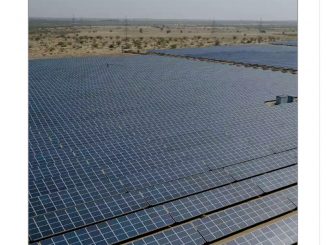
Scaling up decentralised solar projects presents notable challenges, including delays in accessing discom-owned land, difficulties with grid integration – particularly in urban areas with scarce land near substations – and higher relative costs compared to larger solar parks due to similar resource and manpower needs.
EESL is tackling these challenges head-on with innovative and scalable solutions to drive the adoption of decentralised solar power. By promoting rooftop solar installations on government buildings, EESL eliminates the need for additional land acquisition, accelerating project timelines. To improve the financial appeal of smaller projects, the company is collaborating with financial institutions to introduce microfinancing schemes, attracting greater investor participation. Through strategic partnerships with discoms and proactive policy advocacy, EESL is building a robust ecosystem to make decentralised solar power both feasible and sustainable.
Please elaborate on the recent initiatives undertaken by EESL, especially the UrjaVEER programme?
EESL has recently introduced impactful initiatives to promote sustainability and energy efficiency. We expanded the reach of the NECP, launching it in Tripura after its success in Ladakh. It aims to reduce the environmental impact of traditional cooking methods, enhance health and encourage the adoption of modern electric cooking devices. Under this programme, 2,000 induction cooktops were distributed to anganwadi centres and pre-primary schools, marking a shift towards induction-based cooking, which offers 25-30 per cent cost savings over conventional methods.
Similarly, the UrjaVEER programme, initiated in Andhra Pradesh, is a community-driven effort to raise awareness and foster behavioural change in energy consumption. It empowers individuals, particularly youth, to become “UrjaVeers” or energy warriors, promoting energy-efficient lighting, cooling systems and appliances in homes, businesses and public spaces. Anyone aged 18 or above, with valid identity proofs, internet access and a smartphone, can join the programme as an UrjaVeer, earning additional income by promoting energy-saving products.
Both programmes will soon be expanded nationwide, driving grassroots-level engagement and creating a more energy-conscious and sustainable India.
What are the company’s long-term goals?
EESL’s long-term goals focus on advancing energy efficiency, sustainability and a greener future for India. Key initiatives such as UrjaVEER and the NECP promote energy-efficient practices, encouraging the adoption of sustainable solutions. EESL aims to distribute 10 million brushless direct current fans and 2 million energy-efficient induction cooktops to transform cooking practices and promote efficient energy use. These efforts underscore EESL’s commitment to a sustainable, energy-efficient future for India.
EESL is expanding with EESLMart.in, an online platform to promote energy-efficient appliances. Collaborating with state discoms and service providers such as Andhra Pradesh Eastern Power Distribution Company Limited and Tata Power Renewable Energy Limited, EESL is enhancing the availability of these products. The platform offers a seamless, affordable procure-to-pay experience while providing consumers with key information on sustainable products.
In India, energy efficiency is not given importance due to the lack of awareness of its benefits. Our new initiative aims to not only proliferate the market with our energy-efficient products, but also educate Indian citizens on their benefits. Indians, despite being a population accustomed to saving money, have the opposite tendency when it comes to energy efficiency. People are not ready to accept or replace existing products due to the high acquisition cost of energy-efficient products. They would rather go for mediocre products that fulfil their needs at a low first-time cost.
With these forward-thinking initiatives, EESL is actively empowering consumers and industries to take proactive steps towards energy conservation, bridging gaps in information and accelerating the journey towards a more sustainable and energy-efficient India.