JSW Energy Limited is one of India’s leading independent power producers, with a significant presence across the sector, encompassing generation, transmission, manufacturing, renewables and trading.
At present, the company’s operational capacity stands at around 7.7 GW, comprising thermal, hydro, wind and hydropower plants across 11 states. Despite sectoral headwinds, JSW Energy has a steady operational and financial track record. Its cumulative power generation in financial year 2024 stood at 27.9 BUs, a notable increase from 21.9 BUs in financial year 2023.
Going forward, it aims to increase its capacity to 10 GW by the end of this fiscal and more than double its portfolio to reach 20 GW by 2030, primarily through significant growth in its renewables portfolio. It has already secured sites with high solar and wind potential.
The company is enhancing forward integration in the renewable energy sector by setting up 40 GWh of storage capacity by 2030, comprising both battery energy storage systems BESSs and pumped storage projects (PSPs). Further, a 3,800 tonne per annum (tpa) green hydrogen production plant is slated to be operational by 2025. The company also has plans to set up 1 GW of solar module manufacturing capacity by 2030.
Existing capacity and performance
The company’s installed thermal energy generation capacity, aggregating over 3,508 MW, is distributed across several plants, including the 1,200 MW Ratnagiri plant, the 1,080 MW Barmer plant, the 860 MW Vijayanagar plant, the 700 MW Utkal plant (acquired from Ind-Barath, with the 350 MW Unit 1 operational) and the 18 MW Nandyal project.
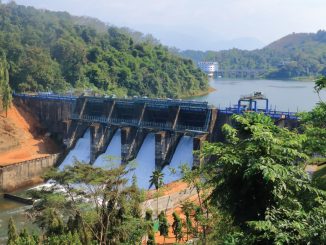
Over 75 per cent of the company’s thermal capacity is under long-term power purchase agreements (PPAs). These thermal power plants have demonstrated a healthy operating track record. The company’s operational renewable capacity stands at over 4.2 GW. This includes 1,391 MW across two hydropower projects – the Karcham Wangtoo and Baspa II projects, a solar capacity of around 675 MW and wind capacity of 2,152 MW.
In 2023-24, its installed generation capacity from thermal, wind, hydro and solar power projects increased by 681 MW. The company achieved a total net generation of 27,862 MUs during 2023-24, up 27 per cent from 21,866 MUs in 2022-23. The total renewable generation increased by 54 per cent year on year to 9.3 BUs. Furthermore, long-term generation (tied under PPAs) increased 22 per cent year on year from 20,075 MUs in financial year 2023 to 24,400 MUs in financial year 2024. In the second quarter of financial year 2025, the company saw a 14 per cent year-on-year increase in net generation to 9,840 MUs, driven by the addition of wind capacity and increased generation from thermal and hydro plants.
Financial performance
In 2023-24, JSW Energy recorded a total income of Rs 114.86 billion, an increase of 5.7 per cent compared to the previous year. Its profit after tax (PAT) for the same period was Rs 17.28 billion as against Rs 7.11 billion in 2022-23, marking an unprecedented 143 per cent growth.
In 2023-24, the capital expenditure incurred on under-construction projects decreased to Rs 110.21 billion from Rs 141.25 billion in 2022-23. Of this, Rs 104.82 billion was allocated to the renewables business and Rs 5.37 billion to the thermal business. At the end of 2023-24, the company had a net worth of Rs 208.32 billion.
For the quarter ended September 2024, JSW Energy reported the total income as Rs 34.59 billion. It rose by 2.1 per cent, up from Rs 33.87 billion in the corresponding period of the previous year.
The company reported a net profit of Rs 8.76 billion during the quarter ended September 2024, marking a 2.3 per cent increase from the Rs 8.56 billion recorded in the same period last year.
In April 2024, around Rs 50 billion was raised through a qualified institutional placement and the sale of shares to institutional investors.

Project pipeline
JSW Energy plans to become a carbon-neutral company by 2050. Towards its target of 20 GW by 2030, the company intends to build an integrated power generation portfolio and invest in new energy solutions including energy storage (BESSs and PSPs), FDRE/hybrid power plants and green hydrogen.
It plans to commission 2.1 GW by 2024-25 to increase its operational capacity to 10 GW. The projects expected to be commissioned this fiscal include the 350 MW Unit 2 of the Utkal thermal plant, the 240 MW Kutehr project (hydro) and 1,511 MW of renewable projects. The Kutehr project site suffered a severe landslide in the first quarter of this year, which washed away its access roads, impacting project activities. However, work on the site has resumed and the project will be commissioned this year.
A key project being undertaken by the company is the construction of a 1 GWh BESS project at Fatehgarh, Rajasthan. The project is expected to be commissioned by June 2025, and preparatory works have already started.
To further enhance its storage capacity, it has also signed MoUs for 66 GWh of hydro PSPs with various states. Notably, it won 2.4 GWh of hydro PSP (300 MW x eight hours) capacity from Power Company of Karnataka Limited. Another PPA has been signed with MSEDCL for 12 GWh of PSP capacity. The Bhavali hydro pumped project in Maharashtra was approved by the Central Electricity Authority in September 2024.
Meanwhile, its under-construction capacity includes 2,536 MW of wind, 2,779 MW of solar and 2,2026 MW of hybrid projects. It also has a number of other solar, wind and hybrid/FDRE projects in the pipeline amounting to around 3.5 GW. It has PPAs signed for 1,025 MW of wind, 2,779 MW of solar and 2,026 MW of hybrid projects.
In October 2024, it signed a major PPA with Solar Energy Corporation of India Limited (SECI) for the supply of 700 MW of solar capacity awarded under SECI Tranche XIII, at a tariff of Rs 2.56 per kWh for a duration of 25 years. Also in October 2024, JSW Energy Limited signed a 700 MW PPA with NTPC Limited for solar energy at a tariff of Rs 2.59 per kWh and a PPA for a 192 MW wind-solar hybrid project with GUVNL for 25 years at a tariff of Rs 3.27 per kWh. Furthermore, two PPAs were signed with MSEDCL for 1,200 MW of solar-wind hybrid projects connected with the state transmission utility.
On the green hydrogen front, JSW Energy will set up a commercial-scale 3,800 tpa green hydrogen plant using 25 MW of RTC power. It has contracted with JSW Steel for the supply of green hydrogen to its Vijayanagar steel plant. The project is expected to be completed by March 2025. Equipment deliveries for the project have started. In addition, an MoU has been signed between JSW Energy and JSW Steel for 85,000-90,000 tonnes of green hydrogen and green oxygen for green steel production by 2030. In addition, it has received an LoA from SECI for a 6.5 ktpa green hydrogen production facility under the SIGHT scheme.
The company is developing 1 GW of wafer-cell-module capacity allocated under Tranche II of the PLI scheme, with a proposed capex of Rs 16 billion. Recently, the company revealed plans to establish a wind turbine blade factory in Karnataka for captive use. The company has already identified surplus land adjacent to its operations for a new wind turbine generator manufacturing unit.
Net, net, JSW Energy has emerged as a major player in India’s renewable energy sector. As an early mover in energy storage and green hydrogen, with a diversified renewable energy portfolio, improving financial performance, scalability and multiple long-term PPAs, the company is well positioned for sustained growth and success in the power sector.