One of the country’s leading integrated energy firms, Indian Oil Corporation Limited (IOCL) operates across a wide range of sectors such as petrochemicals, gas, oil, refining, pipeline transportation, technology as well as in emerging areas such as nanotech, solar, bioenergy, hydrogen and fuel cell technologies. It was established in 1959 as a petroleum public sector undertaking under the jurisdiction of the Indian government’s Ministry of Petroleum and Natural Gas. The company is dedicated to providing cost-effective and sustainable energy solutions and is proactively advancing its current eco-friendly assets through “The Green Umbrella Entity” initiative. This initiative encompasses various domains, such as biofuels, renewable energy, green hydrogen, carbon offsets, carbon capture, utilisation, and storage (CCUS) and low-carbon value chains.
Currently, IOCL’s installed capacity of renewable energy is 238.7 MW (167.6 MW wind energy and 71.10 MW solar PV). The company has so far invested Rs 5.82 billion on renewables and green energy efforts, and avoided 3.8 metric million tonnes (mmt) of carbon dioxide (CO2) equivalent operational emissions. As of March 31, 2023, the company had 20,992 retail outlets equipped with solar power, having a combined installed capacity of approximately 123.4 MW. These installations generated around 159.1 GWh during the year, enabling it to avoid 0.15 mmt of emissions.
The company has installed a solar project with a capacity of 1.87 MW at the Paradip refinery as a step towards renewable energy adoption. A 13 kW off-grid solar power installation with battery backup has also been finished at the company’s bulk explosives plant in Umrer, Nagpur. This project addresses the entire electrical load requirements of the administrative building. With a combined yearly output capacity of 33 GWh of power, the company has 25.57 MWp of solar panels spread throughout multiple refineries. This article focuses on IOCL’s initiatives across various clean energy segments…
Compressed biogas
IOCL is at the forefront of driving the Sustainable Alternative Towards Affordable Transportation programme, an initiative by the central government to promote compressed biogas (CBG) as an environment-friendly fuel. It has been expanding its CBG network under its retail brand “Indigreen”. The company had inaugurated 22 CBG plants by the end of 2022-23, providing biogas through 46 Indigreen outlets spanning nine states. During the period September 2019 to March 2023, it sold 5,822 tonnes of CBG, contributing to 11,086 tonnes of cumulative sales.
It has established a biogas plant with a daily production of 200 tonnes in Gorakhpur, utilising agricultural crop residue. This initiative resulted in annual CBG generation of approximately 7,000 tonnes. Moreover, the company entered into an MoU with Tezpur University in January 2023 to promote the adoption of CBG in Northeast India. Furthermore, a CBG plant with a production capacity of 100 tonnes per day (tpd) utilising cattle dung, has been established at the Hingonia Cattle Rehabilitation Centre in Jaipur, Rajasthan, to power the kitchens of the Akshay Patra Foundation, ensuring meals for school children. As of March 31, 2023, a total of 3,267 letters of intent were issued for the manufacture and distribution of 8.5 million metric tonnes per annum (mtpa) of CBG.
Green hydrogen
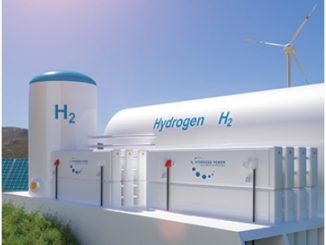
The company is making notable progress in promoting a sustainable and environmentally-conscious future by leveraging the potential of green hydrogen and has various green hydrogen projects under development.
In August 2023, the company invited global tenders to develop a green hydrogen facility, with an annual capacity of 10 kilo tonnes in Panipat. It is planning to integrate this green hydrogen generation plant with the Panipat refinery’s existing hydrogen network that will operate round the clock and is intended to produce 1,250 kg of green hydrogen per hour. In the same month, IOCL established partnerships with ReNew and Larsen & Toubro to enhance and reinforce the green hydrogen ecosystem in India.
It also established the country’s inaugural hydrogen dispensing station at its research and development centre in Faridabad, National Capital Region, and another one at the Gujarat refinery to encourage the adoption of hydrogen mobility. During India Energy Week 2023, the company initiated a partnership with Snam, Italy, to repurpose current gas pipelines for the effective transportation of hydrogen.
Electric vehicle charging
IOCL possesses electric vehicle (EV) charging infrastructure, featuring a thriving network comprising 5,461 stations and 76 battery swapping stations, and has an expectation to expand it to 10,000 EV charging station (EVCS) network in the near future. The company is actively looking into ways to install charging stations at airports and other popular tourist locations in order to increase the availability of EVCSs. In an effort to promote environmental sustainability and electric mobility, IOCL has partnered with cab aggregators, power suppliers, and automakers to set up battery swapping stations and EVCS at its retail outlets. In July 2023, the IOCL board has approved the creation of an equal joint venture (JV) entity with Sun Mobility with focus on the battery swapping industry in India. IOCL will invest approximately Rs 18 billion in the JV by FY 2026-27.
Ethanol blending
IOCL has also been focusing on ethanol blending as an alternative clean energy solution. In August 2022, the company’s 2G ethanol plant with production capacity of 100 kilo litres per day at the Panipat refinery commenced operations to produce ethanol from rice straw. Utilising 200,000 tonnes of rice straw, the plant produces 30 million litres of ethanol annually, which is then mixed with gasoline. This plant helps to cut down on greenhouse gas (GHG) emissions by over 300,000 tonnes annually, which is the environmental equivalent of taking roughly 63,000 cars off the road in the country. The company is presently mixing approximately 12 per cent ethanol into petrol. The company has initiated the transportation of petrol blended with ethanol through its product pipelines, in compliance with the Government of India’s objective of achieving a 20 per cent ethanol blend. Additionally, IOCL has launched standalone E-100 ethanol fuel at specific retail locations.
CCUS
IOCL is strongly dedicated to clean energy solutions, with a particular emphasis on CCUS. It is leading the way in carbon capture using chemical, biochemical, and electro bio-catalytic approaches through innovative research. Its enzyme-solvent fusion outperforms conventional amine-based techniques in terms of accelerating carbon capture. IOCL’s innovative approach is demonstrated by an off-gas to ethanol plant in Panipat, which uses gas fermentation to transform CO2 enriched off-gases into ethanol suitable for use as fuel.
Sustainable aviation fuel
IOCL is actively looking into ways to produce sustainable aviation fuel (SAF) in anticipation of the increase in demand for SAF globally, which is being driven by the need to meet the standards of the Carbon Offsetting and Reduction Scheme for International Aviation. The scheme was developed by the International Civil Aviation Organization and adopted in 2016.
The company has laid out plans to build a JV in partnership with LanzaJet for operating an 86.8 thousand mtpa SAF plant in Panipat. In May 2023, the inaugural commercial passenger flight in India utilising domestically produced SAF blend was successfully launched. Praj Industries Limited manufactured this SAF-blended aviation turbine fuel (ATF) using domestic feedstock provided by IOCL. The company also signed a term sheet with Praj Industries Limited in July 2023 to support initiatives for the promotion of SAF and other biofuels. Furthermore, the company is working towards reaching the goal of blending 2 per cent biofuel in ATF by 2030.
Future plans
Going forward, IOCL’s vision is to reach net zero operational emissions by 2046. The plans for decarbonisation cover both scope 1 and scope 2 emissions, with an anticipated budget exceeding Rs 2.4 trillion. This will lead to 0.7 billion metric tonnes of emission reduction by 2046. To reach the net zero goal, the plan involves implementing transparent and precise accounting of GHG emissions, including consistent monitoring, reporting, and verification of emissions. Additionally, it intends to lower scope 1 and 2 emissions through more investment in carbon markets, CBG, green hydrogen, renewable energy, energy efficiency, and CCUS.
In order to establish a green energy portfolio, IOCL has set an ambitious goal to achieve 31 GW of renewable energy, 4 mmt of biofuels, and 1 mmt of biogas by 2030. This target will be further increased to 200 GW of renewable energy, 7 mmt of biofuels, and 9 mmt of biogas by 2050. The company has outlined short-, medium- and long-term objectives to ensure the effective execution of its net zero strategy. Through a JV with NTPC Green Energy Limited and SJVN Limited, IOCL plans to establish renewable energy capacities of 2.2 GW and 15 GW respectively by 2030.
Net, net, IOCL has comprehensive plans and diversified growth strategies, coupled with solid operational performance and a strategic emphasis on renewable energy development. The company is anticipated to emerge as a key player in the country’s renewable energy sector, especially with its focus on such diverse clean energy verticals.