

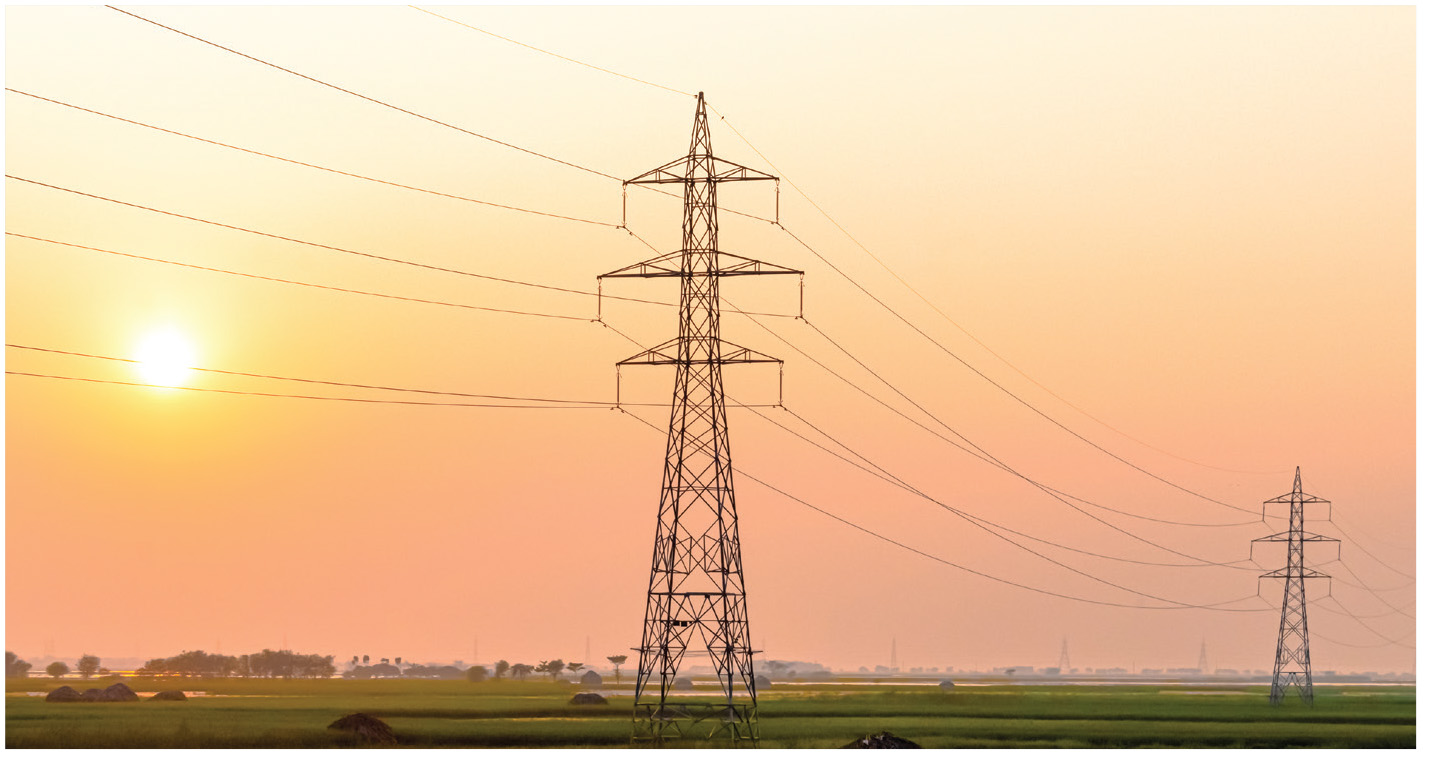
 The rapid growth of solar capacity is transforming power system operations across India. As renewable energy penetration increases, utilities are focusing not only on evacuation infrastructure but also on grid stability, forecasting, storage, demand flexibility and the integration of distributed energy resources. At the 19th edition of Renewable Watch’s “Solar Power in India” conference, a panel discussion on “Grid Integration of Solar Power: Utility Perspective” brought together Kailash Kumar Gupta, Chief Operating Officer, CTUIL; Deepti Mathur, Superintending Engineer, JVVNL; Naveen Nagpal, Vice President, BRPL; Bijuraj R., Deputy Chief Engineer, KSEB; and A.B. Rathod, Chief Engineer, GETCO. The discussion highlighted the evolving challenges and solutions associated with integrating large volumes of renewable energy into the grid.
Evolving grid integration challenges
Transmission infrastructure has been a key enabler of renewable energy growth, supported by investments in green energy corridors and dedicated evacuation systems, particularly in states such as Gujarat and Rajasthan. However, panellists noted that grid integration challenges are becoming increasingly complex. Beyond transmission capacity, the concentration of renewable generation in specific regions and the large-scale injection of solar power into networks originally designed for conventional generation are creating operational challenges. As renewable penetration rises, maintaining system stability will become just as important as evacuating power.
Panellists also highlighted the challenge of aligning transmission development with generation investments. Developers require grid connectivity within strict project timelines, while utilities must plan for future demand growth and network requirements. The emergence of new demand centres such as green hydrogen and green ammonia facilities, and data centres, is adding further uncertainty to long-term planning.
Over the years, transmission expansion has been the primary focus of renewable energy integration efforts. However, panellists noted that the nature of the challenge is changing as renewable penetration increases. Planning the grid is becoming more complex due to uncertainties around the pace and location of future demand growth. The scale of green hydrogen and green ammonia projects, data centres and industrial electrification, and their execution timelines remain difficult to predict. Utilities therefore need to balance near-term connectivity requirements with long-term network planning. Panellists also pointed out that renewable energy developers typically work within fixed project timelines and require timely grid connectivity, while transmission utilities must invest years in advance based on anticipated demand and generation growth.
This creates a planning mismatch that is becoming increasingly difficult to manage as the renewable energy sector expands. In addition, integration challenges are no longer confined to the transmission network. Higher shares of variable renewable energy are increasing the importance of system flexibility, operational preparedness and coordination across the generation, transmission and distribution segments. Panellists emphasised that future grid planning will require a more holistic approach combining network expansion with advanced forecasting, storage deployment, demand-side management and digital technologies. As renewable energy moves towards becoming a dominant source of generation, ensuring system readiness will be as important as adding new transmission capacity.
Curtailment driven by multiple factors
Panellists emphasised that curtailment is no longer solely a transmission issue. In high-renewable regions, operators are increasingly dealing with voltage management issues and grid stability challenges. A key concern is the decline in system inertia. Unlike conventional power plants, solar projects do not provide rotating mass to the grid. As a result, states with large solar capacities, such as Gujarat and Rajasthan, are operating systems with lower inertia levels, making them more sensitive to disturbances and increasing the risk of oscillations and voltage instability.
The growing share of inverter-based resources is also creating dynamic stability challenges. Interactions among large numbers of inverters require detailed transient and dynamic stability studies. To address these issues, utilities are deploying technologies such as STATCOMs and synchronous condensers to provide voltage support, improve fault levels and enhance system stability. In some cases, renewable power remains unscheduled due to low buyer demand. Consequently, curtailment is increasingly influenced by a combination of technical constraints, operational practices, market conditions and system flexibility.
Growing impact of rooftop solar
Panellists highlighted the increasing influence of rooftop solar and decentralised generation on network operations. Rajasthan’s experience demonstrates both the benefits and challenges of this transition. The state has expanded rooftop solar installations and PM-KUSUM projects, helping reduce aggregate technical and commercial losses by generating power closer to consumption centres.
At the same time, distribution networks designed for one-way power flows are now managing bidirectional electricity movement as consumers increasingly become generators. This is leading to issues such as reverse power flows, voltage fluctuations and localised congestion.
Improving visibility of distributed
generation
As rooftop solar capacity expands, utilities are placing greater emphasis on improving forecasting and scheduling across distribution networks. Several panellists noted that limited visibility into real-time rooftop solar generation complicates forecasting, scheduling and network planning. To address this, utilities are investing in digital twins and advanced network modelling platforms.
Rajasthan has initiated digital twin projects to strengthen load-flow analysis and improve understanding of network behaviour under different operating conditions. Utilities in Delhi are exploring similar tools to enhance monitoring of distributed generation and network utilisation. Kerala has adopted a complementary approach by making transformer-level hosting capacity information publicly available. This allows developers to assess solar penetration levels and available capacity before installing new systems, helping reduce congestion risks.
Storage gains importance
Utilities increasingly view energy storage as a key tool for renewable integration. By storing excess daytime solar generation and shifting it to evening demand periods, batteries can reduce curtailment, improve asset utilisation and support system reliability. For instance, Kerala is pursuing battery-integrated solar projects, while Rajasthan is exploring proposals that would require larger rooftop solar consumers to install battery storage alongside generation assets. From a transmission perspective, storage can also reduce the need for infrastructure expansion by providing greater flexibility in balancing generation and demand.
Demand flexibility becomes critical
Alongside storage, panellists stressed the importance of demand-side participation. Time-of-day and time-of-use tariffs are being introduced to encourage consumers to shift consumption towards periods of high solar generation. Rajasthan has already implemented time-based tariff mechanisms and is undertaking pilot programmes focused on demand flexibility. Delhi has introduced mandatory time-of-day tariffs for many commercial and industrial consumers, while residential participation remains largely voluntary. According to the utilities, even modest shifts in consumption patterns can deliver significant system-level benefits by reducing peak demand, lowering procurement costs and improving network utilisation.
Electric vehicle charging was identified as a major opportunity. Encouraging charging during periods of high solar generation can help absorb surplus renewable energy while reducing pressure during evening peaks.
Strengthening forecasting capabilities
Forecasting and scheduling remain central to renewable integration efforts. Utilities have reported improvements in solar forecasting through renewable energy management centres and advanced analytical tools. However, challenges still persist due to rapidly changing weather conditions like sudden cloud cover.
Several speakers highlighted the growing use of artificial intelligence and machine learning to improve forecasting accuracy. More advanced forecasting models are expected to support better scheduling decisions, smoother grid operations and improved renewable despatch. The panel also underscored the importance of data sharing. Access to network information, hosting capacity data and operational insights can help both utilities and developers improve planning and forecasting outcomes.
Outlook
As renewable energy capacity continues to expand, grid integration is becoming less about adding generation and transmission infrastructure, and more about managing a dynamic and increasingly complex power system. Technologies and solutions such as digital twins, advanced forecasting tools, battery storage, demand flexibility programmes, synchronous condensers and improved network visibility are expected to play a critical role in enabling higher levels of renewable energy integration.
Looking ahead, many of the key integration challenges are likely to emerge at the distribution level. As rooftop solar and other distributed energy resources continue to grow, utilities will require new planning approaches, operational tools and flexibility resources to maintain system reliability and efficiently integrate renewable energy into the grid.
