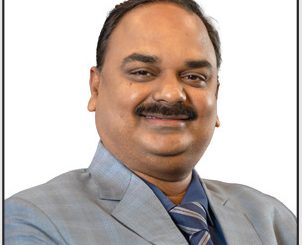
India’s rapid expansion in solar manufacturing capacity, supported by policy frameworks and rising domestic demand, has encouraged companies to move beyond conventional module supply towards more integrated business models that combine manufacturing, project execution and emerging applications such as agrivoltaics. Aroma Solar, the renewable energy arm of Aroma Agrotech, is one such firm in the solar manufacturing space. In an interview with Renewable Watch, Mayank Garg, Chief Executive Officer, Aroma Solar, discussed the company’s current business priorities, the role of artificial intelligence (AI) in manufacturing, their assessment of the domestic manufacturing industry as well as overcapacity concerns, and the company’s future growth plans. Edited excerpts…
Could you briefly outline Aroma Solar’s current business focus and the main products driving growth today?
Solar, for us, has never just been about making modules. The ambition has always been to build an ecosystem that addresses the full picture: how energy gets financed, installed and used over a 25-year life cycle, not just what gets shipped out of the factory gate. On the product side, growth is coming from high-efficiency modules built on M10R and G12R architecture, with TOPCon increasingly central to where we are headed. The emphasis is on energy yield, durability and performance over time.
The commercial and industrial (C&I) segment is where we are seeing the sharpest traction. Companies are under real pressure to cut energy costs, and solar makes financial sense for them. We have also moved beyond module supply. Our service models now include engineering, procurement and construction execution, short-term operations and maintenance (O&M), PPA-backed investment structures and agrivoltaics.
Can you share more on the recently commissioned 1.2 GW manufacturing facility in Haryana, and what it means for your next phase?
The 1.2 GW facility in Karnal, Haryana, is fully automated, and the decision to go 100 per cent robotic from day one, with AI-driven quality systems running alongside, came from a simple belief: in a 25-year asset class, the cost of a bad module appears years later in degraded output and failed warranties. Furthermore, the plant focuses on TOPCon technology and produces modules in the 620-635 W range at 23.5 per cent efficiency.
The next step is backward integration. We are actively evaluating a move into cells and wafers, which would give us deeper control over the value chain. The facility also supports our agrivoltaic expansion, and we have ensured that environmental, social and governance (ESG) considerations are built into both manufacturing and deployment.
Which segments are you focusing on most: agrivoltaics, rooftop, commercial or utility-scale, and why?
We do not think of these as competing priorities. Each segment has its own role in where the market is going. That said, the commercial and industrial segment is clearly where we are putting the most weight right now. Businesses are under pressure to act on energy costs and ESG commitments. Solar in that context is not a feel-good choice; it is a financial decision.
Agrivoltaics is a different kind of priority: it is not about speed, but depth. India has a land constraint and an agricultural income problem, and this model addresses both simultaneously. Rooftop is a longer game. Tariff increases and improving policy support are creating momentum, and it will become a high-volume segment over the next few years. Our approach in utility scale is more selective; it is competitive and margin-thin if you are not disciplined about which projects you take on. But it matters for national capacity targets, and we participate where efficiency and quality give us a genuine edge.
With competition rising in the solar manufacturing market, how would Aroma Solar stand out?
Competing on price alone is a race we have no interest in winning. Margins in the module market get thinner every year, and players who have built their position purely on cost are now feeling that pressure. Our differentiation has always been built on something harder to replicate: manufacturing precision, technology foresight and a deployment model that goes well beyond the module itself.
Going fully robotic from the start was not the cheapest path. But now it means low defect rates, higher consistency and better long-term module performance.
Are you using AI in your operations, and how do you see it improving quality, efficiency and planning at Aroma Solar?
At stages such as cell placement and lamination, AI is helping us detect micro-level inconsistencies that a human inspector would simply miss at production speed. Additionally, AI is also valuable for throughput and planning. The system is not just inspecting. It is flagging deviations, adjusting process parameters and identifying resource utilisation patterns. That continuous feedback loop means we are preventing problems, not catching them after the fact, which is what lets us scale output without scaling our error rate.
Moreover, higher efficiency architectures like TOPCon demand tighter manufacturing tolerances, and the margin for error shrinks. Having AI embedded in the production process means we are already building that muscle. Furthermore, this is complemented by manual testing and expert oversight, because the goal is not to remove human judgement, but to give it better data.
How do you see domestic module manufacturing evolving as prices, policy and imports keep shifting?
For a long time, Indian solar was heavily dependent on Chinese imports across the value chain: be it cells, wafers or polysilicon. That dependency has not disappeared, but it is being chipped away as domestic capacity grows and frameworks such as the Approved List of Models and Manufacturers (ALMM) and production-linked incentive (PLI) scheme create a more protected ecosystem for local manufacturers.
Policy is going to be the big driver of the next phase. PLI incentives, ALMM mandates, and the push for domestic cell and wafer sourcing are all pulling backward integration forward across the value chain. There is a short-term cost to this.
Domestic production is more expensive than importing from China right now, but it is the kind of short-term pain necessary to build long-term resilience. Automation and AI will further bridge the cost gap.
Structurally, the industry is slowly moving from module-only players towards full integration covering cells, wafers and eventually upstream components. Players who cannot make that transition will struggle as lenders and large developers raise the bar on what bankable actually means. Certifications, performance consistency and traceability are becoming non-negotiable. The goal should be a capable domestic industry that can genuinely compete on quality and eventually on exports, rather than surviving purely on protection.
What do you think about the overcapacity concerns and decreasing demand for manufacturing in the solar sector?
The concerns are legitimate. India’s solar module and solar cell manufacturing capacity combined is now more than 200 GW, far greater than the annual installed capacity addition. This mismatch is showing up in inventory pressure and tighter margins. But it signals a structural problem with demand, since the underlying need for solar capacity in India is enormous. What we are dealing with is a timing gap, not a demand gap.
This gap is being caused by project execution delays, financing cycles and policy transitions. Large project pipelines are real, rooftop adoption is still in the early stages, and policy-driven demand through schemes and mandates will keep coming. The question is when, not whether.
In the meantime, overcapacity has a predictable consequence: price compression. That pressure separates manufacturers who have genuine cost efficiency and scale from those who are banking on a supply-constrained market to protect margins. Players who have invested in high-efficiency technology, integrated value chains and bankable quality will survive this phase.
What challenges does the manufacturing sector face, and what policy recommendations do you have?
The gap in the sector is less about policy design and more about execution consistency. Manufacturers are making 10-to 15-year capital commitments. When the policy environment shifts frequently, or when implementation lags years behind intent, it creates real planning risk.
On the supply side, module manufacturing has come along well, but cells, wafers and polysilicon still remain weak points. Targeted incentives for upstream components, not just more of the same, would help close the import gap in a meaningful way. Financing is another pressure point that often gets underweighted: low-cost capital access is a genuine barrier, especially for small enterprises and rural areas.
On the demand side, faster tender execution, continued rooftop support and scaling up Pradhan Mantri Kisan Urja Suraksha evam Utthaan Mahabhiyan projects would help absorb the manufacturing capacity that has already been built.
For India to be taken seriously as a global manufacturing hub, export competitiveness needs direct attention as well. That means export incentives, trade agreements and quality certifications aligned with international standards.
What are your growth plans?
The goal over the next three to five years is to grow from a strong domestic manufacturer into something genuinely integrated and globally relevant. Manufacturing capacity will expand, with the same robotic-led, quality-first discipline we have built in Karnal.
Technology will be our most important investment over this period. We need to stay ahead of where efficiency benchmarks are heading globally, not just domestically. Backward integration into cells and potentially wafers is a related priority. Deeper value chain control means better margins, better quality oversight and less vulnerability to import disruptions.
Across segments, we will continue building in C&I, agrivoltaics and residential rooftop, which gives us a demand base that is not over-reliant on any single customer type or policy cycle. Long-term O&M, asset monitoring and performance optimisation are also on the road map.
The goal is an integrated, technology-led solar business that competes on both scale and substance.