

 By C. Nallasivan, Assistant Executive Engineer, Tamil Nadu Power Distribution Corporation Limited, and Dr S. Sendil Kumar, Professor, S.A. Engineering College, Chennai
India’s renewable energy growth over the past two decades has been driven by rapid capacity expansion. Tamil Nadu, one of the earliest adopters of wind energy, played a pivotal role in establishing the country’s wind power foundation through large installations beginning in the 1990s. Tamil Nadu remains one of India’s most renewable-intensive states, currently operating more than 27 GW of installed renewable energy capacity, including approximately 12.08 GW of wind power and over 11.7 GW of solar power. The year 2025 marked a defining moment for Tamil Nadu’s wind sector, with daily wind generation surpassing the 100 MU threshold on 35 occasions – the highest frequency of such high-output events ever recorded. This milestone reflects not merely capacity growth, but the increasing maturity of forecasting practices, grid management and renewable integration across the state’s wind corridors.
Today, however, renewable-rich states face new challenges. Grid congestion, seasonal curtailment and land constraints increasingly limit the effectiveness of adding new generation capacity. Recognising this transition, the Ministry of New and Renewable Energy (MNRE) introduced the National Repowering and Life Extension Policy for Wind Power Projects, 2023, emphasising the need to modernise ageing wind assets to maximise energy yield and infrastructure utilisation. Tamil Nadu has now reinforced this national vision through policy reforms.
Tamil Nadu strengthens repowering framework
On January 14, 2026, the Tamil Nadu government approved key amendments to the Tamil Nadu Repowering, Refurbishment and Life Extension Policy for Wind Power Projects, 2024. The order reflects a clear strategic intent: transform existing wind corridors into high-efficiency renewable generation zones.
Key policy refinements include mandatory repowering consideration for wind energy generators commissioned before April 1, 2016, upon completion of operational life. The policy also includes provisions for performance-linked eligibility for repowering based on improvements in annual generation rather than merely an increase in installed capacity. Further, the amended policy permits the continuity of existing PPAs during transition, with options for new market-linked arrangements after completion and converting repowered wind projects into wind-solar hybrid projects. These measures position Tamil Nadu as the most policy-ready state for large-scale wind repowering.
Why repowering matters now
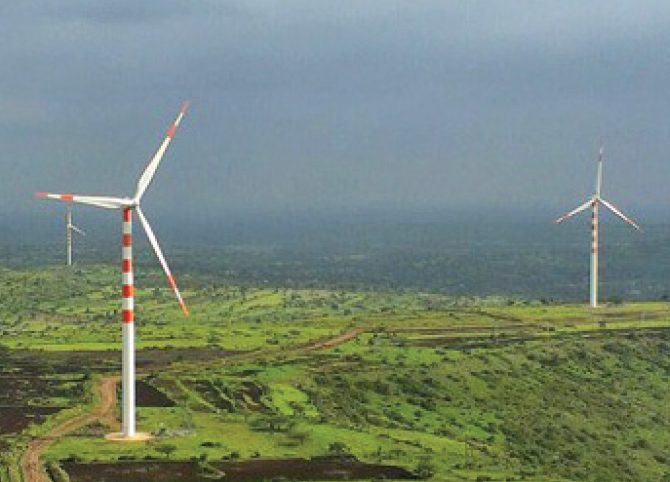
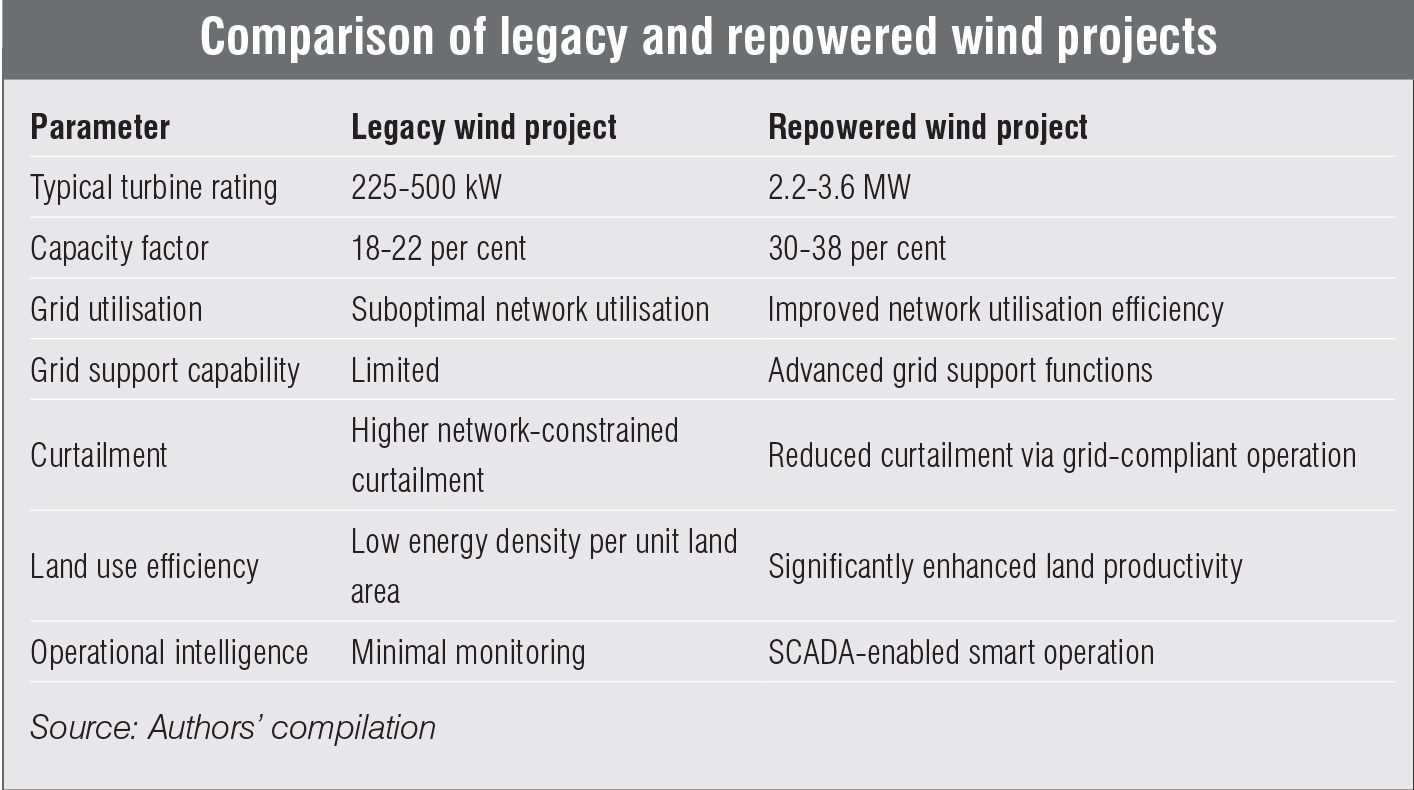
Early wind farms in the country largely consist of turbines rated between 225 kW and 500 kW with lower hub heights and limited control capability. Modern wind technology enables significantly higher energy capture without expanding the land footprint. Repowering delivers multiple advantages: higher generation from existing wind sites, better utilisation of already-developed transmission infrastructure, reduced renewable curtailment, improved grid support capability and extended operational life of renewable assets. Rather than building outward, repowering enables growth within existing renewable ecosystems.
A preview of the global renewable future
Globally, countries such as Germany, Denmark and Spain have demonstrated how systematic wind repowering modernises ageing fleets, increases energy output, and reduces turbine density and visual impact.
India now stands at a similar policy moment. Repowering is not only a technical upgrade but a regulatory challenge requiring alignment of ownership structures, legacy tariffs, financing mechanisms and grid access rights. Clear incentives, streamlined approvals and evacuation certainty are essential to unlock investment. If implemented effectively, wind repowering could emerge as one of India’s most cost-efficient pathways to accelerate renewable capacity while optimising existing infrastructure.
From capacity addition to asset optimisation
 India’s renewable energy transition is evolving through three stages:
- Phase One – Capacity addition: The first phase focused on rapid deployment. Policy incentives, feed-in tariffs and investor confidence drove large-scale installation of wind and solar projects. The objective was simple: build capacity quickly and reduce dependence on fossil fuels.
- Phase Two – Grid integration: As renewable penetration increased, new challenges emerged. Grid operators had to manage intermittency, forecasting errors, congestion and voltage stability issues. Renewable energy was no longer a marginal contributor; it became a dominant operational factor.
- Phase Three – Asset optimisation: India is now entering this phase. Instead of merely adding capacity, the focus has shifted towards extracting greater performance from existing infrastructure. Repowering represents the third phase – an approach strongly supported by both the MNRE and Tamil Nadu policy frameworks.
- Hybridisation – The next logical step: One of the most forward-looking provisions in the Tamil Nadu policy is the permission to convert repowered wind projects into wind-solar hybrid systems. Hybridisation enables better utilisation of transmission capacity, improved generation profile across seasons, enhanced grid stability and increased project revenue streams. This marks a significantshift towards integrated renewable energy parks rather than standalone generation assets.
Open access and decarbonisation advantage
Tamil Nadu remains one of India’s most favourable states for renewable open access, supported by strong industrial demand and established wind corridors. As export-oriented industries accelerate decarbonisation to meet global sustainability standards, direct procurement of renewable energy is becoming a strategic necessity rather than an environmental choice.
The evolving India-European Union trade environment and zero-tariff export opportunities further strengthen this transition, particularly for Tamil Nadu’s textile and manufacturing sectors that supply European markets. Access to competitively priced green power through repowered wind projects enables industries to reduce carbon intensity, enhance ESG (environmental, social and governance) compliance and maintain export competitiveness. In this context, wind repowering combined with open access frameworks, positions Tamil Nadu’s renewable ecosystem as a key enabler of low-carbon industrial growth.
A strategic opportunity for Tamil Nadu and India
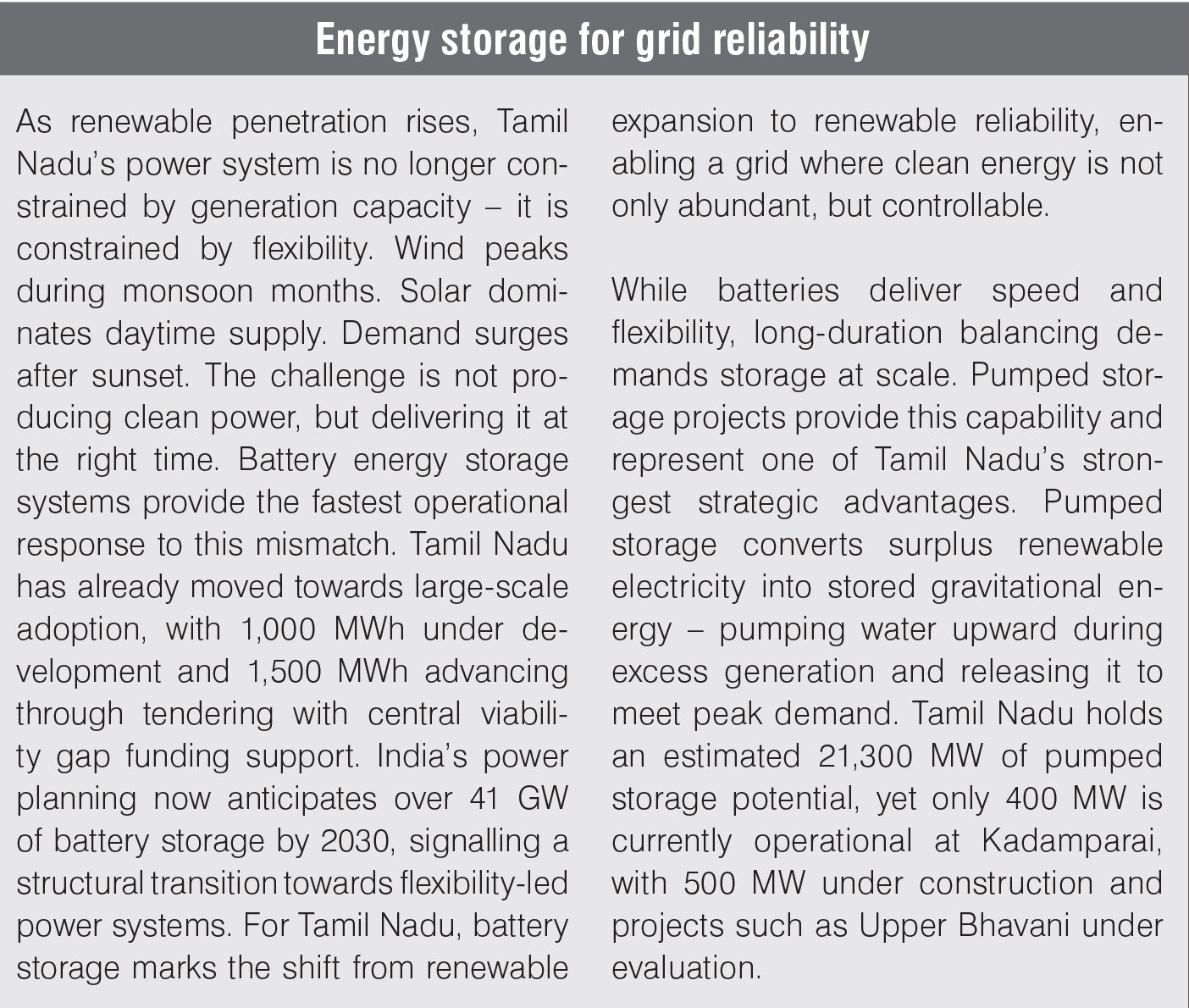
The focus of Tamil Nadu’s renewable transition is shifting from expansion to optimisation, defining the next phase of India’s clean energy journey. Wind repowering shows how legacy assets can be transformed into efficient, grid-supportive infrastructure without expanding land or transmission networks. Supported by battery storage for rapid flexibility and pumped storage for long-duration balancing, renewable corridors can deliver reliable round-the-clock green power for industry. The energy transition ahead will depend less on adding capacity and more on integrating intelligence, storage and flexibility – once again placing Tamil Nadu at the forefront, demonstrating how legacy wind investments can anchor a dependable, competitive and future-ready clean energy economy.
