 By Vaibhav Singh, Executive Director, PwC
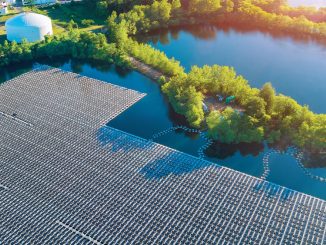
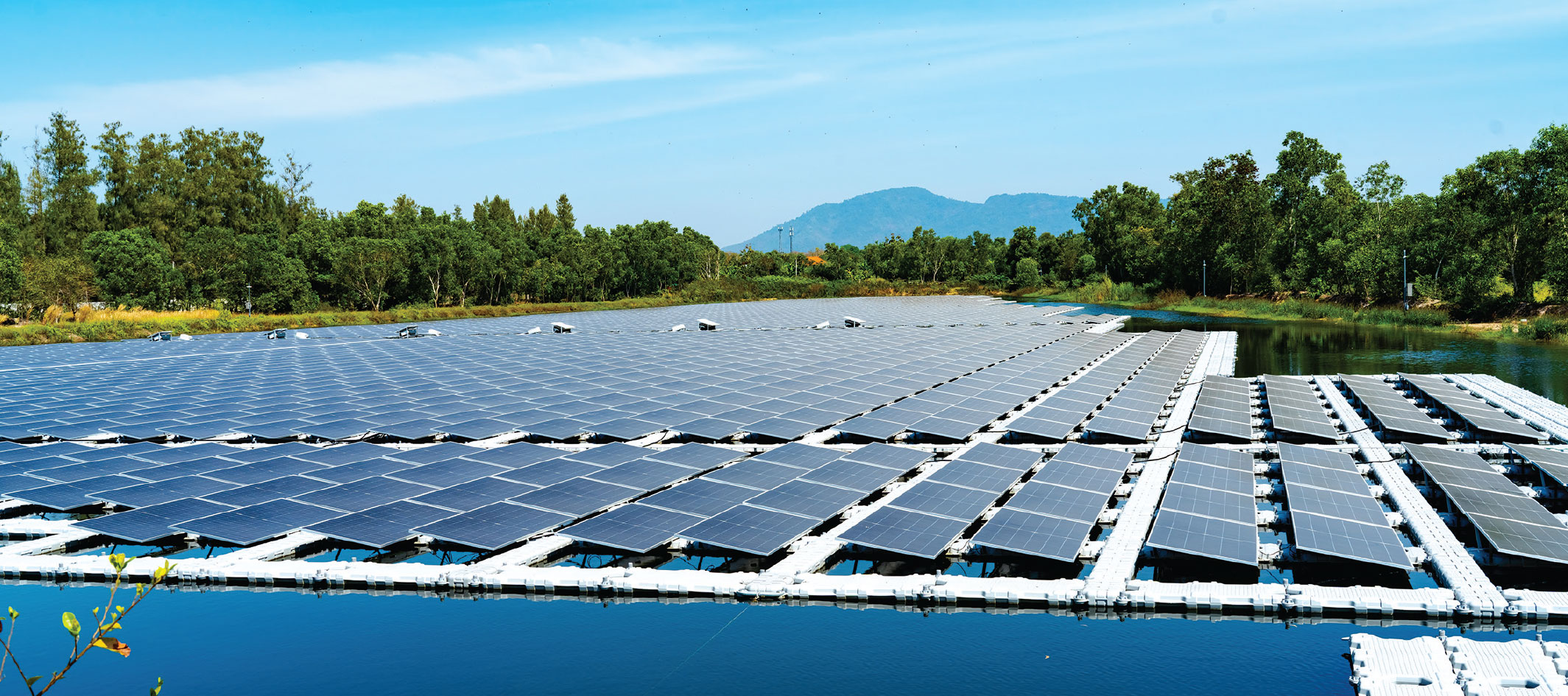
Floating solar PV (FSPV) technology is emerging as a key driver of solar energy growth in India, effectively addressing land constraints and providing a promising alternative to complement and diversify existing renewable energy portfolios. FSPV can be installed over reservoirs, dams, lakes, ponds and backwaters, offering several advantages such as reduced land usage, improved capacity utilisation factor (CUF) due to the cooling effect of water, water conservation by reducing evaporation, dual use of water bodies, and often the utilisation of existing power evacuation infrastructure. India’s FSPV potential is estimated at around 207 GW, assuming 40 per cent utilisation of the available water surface area.
On the technology front, important components of FSPV systems include glass-to-glass bifacial solar PV modules, high-density polyethylene (HDPE) floaters, and ballast anchoring with mooring ropes.
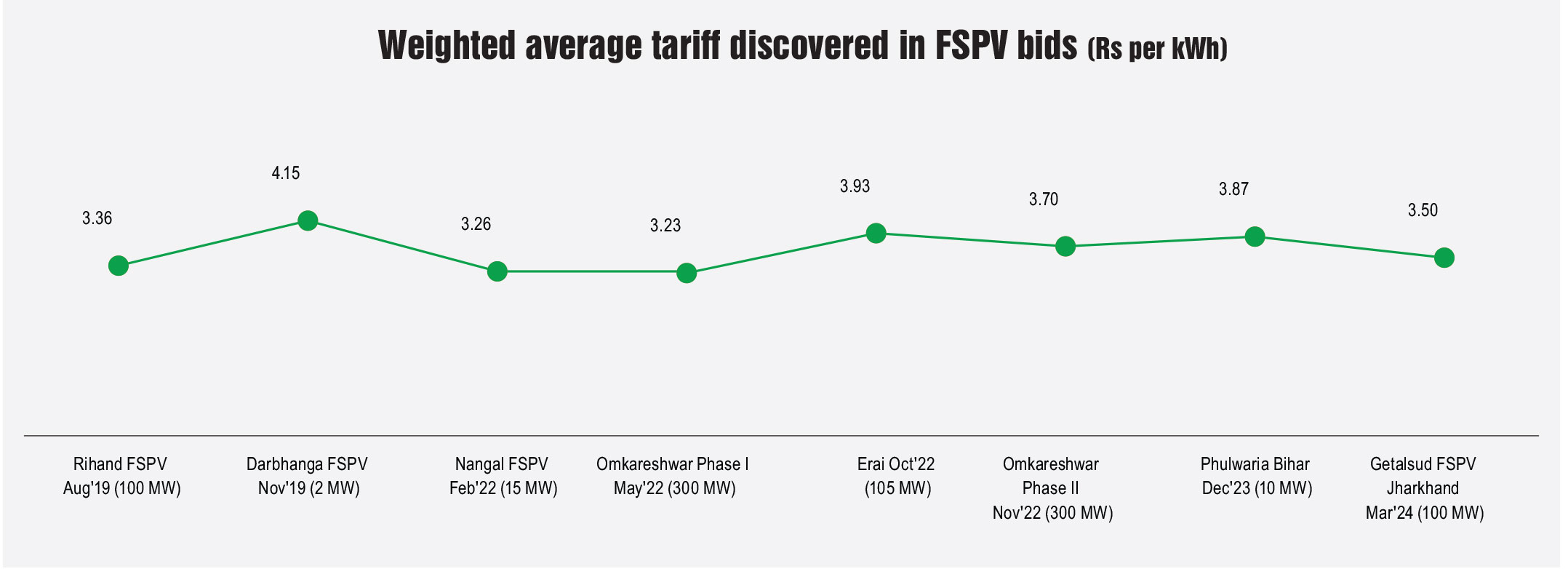
The weighted average tariff for FSPV over the past two years has been around Rs 3.50 per kWh, about 35 per cent higher than that of ground-mounted solar due to increased capital costs associated with floaters and anchoring/mooring systems.
Several FSPV projects are currently in the bidding phase, including a 110 MW project in Gujarat, for which expressions of interest have been invited by Gujarat State Electricity Corporation Limited, and a 234 MW project in Jharkhand, for which a tender has been issued by the Damodar Valley Corporation (DVC).
FSPV has witnessed rapid growth, with 600-700 MW of commissioned capacity and around 1 GW of capacity under construction as of October 2025. According to the International Energy Agency, India’s FSPV capacity could reach up to 10 GW by 2030, provided supportive policy regulations and financial incentives are in place. To achieve this goal, 1.5-2 GW of annual FSPV capacity addition is required until 2030, considering the current installed capacity of approximately 600-700 MW.
At the state level, some states like Odisha and Kerala have released separate policies and guidelines for FSPV, while others, like Madhya Pradesh and Telangana, have integrated FSPV into their broader renewable energy policy. These dedicated FSPV policies and guidelines have enabled large-scale projects in states like Telangana, Kerala, Madhya Pradesh and Odisha, accelerating adoption and future expansion. Here are some examples:
Odisha issued “Guidelines for establishing FSPV power projects on water bodies” in January 2025. It provides a structured framework for FSPV projects, including the formation of a reservoir committee, allocation of reservoirs, and well-defined statutory clearances and permissions. Odisha plans to develop 1 GW of FSPV capacity by 2030.
Kerala issued Guidelines for the Development of Floating Solar Power Plants in March 2025. It has introduced a single-window clearance system, and proposed the formation of committees for approvals, technical appraisals and grid connectivity.
 Telangana’s Clean and Green Energy Policy promotes FSPV development and facilitates water body allocation for FSPV.
The Madhya Pradesh Renewable Energy Policy, 2022 explicitly mentions the promotion of FSPV projects as part of its strategy to utilise reservoirs and water bodies.
These states account for over 85 per cent of FSPV installations in the country, owing to supportive policies and defined standards. Notable projects include the 100 MW Ramagundam plant in Telangana, the 92 MW Kayamkulam project in Kerala, and the 600 MW Omkareshwar project in Madhya Pradesh. Odisha is also preparing to tender the 225 MW Indravati FSPV project, signalling strong future growth.
Recent advancements in FSPV technology in India include cold-resistant designs for harsh climates, flexible mooring systems for reservoirs with fluctuating water levels, and innovative installations on municipal and industrial reservoirs.
Cold-resistant design: The 100 kW FSPV project on Dal Lake in Jammu & Kashmir uses floaters and cables engineered to withstand freezing temperatures, ice formation, and UV exposure in extreme winter conditions.
Flexible mooring system: A 10 MW project in Purulia, West Bengal, employs a mooring design that adapts to large water-level variations.
FSPV on municipal reservoir: A 5 MW floating solar project developed by CREST and Quant Solar is installed at Chandigarh’s municipal reservoir, with mooring ropes and cables designed to handle large water-level variations.
FSPV on industrial reservoirs: Tata Power has installed a 10.8 MW FSPV project on the cooling pond of Tata Steel’s Jamshedpur plant.
PSUs such as Solar Energy Corporation of India, NTPC, NHPC, NHDC and SJVN are planning multi-GW projects, while private developers and EPCs, including Amp Energy, Tata Power, Ciel & Terre and Quant Solar, have established themselves in the FSPV project execution space. Manufacturers such as Ciel & Terre, Floatex and Quant Solar provide specialised floats while Fimer offers specialised inverter solutions. This collaboration across developers, EPCs and OEMs is driving rapid scale-up and technological advancement in floating solar.
India’s FSPV sector faces significant challenges, such as lack of national policy, high capex costs without financial support, and inadequate monitoring of biodiversity and performance. Addressing these issues requires clear guidelines, financial incentives, robust environmental and social impact assessments (ESIAs) and improved technical standards through capacity building.
The MNRE has introduced a scheme for the “Development of Solar Parks and Ultra Mega Solar Power Projects”, which includes FSPV in its framework, offering a plug-and-play model with central financial assistance (CFA) of up to Rs 2.5 million for DPR preparation and Rs 2 million per MW or 30 per cent of the project cost (whichever is lower) for park development. A notable example of an FSPV project under this solar park scheme is the 100 MW Rengali FSPV project in Odisha.
The ministry is currently drafting a Policy Framework Recommendation for Floating Solar in consultation with relevant stakeholders. This framework aims to provide enhanced financial support for FSPV projects beyond the standard incentives available under the existing scheme. A conducive policy environment, combined with adequate incentives, can go a long way in enhancing the deployment of FSPV capacities across the country.
The key gaps relating to FSPV projects and recommendations are outlined in the accompanying table.
 The International Solar Alliance, along with PwC and GERMI, has developed a Global Floating Solar Framework (October 2025) that addresses the key challenges for the sector. This framework provides a robust and comprehensive blueprint to help nations offer critical technical, regulatory, financial, and environmental and social guidance for planning, designing and implementing FSPV projects. It addresses real-world deployment challenges and offers practical solutions. The framework’s decision-support tool helps assess the feasibility and readiness of FSPV projects.
Despite existing challenges, there have been successful projects like the Omkareshwar Floating Solar Project, which has become a best practice example by providing cost-effective tariffs and technological solutions, allowing developers and investors to achieve the required returns.
Developed under the MNRE’s solar park scheme by RUMSL, the project has an operational capacity of 278 MW, comprising 100 MW by Amp Energy, 90 MW by SJVN, and 88 MW by NHDC. Another 322 MW capacity is currently under development. Key success factors of the project include:
Plug-and-play model: RUMSL provides 100 per cent water to developers, and land for storage, to facilitate smooth project execution;
Robust risk mitigation: Multiple payment security layers and state guarantees minimised financial and offtake risks;
Transparent data sharing: Detailed ESIA findings and project documents were shared with bidders before bidding;
Environmental and social compliance: Dedicated ESIA conducted and mitigation measures implemented to avoid delays.
With successful large-scale FSPV installations, technology advances and strong policy-regulatory support at both the national and state levels, India has the potential to become a global leader in FSPV deployment. Financial incentives ensuring tariff viability will further accelerate adoption and cement India’s position as a frontrunner in FSPV development.
(With inputs from Aayush Jain and Rishabh Sharma, PwC India)