By Rohit Chandra, Co-Founder and Chief Executive Officer, OMC Power
On the rooftop of a hospital in a remote district of Uttar Pradesh, a quiet revolution is under way. What was once a sun-scorched, unused space is now a lifeline, generating clean energy that powers critical healthcare services. This transformation is not just about sustainability; it is about survival in a world racing against the clock of climate change. Every kilowatt-hour produced by solar panels lowers energy costs, replaces diesel, cuts emissions and strengthens the hospital’s ability to serve its community without locking into fossil fuel dependency.
Across India, telecom towers and community rooftops represent untapped opportunities to drive climate resilience through decentralised renewable energy generation. However, adoption remains painfully slow. These spaces could become engines of sustainability, cutting carbon footprints, reducing diesel dependency and creating circular economic loops where resources are optimised and savings reinvested locally. The hospital rooftop example is not an exception; it is a blueprint for what is urgently needed across sectors. From healthcare to telecom to education, the need to pivot towards decentralised energy solutions is critical. Every delay locks us deeper into fossil fuel reliance and pushes climate deadlines further out of reach. Systemic adoption now is the only way forward.
Why decentralisation matters
Different segments must act now and benefit the intersection of economics, sustainability and environment. Healthcare, telecom, agriculture, education and small enterprises cannot afford to delay decentralisation. From an economic perspective, decentralised energy delivers predictable costs and significant savings. Hospitals and rice mills have reported 40-60 per cent reductions in energy expenses, freeing capital for core operations. Telecom operators cut fuel logistics and maintenance costs, reinvesting savings into network expansion. For small enterprises, lower energy bills mean funds for technology upgrades and market growth.
From a sustainability standpoint, decentralised systems create resilience against grid failures and fossil fuel volatility. They enable circular economic loops where savings are reinvested locally, strengthening grassroots economies and reducing resource waste. Schools powered by solar can run digital programmes uninterrupted, bridging education gaps and fostering inclusive growth.
Environmentally, the impact is transformative. Every kilowatt-hour of solar replaces diesel, preventing approximately 0.85 kg of carbon emissions. Hospitals, telecom towers and rice mills powered by OMC Power have collectively avoided thousands of litres of diesel annually, reducing air pollution and improving health outcomes. These actions align with sustainable development goals – affordable and clean energy, climate action and good health – making decentralisation not just a business decision but a global responsibility. The case is clear: decentralised energy is the intersection of economic viability, operational resilience and environmental stewardship. Stakeholders across sectors must act now to scale adoption and secure a sustainable future.
For decades, centralised grids have powered nations, but they often struggle to meet the diverse and evolving needs of modern sectors. Hospitals, telecom networks, schools and small enterprises require reliable, cost-effective energy – something that traditional grids and diesel generators cannot always guarantee. Beyond reliability, the challenge now lies in adopting predictive energy solutions to anticipate demand and optimise performance, addressing growing climatic issues, and managing rising operating expenses. Institutions must leverage their own assets – rooftops, land and infrastructure – to generate clean power. Doing so not only cuts costs significantly but also supports health, safety and ecology by reducing emissions, minimising pollution and creating sustainable energy loops. Diesel generators, the default backup option, are expensive, polluting and logistically challenging, making the case for decentralised renewable energy stronger than ever.
Decentralised renewable energy
Rooftop systems, solar mini-grids and hybrid models deliver power where it is needed most. Unlike large-scale projects, decentralised systems are agile, faster to deploy and tailored to local realities. They also align perfectly with circular economy principles: reducing waste, cutting emissions and creating local economic loops. OMC Power has been focused on creating an impact with its decentralised solar solutions for diverse segments such as healthcare, commercial and industrial users, and grassroots communities. After installing solar, hospitals and medical colleges have been saving over 40 per cent energy costs annually, utilising their rooftops more effectively and reducing carbon emissions significantly. Hospitals are successfully redirecting the savings to healthcare infrastructure and improving their services. Meanwhile, telecom towers that have switched to solar have eliminated fuel transport costs and reduced their environmental impact. Decentralisation is not just an energy solution, it is a catalyst for systemic efficiency and sustainability.
Sectoral impact: From healthcare to telecom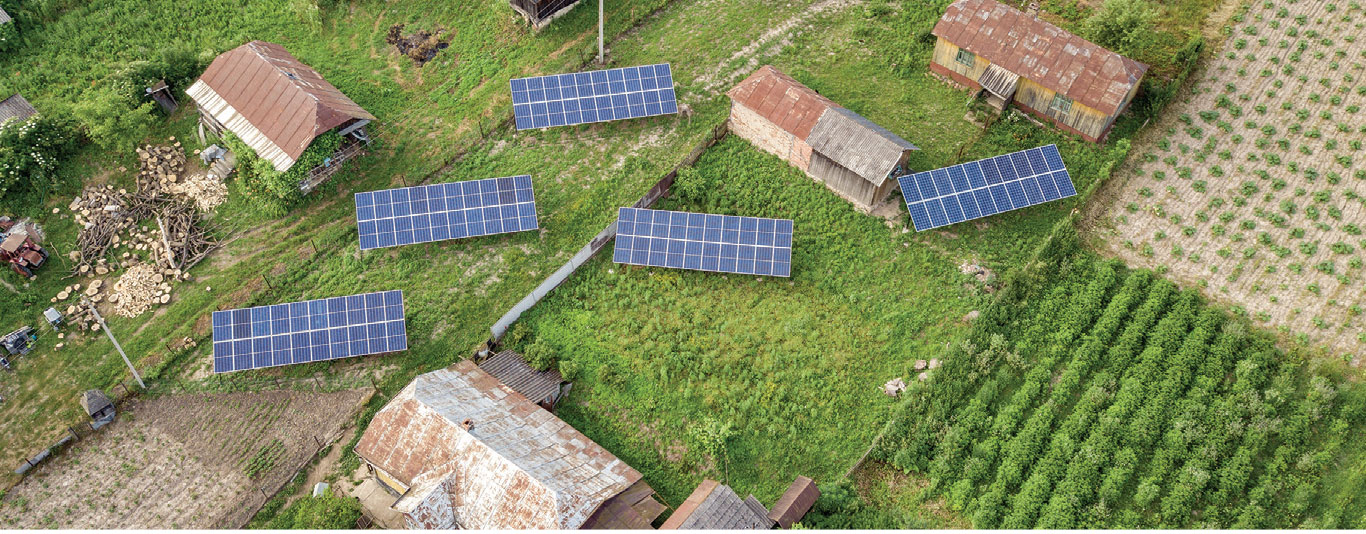
Hospitals are energy-intensive facilities. From operating theatres to diagnostic labs, uninterrupted power is non-negotiable. Traditionally, hospitals relied on diesel generators during outages, incurring high fuel costs and maintenance expenses. Today, decentralised solar systems are breaking the fossil fuel lock-in.
A medical college in Uttar Pradesh, for example, has been solarised with the support of OMC Power. By installing rooftop solar panels under an energy-as-a-service (EaaS) model, the institution has reduced its energy bills, including diesel costs, by 40-50 per cent. The predictable monthly energy expenses allowed administrators to redirect savings towards telemedicine equipment and digital patient records. “Our rooftop now powers our future,” says the college administrator. “We have cut costs and improved care without upfront investment.”
Another hospital reported annual savings of over Rs 1.2 million after switching to decentralised solar with OMC Power’s solutions. Those funds were reinvested in waste segregation and recycling programmes, closing the loop between energy efficiency and environmental responsibility.
Telecom: Powering connectivity without diesel
Telecom towers are lifelines for digital connectivity, yet they have historically relied on diesel generators, creating a massive carbon footprint and logistical challenges. The adoption of the EaaS model by telecom operators, powered by OMC Power’s decentralised solar solutions, has replaced diesel with clean solar energy. This shift not only reduces emissions but also ensures predictable costs and operational reliability. For telecom companies, decentralised energy means fewer fuel deliveries, lower maintenance requirement and uninterrupted service, even in remote areas.
One telecom operator reported a 40 per cent reduction in operating costs after adopting EaaS with OMC Power’s solar solutions. The savings were reinvested in network expansion, improving connectivity for rural communities and enabling services such as telemedicine and online education.
Education and small enterprises: Enabling growth
Schools and small businesses in rural areas often face unreliable grid supply, limiting their ability to adopt digital tools or scale operations. Decentralised energy solutions from OMC Power provide consistent power for classrooms, computer labs and small manufacturing units. A rural school powered by a solar mini-grid now runs digital learning programmes without fear of blackouts – a small but significant step towards bridging the education gap.
For small enterprises, reliable power means predictable production schedules and reduced reliance on costly diesel. A dairy cooperative in Uttar Pradesh, powered by decentralised solar from OMC Power, reduced energy costs by 30 per cent, allowing it to invest in cold storage and expand its market reach.
Circular economy in action
Decentralised energy does not just deliver electricity; it creates a ripple effect of resource optimisation and economic resilience. It reduces fuel waste, enables infrastructure sharing and supports innovative EaaS models while creating local economic loops that strengthen grassroots economics through maintenance and services that create jobs.
A rice mill powered by OMC redirected its energy savings to launch a waste segregation and recycling programme. By reducing diesel dependency and reinvesting in sustainability initiatives, the rice mill owner created a virtuous cycle of lower emissions and better waste management.