

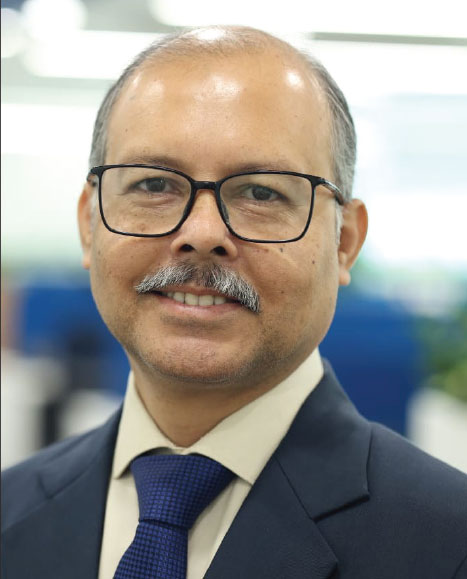
 Renewable mini grids are considered as vital elements of the energy ecosystem for delivering reliable, clean power to remote and underserved regions, supporting rural development and energy access. In the third episode of the Renewable Watch Podcast, Sarthak Takyar, Associate Director, and Mohammed Ali Siddiqi, Research Analyst, Renewable Watch, interacted with Dr Debajit Palit, Centre Head, Centre for Climate Change & Energy Transition, Chintan Research Foundation, on the evolving renewable mini grid landscape, energy access and the next big shift in renewable energy. Edited excerpts…
Do you think the renewable mini grid segment has grown as expected initially, or did it fall short?
Initially, mini grids were implemented in remote areas, and the concept was to implement them in places where the grid could not reach. These mini grids were expected to be managed by the local population, with the government offering capital cost subsidies to set up mini grids while the local population formed committees to manage the projects. The challenge emerged once the government left and the local communities were burdened with managing the mini grids on their own. While communities could manage the social aspects, they lacked the technical skills needed for long-term operation. The systems functioned well for the first few years, but as villagers started using more appliances such as televisions and small pumps, the load exceeded the design capacity, which led to battery deterioration. In such remote locations, technicians were difficult to access and no funding mechanisms were available for repairs once the government teams withdrew. Consequently, many early mini grids failed unless continuous technical support was provided.
Mini grids are outside the purview of electricity regulation under the Electricity Act, 2003, and their implementation in rural areas does not require any licences. Private players thus entered the sector in many states such as Bihar, Uttar Pradesh and Jharkhand. However, high capital costs kept tariffs elevated, limiting household affordability. Business models were not considered bankable, which meant banks were unwilling to provide debt financing or loans to these companies. Where financing was available, interest rates were high, pushing tariffs even higher. A major policy-related issue was the ambiguity around how mini grids were treated. They were consistently portrayed as solutions only for remote areas and seen as alternatives, rather than complements, to the national grid. This created confusion among communities.
What steps can be taken today to support the growth of renewable mini grid players and the overall sector?
The renewable mini grid sector definitely has a future, but the way we are implementing mini grids today needs to change. Technology is making many things possible. Solar prices have fallen, and storage prices are also expected to decline. Therefore, implementing sub-MW-scale mini grids in the range of 800 kW to 1.2 MW, covering a cluster of villages, can help achieve economies of scale and reduce overall costs. One key insight that has emerged from my research is that the productive use of electricity is the strongest driver for the success of mini grids. However, most mini grids in India are not designed to support productive applications such as irrigation. A 50 kW system simply cannot drive productive use. If a mini grid of around 500 kW is developed, this challenge could be addressed through economies of scale, improved bankability and strong viability.
Furthermore, with the increasing adoption of rooftop solar and solar irrigation systems, these installations will eventually be connected to local mini grids in both urban and rural regions. These mini grids can then be integrated with the main grid, creating an interoperable system. Mini grids should not be viewed as isolated systems competing with the grid; instead, the two should be interconnected to complement each other. With the announcement of the India Energy Stack, the complementary convergence of the grid and mini grids is the only logical way forward.
PM-KUSUM was envisioned as a game-changer for farmers by combining decentralised solar with income opportunities. However, it has faced implementation challenges. Is there a large gap between the ambition of decentralised renewables programmes and their actual on-ground implementation?
The PM-KUSUM scheme has three components. The main challenge lies in Component A, which involves setting up solar power plants on farmers’ land. Farmers find it difficult to raise the required capital, and there are concerns about whether they will reliably receive revenue from the discom. The Private sector is also not coming forward to jointly develop these projects with farmers.
One approach that may help, and which the government is already considering, is to integrate Component A into an agrivoltaics framework. This would allow the same land to be used for both solar power generation and agriculture. The challenge, however, is that India has not yet defined agrivoltaics for its own conditions. Countries such as Japan and Germany already have guidelines that specify acceptable levels of agricultural productivity loss under solar installations, but in India, we have not identified suitable crops for such systems. Both the state and central governments need to work together. Agricultural universities should collaborate with institutions offering energy programmes to identify viable crops and develop appropriate models, and then take this forward. This could potentially resolve the challenges associated with implementing Component A.
Component B is already advancing and Component C (feeder solarisation) is also gaining traction. The government has allowed feeders to be solarised either directly by discoms or through alternative arrangements. Maharashtra, for example, has decided to solarise most of its feeders, and other states are following suit.
In your research, you examined the World Bank’s pay-as-you-go model and its potential to drive the adoption of distributed renewable energy (DRE) in India based on experiences in Africa. How do you see this approach addressing energy poverty?
In the context of PM-KUSUM, or for any agricultural equipment that can run on solar or other forms of distributed renewable energy, we need to rethink how DRE systems are designed. This equipment is large and was originally designed to operate on electricity from larger systems. Now we are trying to power it using much smaller systems. If we can redesign a power tiller or similar equipment so that it consumes less electricity, is smaller in size and yet produces the same output through higher efficiency, the overall consumption declines. With lower consumption, the solar capacity requirement also declines. This directly lowers capital costs and improves project viability.
Therefore, if we want productive-use equipment to operate on renewable energy systems, we need to work on improving not only the efficiency of solar panels but also the efficiency of electric motors. The equipment must either deliver more output with the same input or at least the same output using less energy. We need to prioritise such innovations. There is a significant need for policies and research in this direction. Technical institutions such as the IITs, many of which have Centres for Rural Technology, are already working on solutions, but these efforts must be scaled up to meet rising demand. We must produce more equipment that can efficiently run on DRE systems.
Many developers appear to be shifting their focus to African countries, signing MoUs and building extensive project pipelines there. What is driving this trend?
This is a good choice by developers, simply because a large population in Africa still lacks access to electricity. There are over 500 million people in Africa without electricity. It is a huge market, and this is the right time for us to expand into African countries and explore the opportunity.
We are well-positioned to replicate Indian models in Africa because we faced a similar situation in the 1970s and 1980s, and have since moved past that stage. We understand what Africa needs, what kinds of models are feasible, what pricing mechanisms could work and which tariffs are both suitable and affordable. Taking India’s technological and institutional experience to Africa is the right step and can help African countries expand their energy access. The main challenge, however, is funding. It is not clear whether African governments have enough financial resources to support such programmes. In India, the government invested more than Rs 800 billion to electrify all villages and households and strengthen the distribution sector. That is a massive investment. But Africa does have one advantage: fuel supply is typically not subsidised. People already spend substantial amounts to access electricity in some form. They use very costly dry cell batteries for lighting. In comparison, a solar mini grid is not only more viable but also provides better quality light.
Therefore, for companies implementing mini grids and rooftop solar systems, or selling solar products, Africa is a promising market. It also presents a strong opportunity to deepen the India–Africa partnership. In my view, instead of Indian companies competing with each other in the African market, the government should coordinate their efforts. It could allocate different countries to different companies, so each company focuses on five countries. This way, Indian companies avoid competing with each other and are better positioned to compete with companies from other countries.
Tune in to the full podcast on YouTube, Spotify and Apple Podcasts…

