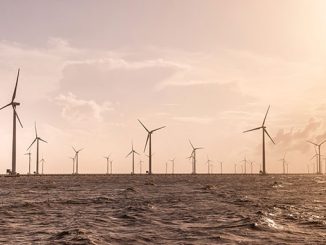
Wind power is expected to play a key role in the country’s journey towards 500 GW of non-fossil fuel capacity by 2030. Although wind power was one of the earliest renewable technologies to be deployed at scale, the sector has struggled to maintain its growth momentum in recent years. Annual installations have averaged around 4 GW, well below the levels needed to meet national requirements. The slowdown can be attributed to various structural and operational challenges, ranging from supply chain bottlenecks and land acquisition delays to policy inconsistencies and resource variability. However, new opportunities are also emerging, particularly in the commercial and industrial (C&I) segment and in hybrid project development.
This article presents key insights from a recent panel discussion at Renewable Watch’s 13th edition of the “Wind Power in India” conference, where industry leaders discussed current challenges, opportunities and the way forward for the sector…
Tendering and execution gaps
The current policy framework for wind development presents both opportunities and challenges. On the positive side, wind energy is increasingly being integrated into hybrid and round-the-clock auctions, with some activity also seen in standalone wind tenders. However, the momentum has not translated into on-ground progress. There is a significant gap between tender announcements and actual project commissioning. Annual installations have consistently remained in the range of 4-5 GW, against the target of adding 50 GW of new wind capacity by 2030. While auction volumes may appear adequate on paper, the pace of project completion has lagged considerably, with many projects missing timelines.
Furthermore, the dominance of solar, coupled with the rising role of storage, has diluted attention on wind, despite its critical role in balancing the renewable energy mix. Bridging this gap requires a more deliberate effort, both to ensure technology diversity in auctions and to strengthen project execution frameworks so that India’s wind capacity growth keeps pace with its long-term clean energy ambitions.
Structural bottlenecks
Land acquisition and right of way are among the most persistent challenges in wind project development. Even when viable sites are identified, securing land and resolving local-level disputes can delay projects well beyond stipulated commissioning timelines. These delays are compounded by grid connectivity issues, as transmission approvals at both state and central levels are often not aligned with actual project readiness. Hybrid projects that combine wind and solar face additional complexity, particularly in load flow studies and curtailment risks.
The shortage of skilled manpower is another structural concern. With few institutions offering dedicated courses in wind technology, developers face difficulties in hiring trained personnel for manufacturing, construction and operations. The talent pool is limited and often circulates between projects, leading to inefficiencies and increased costs. Expanding skill development initiatives and introducing certified programmes in wind turbine technology, blade manufacturing and quality assurance will be essential to build capacity for the future.
Technology and supply chain shifts
The wind power sector is witnessing several technological advancements. Turbine platforms have scaled up quickly from 2 MW to 4-5 MW. Developers are now managing projects with a mix of turbine models and technologies, which demands greater sophistication in operations and maintenance.
Supply chain dynamics further add to the complexity. The range of equipment suppliers has narrowed, with several international players scaling down their presence and Chinese manufacturers gaining market share. While domestic manufacturing is being promoted through localisation requirements, logistical costs remain high, as components are often manufactured far from project sites. The transportation of heavy turbine parts can significantly inflate tariffs, reducing competitiveness.
Another challenge lies in the changing contracting model. Earlier, original equipment manufacturers (OEMs) handled the end-to-end delivery of projects, from equipment supply to erection, commissioning and grid connectivity. Now, their role has largely reduced to just turbine manufacturing and supply. As a result, developers must now manage many different contractors for foundations, electrical infrastructure and logistics, increasing interface risks, stretching timelines and escalating costs. Going forward, building a mature ecosystem of contractors with well-defined technical responsibilities will be crucial for smoother execution.

Resource and forecasting challenges
The panellists noted that in recent years, wind speeds across India have been lower than what long-term historical data suggests. While cyclical dips in resource availability are not new, consistent lower-than-expected speeds have eroded equity returns.
Forecasting accuracy remains a weak link. Despite advances in digital tools and data analytics, forecasting errors in wind projects continue to be significantly higher than in solar projects. This has resulted in greater penalties under the deviation settlement mechanism (DSM), adding to project risks. More clarity on the regulatory trajectory of DSM tolerance bands over the next two decades would provide much-needed predictability for developers and investors.
Meanwhile, resource assessment practices are evolving. Taller hub heights, LiDAR-based measurements and improved wake-effect modelling are helping reduce uncertainties. However, projects remain concentrated in resource-rich states, which continues to create challenges. The combination of climate variability and high site saturation makes it essential to adopt more conservative assumptions of wind resources and advanced measurement technologies in project planning.
Digitalisation and data optimisation
The digitalisation of wind projects is steadily advancing, creating opportunities to enhance efficiency and decision-making. Modern turbines generate a significant amount of data that can be used for predictive maintenance and performance optimisation.
Regulatory requirements are also driving digital adoption. Real-time reporting to load despatch centres has become mandatory, requiring tighter integration of data and compliance systems. However, data transparency between OEMs and developers remains an area of friction, with limited access to raw operational data constraining independent analysis. Over time, greater standardisation in data-sharing protocols will be important to unlock the full potential of digital tools for improving reliability and reducing costs.
Emerging role of the C&I segment
One of the most promising growth areas for wind power is the C&I segment. While C&I consumers initially favoured solar, evolving tariff structures are creating strong incentives to add wind to their energy mix. In states such as Maharashtra, rebates for power consumption during non-solar hours have shifted the economics in favour of wind, whose generation profile complements solar output. Thus, going forward, the role of wind in the C&I energy supply mix is set to expand.
However, policy inconsistencies remain a barrier. Banking provisions vary widely across states, with some offering annual settlement while others restrict it to monthly or cap it at 30 per cent of generation. Such limitations undermine the net zero ambitions of C&I consumers and reduce the bankability of wind projects. A uniform and supportive framework for banking across states would significantly accelerate adoption in the segment.
Outlook
The outlook for India’s wind sector presents a mix of challenges and opportunities. While structural bottlenecks, supply chain constraints and resource variability have slowed growth, the technology remains indispensable for achieving national renewable energy goals. Its complementary profile to solar, suitability for hybrid and RTC projects, and growing relevance for C&I consumers position wind as a key pillar of the clean energy transition.
Realising its full potential will require coordinated action on multiple fronts. Policymakers must provide greater clarity and consistency on tendering, banking and forecasting regulations. Supply chains need localisation and geographic diversification to reduce costs. Developers must also strengthen contracting frameworks, adopt digitalisation and apply conservative resource assumptions. At the same time, skill development initiatives must expand to build a robust talent pipeline.
The wind power sector in India has navigated cycles of growth and stagnation over the past three decades. With policy impetus, stronger execution frameworks and a focus on innovation, the sector can overcome current hurdles and re-emerge as a central driver of India’s energy transition.
Based on a panel discussion among Dr Alok Das, Group CEO, KPI Green Energy; Vinay Pabba, CEO, Vibrant Energy; and Anuj Kumar Tyagi, AVP and Head, Quality (Renewable Energy), JSW Energy, at Renewable Watch’s 13th edition of the “Wind Power in India” conference.