In a recent interview with Renewable Watch, Rajesh Kaushal, Vice-President, Energy Infrastructure Business Group, Delta Electronics India, discussed the company’s journey and its comprehensive portfolio of solar inverters, battery storage, power conditioning systems (PCS) and electric vehicle (EV) chargers. He highlighted Delta’s focus on hybrid ecosystems, integrating solar, storage and mobility with artificial intelligence (AI) and internet of things (IoT)-enabled energy management systems for smarter operations. Kaushal also emphasised localisation through the expanded Krishnagiri plant, strategic partnerships with IPPs, discoms and corporates, and advanced inverter technologies. With over 9,000 EV chargers deployed and plans for rapid scale-up, Delta is positioning itself as a key enabler of India’s renewable energy and e-mobility transition. Edited Excerpts…
Please provide a brief overview of Delta Electronics India and its journey so far. What are the key service offerings?
Delta Electronics India, a subsidiary of Delta Electronics Inc., commenced its operations in 2003 and has since expanded with multiple manufacturing units, research and development (R&D) centres, and a strong nationwide sales and service network. Having built expertise across multiple industries, Delta today stands as a comprehensive energy and infrastructure solutions provider with a strong focus on enabling sustainability and digital transformation. Power management, industrial automation and energy infrastructure have evolved into a holistic solutions portfolio. With 14 regional offices, manufacturing facilities in Rudrapur, Gurgaon and Krishnagiri, and two R&D centres in Gurgaon and Bengaluru, Delta has built a strong presence across India, supported by more than 200 channel partners.
Building on this strong foundation, our energy infrastructure portfolio spans EV charging solutions (from 3.3 kW AC chargers up to 1 MW ultra-fast DC chargers and dispensers), solar central inverters including our flagship 4.4 MW modular system, multi-MW battery energy storage systems, PCS, wind power converters, and medium voltage power quality solutions.
Aligned with India’s Atmanirbhar Bharat and net zero 2070 goals, Delta has strengthened its local manufacturing footprint with the recent expansion of the Krishnagiri plant in Tamil Nadu, where two new factory buildings were inaugurated by the Hon’ble Chief Minister of Tamil Nadu. These facilities, along with our R&D centres in Bengaluru and Gurgaon, reinforce our ability to deliver 100 per cent indigenously designed, developed and manufactured solutions for both domestic and global markets.
What role do you see hybrid solutions (solar + storage + EV charging) playing in India, and how is Delta preparing for that?
India is moving from standalone projects to integrated hybrid ecosystems, where solar, storage and EV charging work in tandem. This convergence is essential to maintain grid stability, improve reliability and accelerate decarbonisation.
Delta is well-positioned because we combine expertise in all three pillars – solar inverters for generation, energy storage and PCS for balancing intermittency, and EV chargers for mobility. Our energy management system (EMS) integrates these technologies into one platform, enabling advanced functions like peak shaving, demand response, renewable-linked charging and vehicle-to-grid.
We see such hybrid ecosystems becoming mainstream across industrial parks, data centres and smart cities. With over 9,000 EV chargers already deployed in India and multi-MW inverter projects executed with IPPs, Delta is providing solutions that deliver measurable economic and environmental benefits.
How is Delta leveraging digitalisation, AI or IoT for smarter renewable energy and power management solutions?
Digitalisation is central to our strategy. By embedding IoT sensors, AI-based analytics and cloud connectivity into our hardware, Delta transforms conventional assets into intelligent, adaptive networks.
Our solar inverters and energy storage system platforms are equipped with predictive analytics that can identify issues before they become faults, thereby reducing downtime. In the EV charging segment, our cloud-enabled chargers provide real-time usage analytics, dynamic load balancing and remote diagnostics – features that are increasingly valued by fleet operators and charge point operators. Our EMS platforms leverage AI to forecast energy demand, solar generation and market pricing, which allows customers to optimise both operational costs and carbon footprint.
As highlighted in our thought leadership on “The Digital Spine of New India”, AI and IoT are no longer optional; they are becoming the backbone of efficient and sustainable energy infrastructure.
India’s rooftop and C&I solar markets are growing rapidly. What solutions does Delta offer, and what differentiates you from competitors?
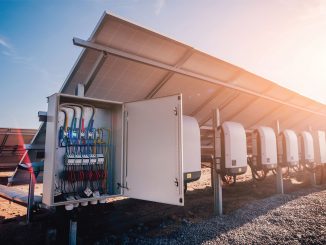
Delta today focuses on large-scale central inverter solutions for commercial and industrial (C&I) and utility-scale markets. Our flagship 4.4 MW modular central inverter offers unmatched scalability and reliability.
Key differentiators include:
- 4.4 MW modular design for optimised plant layouts.
- Capability to supply full-rated reactive power, enhancing grid stability.
- Wi-Fi-enabled connectivity with smart monitoring for reduced operations and maintenance downtime.
- Proven reliability across India’s toughest grid and climatic conditions.
With our integrated portfolio spanning solar, storage, EV charging and PCS, Delta offers future-ready, hybrid-enabled solutions backed by local R&D, manufacturing and pan-India service support.
Could you share notable collaborations with utilities, IPPs or corporates for renewable deployment?
Collaboration has been central to Delta’s impact in India. Recently, we signed three MoUs with the KP Group to jointly advance clean energy innovations across solar, storage and EV charging. This marks an important step in scaling integrated energy ecosystems in partnership with leading renewable players.
Beyond this, we continue to work with state discoms and private utilities on grid-tied solar projects; partner with IPPs on multi-MW solar and hybrid plants; and enable corporates in IT, manufacturing and retail to deploy workplace EV charging and rooftop solar solutions.
Together, these collaborations represent hundreds of MW in solar deployments, reinforcing Delta’s ability to deliver scalable, future-ready solutions aligned with both corporate environment, social and governance targets and national clean energy goals.
How does Delta see the role of partnerships in scaling clean energy adoption?
Scaling clean energy to meet India’s 500 GW renewable energy target by 2030 requires collective effort. Delta sees itself as a technology enabler, complementing the strengths of partners across the value chain.
We work with developers and engineering, procurement and construction contractors to deliver reliable products and design support; with technology providers to embed AI, IoT and grid software into our systems; and with corporates to co-create sustainability roadmaps that combine solar, storage and e-mobility. By blending our innovation with our partners’ execution capabilities, we accelerate adoption, reduce cost per kWh and ensure cleaner power reaches scale faster.
What policy or regulatory changes would most accelerate the adoption of renewable and storage solutions in India?
Three key enablers can unlock faster adoption:
- Clear storage policy and incentives to drive adoption in C&I and grid-scale projects.
- Time-of-day tariffs and ancillary markets to enable the monetisation of flexibility services.
- EV charging reforms with simplified approvals, renewable-linked tariffs and open access for scale-up.
If implemented effectively, these measures could fast-track India’s journey to 500 GW renewables while attracting larger private-sector investments.
How do you plan to build resilience in India’s power ecosystem, especially amid global supply chain challenges?
Delta is building resilience through localisation and innovation. On the localisation side, Delta has expanded its Krishnagiri campus with a $500 million investment, now spread across 95 acres with two new factory buildings. This expansion alone will increase our workforce from around 3,750 today to 5,000 employees within three years.
In parallel, facilities in Rudrapur and Hosur, together with R&D in Bengaluru and Gurgaon, enable faster design-to-delivery cycles and reduce supply chain dependencies. We have significantly reduced supply chain dependencies while strengthening Make in India capabilities.
On the technological side, our modular designs maximise uptime, while AI-driven predictive maintenance reduces downtime risks. We are also deploying renewable-linked microgrids and hybrid systems for critical industries and cities, ensuring business continuity even during grid instability.
What are Delta’s targets for renewable and power solutions in India?
Sustainability is central to Delta’s purpose. Delta’s power purchase agreements are more than transactions; they are part of a long-term strategy to decarbonise our operations and contribute meaningfully to India’s green transition, while also reaffirming our commitments under global frameworks like RE100.
Our priorities include:
- Scaling EV charger production (backed by our recently expanded manufacturing) to meet India’s fast-growing demand, targeting around 40 per cent year-on-year growth in the EV segment.
- Scaling domestic manufacturing for both Indian projects and export opportunities.
- Driving adoption of hybrid ecosystems across data centres, industrial parks, and smart cities.
- Strengthening our digital platforms and service networks for lifecycle value.