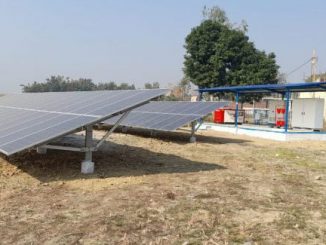
India is emerging as one of the world’s leading solar markets, with nearly 119 GW of installed capacity as of July 2025, according to the Ministry of New and Renewable Energy (MNRE). As solar deployment gathers pace, the demand for reliable and efficient system components, particularly solar inverters, is rising. This is being fuelled by large utility-scale projects, the growing adoption of residential rooftop systems and the increasing integration of hybrid storage solutions. These devices perform the critical function of converting direct current (DC) produced by solar panels into alternating current (AC) for use across households, businesses, industries and institutions, or for supply to the grid. In addition to conversion, inverters safeguard installations by automatically shutting down during faults or voltage fluctuations, preventing hazards such as fires or electrocution. Beyond ensuring safety, they enable seamless grid interaction by supporting the export of surplus solar power.
The efficiency and durability of a solar power system are closely tied to the quality of the inverter, and manufacturers are investing heavily in improving their products. With rapid growth in solar deployment worldwide, the inverter industry is undergoing significant technological transformation, driven by advances in digitalisation, semiconductor technology and storage integration. In India, the market is evolving from the dominance of conventional central inverters to a more diverse mix of string inverters, microinverters and hybrid designs that support energy storage and smart grid interaction.
Policy developments
The government has introduced a series of regulatory measures to standardise performance and strengthen consumer confidence in solar inverters. In March 2024, the Bureau of Energy Efficiency launched the Standards and Labelling Programme for grid-connected solar inverters without storage. Under this programme, efficiency thresholds range from 92 per cent for smaller units to 98 per cent for higher-capacity inverters. The initiative is expected to save over 21 billion kWh of electricity and reduce emissions by around 15 million tonnes between 2024-25 and 2033-34, while also improving grid stability.
The residential rooftop solar sector has gained momentum under the PM Surya Ghar: Muft Bijli Yojana. Inverters enlisted under this programme are required to meet minimum labelling standards and carry warranties of at least eight years. These conditions have strengthened consumer trust and improved product quality and durability. The programme has also boosted demand for string inverters in the rooftop space.
The standards were further tightened in January 2025, when the MNRE issued the Solar Systems, Devices and Components Goods Order, mandating compliance with the Bureau of Indian Standards (BIS) requirements for all solar components, including inverters. While the order was to take effect within six months of notification, its implementation for inverters above 200 kW has been extended to June 2026 due to limited testing capacity. As part of this order, in June 2025, the MNRE issued draft guidelines for the series approval of solar photovoltaic (PV) inverters to facilitate testing and certification. These guidelines help manufacturers and test laboratories define product families, permissible design and material variations for approval under compulsory BIS registration. The draft guidelines apply to off-grid, grid-tied and hybrid inverters, ensuring a more streamlined process for standardisation.
Cybersecurity has emerged as another focus area. In July 2025, the MNRE mandated that all inverters supplied under the PM Surya Ghar scheme must connect to national servers managed by government-designated agencies. This move aims to safeguard energy data and prevent risks of remote interference.
Market and technology trends
The global inverter market has witnessed rapid growth, with shipments reaching nearly 589 GWac in 2024, according to Wood Mackenzie. The Asia-Pacific region accounts for the largest share.
A diverse mix of domestic and international companies operates in the country, including Sungrow, TBEA Energy India, FIMER India, Sineng Electric, Ginlong (Solis), Microtek, UTL Solar, Su-Kam, Livguard, Delta Electronics, Servotech, Luminous, Hitachi, Nexus Solar, Waaree, Eapro Global, Goldi Solar, Lento and Smarten. Competition is intense, encouraging players to continuously innovate and scale up local manufacturing.
In terms of technology, central inverters continue to dominate utility-scale projects. A key innovation in this space is the launch of higher-capacity inverters, with 2,000 V designs now available, enabling longer module strings and reductions in system costs. Manufacturers are also investing in modular inverter architectures for utility-scale projects. For instance, SMA’s modular central inverters allow system oversizing and high-power density while reducing installation costs. Such designs are expected to gain traction as developers explore flexible, project-specific solutions.
Meanwhile, string inverters are increasingly preferred for residential and commercial and industrial (C&I) projects due to their lower upfront costs and ease of deployment. Beyond these segments, high-power string inverters are now being used in utility-scale plants as well, reducing the number of units required per block, lowering balance-of-system costs and enhancing DC-to-AC conversion efficiency.
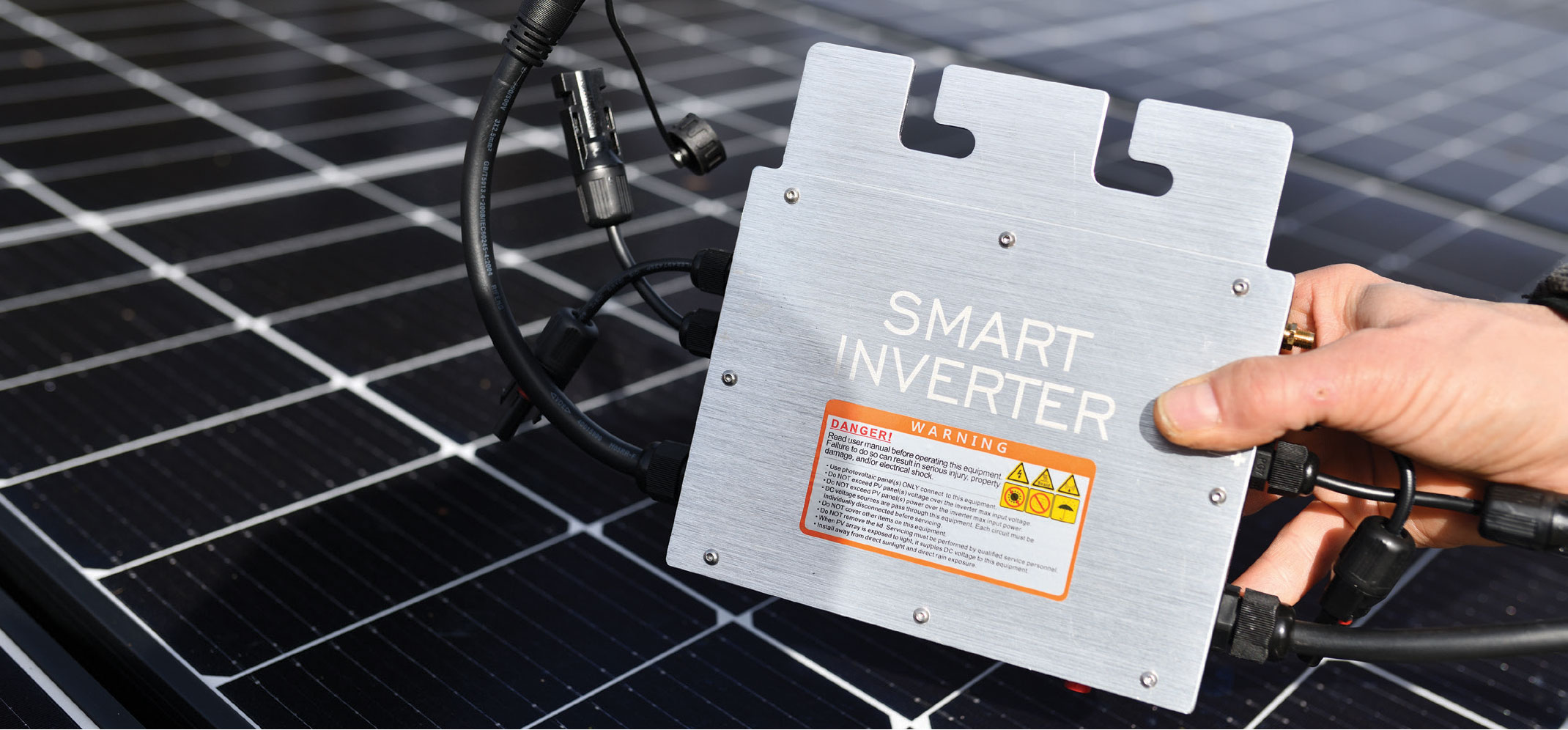
Further, microinverters are gaining traction in the residential and commercial rooftop space, where panel-level optimisation provides higher yields and greater resilience to shading. A case in point is the recent launch of Servotech’s Wi-Fi-enabled microinverters with app-based monitoring.
Hybrid inverters that integrate storage are becoming popular among households and businesses seeking greater energy independence and backup during grid outages. Bengaluru-based POM Systems launched hybrid inverters in 3 kW, 5 kW and 10 kW sizes, designed for residential users, optimising for both solar generation and battery storage.
Digitalisation is another key driver. Smart inverters equipped with internet of things (IoT) and artificial intelligence (AI)-enabled features now enable real-time monitoring, predictive maintenance and seamless grid integration. Remote monitoring systems allow plant operators to quickly detect faults, optimise performance and minimise downtime. The ability of modern inverters to regulate voltage and frequency, supply reactive power and communicate with grid operators has made them critical to maintaining grid stability as renewable penetration increases.
Semiconductor innovations such as gallium nitride and silicon carbide have pushed inverter efficiency levels beyond 99 per cent while also improving power density. The past decade has seen power density increase nearly tenfold, from around 50 W per cubic inch to over 500 W, enabling smaller, lighter and more cost-effective designs. Transformer-less topologies have further reduced the weight and size of inverters while maintaining safe electrical isolation.
Challenges and the way forward
Despite steady progress, the solar inverter industry continues to face challenges. Cybersecurity has become a pressing concern, particularly for imported products, prompting stricter government oversight. Heat losses in large inverters, grid integration complexities and limited panel-level monitoring are additional hurdles.
Another key challenge is competing with China’s low-cost inverters. Chinese inverters continue to dominate global markets due to scale and pricing advantages, making it difficult for domestic manufacturers to match costs. Going forward, to reduce reliance on imports, India must expand local manufacturing capacity, secure supply chains and invest in research and development.
The solar inverter market is expected to grow in line with India’s ambitious solar expansion targets. The increasing adoption of energy storage will fuel demand for hybrid and bidirectional inverters capable of supporting vehicle-to-grid applications as electric mobility expands. Smarter inverters with predictive analytics, self-learning algorithms and AI-driven optimisation will further enhance system performance.
Going forward, modular and standardised designs are likely to become mainstream, enabling easier customisation across different project sizes and improving reliability by reducing single points of failure.
Net, net, continued policy support for performance standards, labelling and cybersecurity safeguards, combined with innovations by technology providers, will be key to ensuring that high-quality products dominate the market, leading to efficient solar installations.