By Ravi Mahto, Senior Manager-Policy and Regulatory (IESA), Customized Energy Solutions
India sold 2.08 million electric vehicles (EVs) in 2024, a 40-fold increase from 2016, taking the total EV stock to 5.45 million, according to NITI Aayog’s 2025 EV Opportunity report. Yet, penetration stands at just 7.66 per cent of new vehicle sales, well short of the 30 per cent target. Two- and three-wheelers dominate adoption, and electric buses are gradually expanding, but electric cars remain a niche and long-haul e-trucks are still rare in sales data. NITI Aayog’s India Electric Mobility Index 2024 highlights sharp regional variation: Delhi, Maharashtra and Chandigarh lead in infrastructure readiness, while Karnataka and Tamil Nadu excel in manufacturing investments. This uneven progress underscores the need for targeted infrastructure expansion to balance growth across regions.
Why charging matters
The IEA Global EV Outlook 2025 makes a simple point: charging infrastructure is not a support system, it is the backbone. Globally, public chargers doubled between 2022 and 2024, crossing 5 million. Countries with faster charger roll-outs saw steeper EV adoption curves. In mature markets, the EV-to-public-charger ratio is often below 20:1; in India, it is closer to 235:1, according to industry data. The charging infrastructure is scaling rapidly, with public EV stations growing over five times between financial year 2022 and early financial year 2025. This substantial expansion has been attributed to robust initiatives from both central and state administrations.
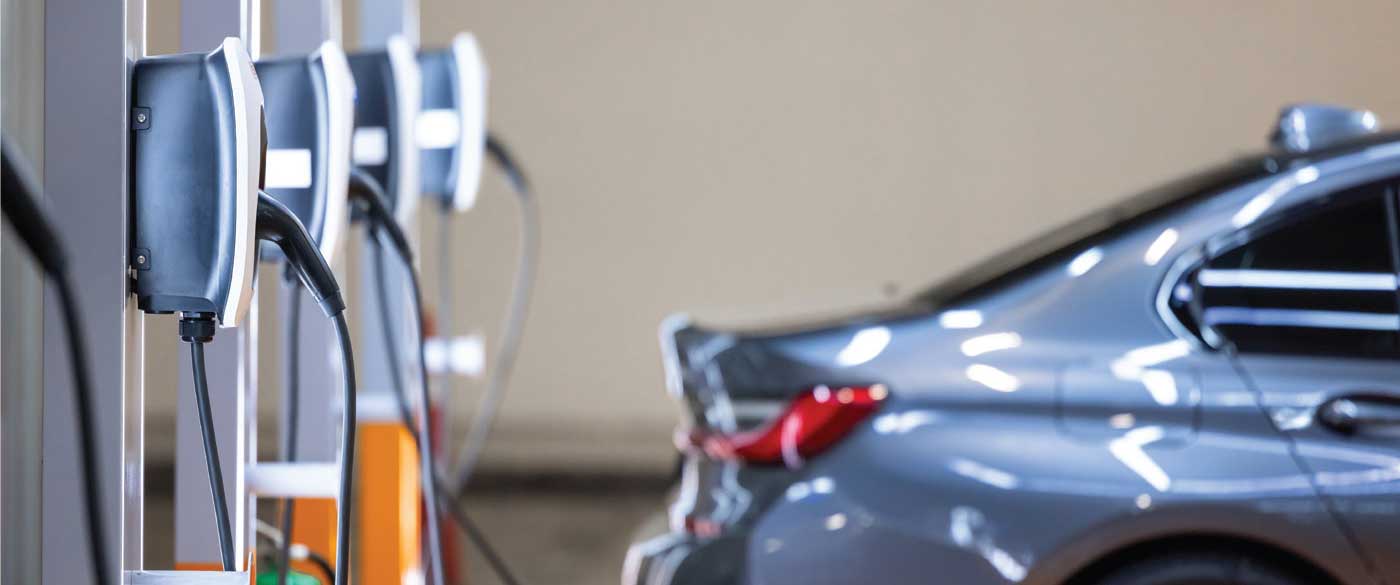
As of August 1, 2025, there were 29,277 public charging stations, with the top states being Karnataka (6,097), Maharashtra (4,155), Uttar Pradesh (2,326), Delhi (1,967) and Tamil Nadu (1,781). Many are concentrated in urban hubs; rural and highway coverage remains sparse. Fast-charging options, essential for commercial fleets and intercity travel, are still limited.
The chicken-and-egg dilemma
EVs and charging facilities face a classic chicken-and-egg problem – limited charging infrastructure slows EV adoption, while a small EV base undermines charger viability. Globally, more chargers has generally meant higher adoption: China, with nine cars per charger, leads penetration, followed by the US and Germany. Norway is an exception, having achieved 93 per cent penetration despite 25 cars per charger. India has 14 cars per charger, but lags in adoption due to the low share of cars in its vehicle fleet and suboptimal charger placement. Rather than evenly dispersing chargers, aligning them with travel patterns can boost utilisation. Scaling up will require coordinated action among utilities, municipalities, landowners and financiers; streamlined approvals and uniform tariffs; and pan-India introduction of time-of-day pricing (as introduced by Kerala), dedicated EV power lines and vehicle-to-grid integration to turn EVs into both mobility solutions and grid assets.
Challenges in the current network
India’s EV charging infrastructure faces the dual challenge of inadequate facility availability and low utilisation of existing public chargers. Key issues include delays and inconsistencies in securing power supply from discoms, and the high deposits required by discoms from charge point operators. Land acquisition remains difficult in cities and along highways, while safety concerns from RWAs and restrictive building bylaws hinder installation in residential areas. Public charging is significantly costlier than home charging due to high margins. Further, public charging station users are liable to pay 18 per cent Goods & Services Tax (GST), and the lack of subsidies further discourages use. The absence of a unified national app for locating, booking and paying at stations, coupled with suboptimal placement of chargers, reduces user convenience. Poor inter-agency coordination and the lack of targeted infrastructure planning exacerbate these challenges.
Accelerating India’s EV transition
India’s EV transition has been driven so far by strong policy initiatives, but the next phase may require a shift towards mandates. Under FAME-II, the government extended demand incentives for e2W, e3W and e4W; provided grants for deploying e-buses; and supported the establishment of public charging stations. Building on this foundation, the PM e-Drive scheme (2024-26) earmarks Rs 109 billion, with a substantial share dedicated to charging infrastructure, including 20 high-density e-bus and e-truck corridors, viability gap funding to encourage private investment, and unified digital platforms for charger access and payments. The Ministry of Housing and Urban Affairs has amended its 2016 Model Building Bylaws to mandate EV charging infrastructure for 20 per cent of a building’s parking capacity. The Ministry of Power has also issued updated Guidelines for Installation and Operation of Electric Vehicle Charging Infrastructure (September 2024) and Battery Swapping and Charging Stations (January 2025), setting national standards and protocols for a uniform, reliable charging network.
However, as noted in NITI Aayog reports, incentives have largely fulfilled their role, and the next stage should rely more on mandates, disincentives for internal combustion engine vehicles, and targeted “saturation” strategies, such as fully electrifying public transport and freight fleets in select cities to deliver visible benefits and drive replication nationwide.
Leveraging innovative financing models
Going forward, scaling India’s EV charging network requires not just policy support but also innovative financing mechanisms that make participation viable for a wide range of investors. Emerging models include dealer-owned, company-operated frameworks, where private players invest in charging stations while operators handle technology, operations and maintenance, backed by collateral-free loans and credit guarantee schemes to ease capital access. Further, micro, small and medium enterprise-focused concessional lending programmes enable small entrepreneurs to enter the market without prohibitive upfront costs. Infrastructure-as-a-service approaches, whereby operators fund, install and maintain chargers in return for subscription or usage fees, can demonstrate how asset-light models can accelerate deployment. By combining public-private partnerships, credit guarantees and operational outsourcing, such models lower entry barriers, diversify geographic coverage and ensure sustainable operations, strengthening India’s path towards its EV adoption goals.
The road to 2030
Reaching 30 per cent EV penetration from the current 7.66 per cent and creating India’s $200 billion EV opportunity will require policy certainty through clear and consistent zero-emission vehicle timelines across states; targeted infrastructure scaling in priority corridors and cities; innovation in financing through the blended capital, leasing and battery-as-a-service models; technology localisation in batteries, recycling and chargers; and consumer confidence built on reliable, accessible and fairly priced charging.
India’s charging infrastructure story is as much about coordination, finance and trust as it is about hardware. With clear national road maps, global best practices and state-level success stories, the building blocks are in place. If charging becomes as seamless and ubiquitous as refuelling, the 2030 targets will not just be aspirations, they will be milestones on the road to a cleaner, more resilient mobility future.