

 By Tejas Chavan, Director, Green Spaces
As sustainability becomes a business imperative, renewable power is enabling hospitality brands to lower their emissions and ensure long-term resilience. As the climate crisis deepens and conscious travel becomes the norm, the hospitality industry is undergoing a quiet but transformative energy shift. At its core lies a simple truth – sustainability is not possible without clean, renewable power. Whether tucked away into remote hills, sprawling across desert landscapes, or nestling in the heart of cities, hospitality spaces are energy-intensive by nature. From heating and cooling systems to laundry, lighting, water treatment, kitchens, spas and pools – every aspect of operations demands energy. And how that energy is sourced highlights the difference between a carbon-heavy footprint and a regenerative one.
Rethinking energy: From cost centre to climate tool
Traditionally, energy has been viewed as an operational cost – something to be managed efficiently, but rarely questioned. That is changing. Today, renewable energy is no longer a side project or aspirational goal; it is rapidly becoming a key pillar of responsible hospitality design. Solar panels, wind turbines, micro-hydro systems, biogas digesters and geothermal loops are reshaping the infrastructure of hotels, eco-stays and retreats. What was once considered niche or expensive is now being embraced as essential – not just for environmental reasons but also for economic resilience.
The shift is being driven by multiple forces: evolving government policies, increasing volatility in fossil fuel markets, rising guest expectations and industry-wide consensus that sustainability must move from tokenism to systemic action.
When energy aligns with experience
Renewable energy is not just about reducing emissions. When thoughtfully integrated, it can enhance the guest experience. Imagine a space where hot showers are heated by the sun, your phone charges using solar energy harvested earlier that day, or your meal is prepared using cooking gas generated from kitchen waste.
Such details are no longer background logistics; they are part of the story. New-age travellers seek authenticity, transparency and purpose. They want to know not just where they are staying but how that space operates behind the scenes. A property that powers itself responsibly is not just functional – it fosters a deeper sense of alignment and presence. Designing with clean energy at the core also enables spaces to push creative boundaries: rooftop solar gardens, energy-positive architecture, silent wind generators and passive solar heating systems that double as aesthetic features.
Sustainability, here, becomes as much a design opportunity as it is a responsibility.
The long game
Despite early assumptions, renewable energy is not only an environmental investment, it is also a financial one. While solar or wind infrastructure may initially entail high set-up costs, they often deliver substantial long-term savings. Lower energy bills, fewer outages and protection against fuel price fluctuations offer operators greater control and certainty.
In many regions, tax incentives, subsidies and green financing schemes are accelerating returns on investment. Even small, hybrid systems, combining grid electricity with solar or biogas, can reduce operational expenses while building resilience.
For remote or off-grid properties, the benefits multiply. Renewable energy minimises the need to transport fuel over long distances, reduces dependency on unstable grid supply, and ensures consistent service in areas prone to power cuts.
 From silent footprints to conscious blueprints
The most exciting trend in hospitality is how renewable energy is being built into spaces from the ground up. The focus has shifted from “offsetting” impact to designing systems that minimise it from the start. Architects, engineers and sustainability consultants are now collaborating from day one to integrate energy systems that are site-sensitive, scalable and efficient.
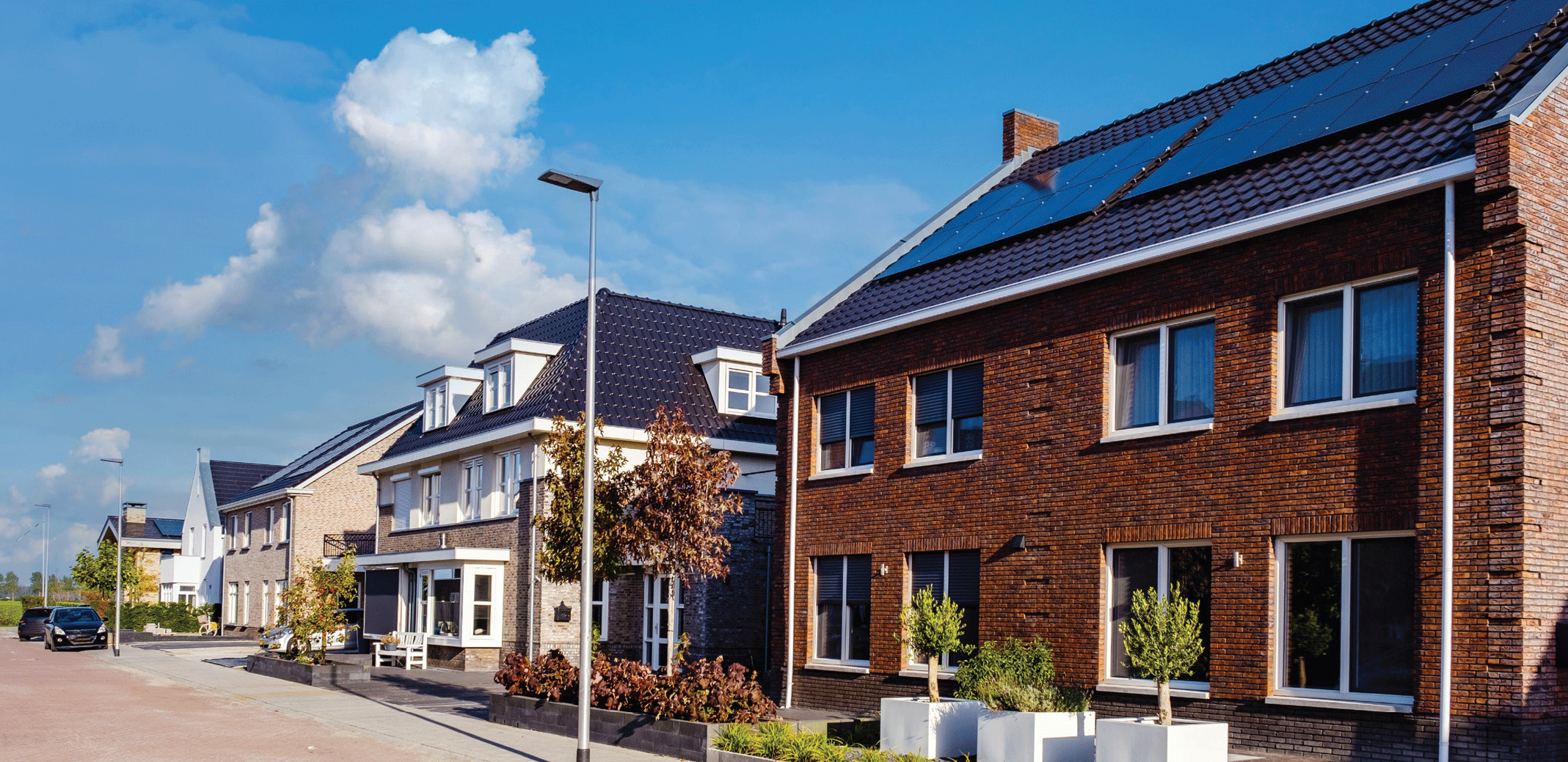
Solar panels are no longer just add-ons; they are integrated into the building’s orientation. Biogas units are planned alongside kitchen layouts. Natural ventilation strategies reduce cooling needs. The goal is not just net zero, but net positive.
The shift is also changing how hospitality owners think about energy. No longer just a technical domain, it is becoming a storytelling tool. Guests are invited to understand the systems that power their stay, turning infrastructure into inspiration.
A solar dashboard in the lobby, a visible composting station or a guided energy walk – these touchpoints make sustainability real and relatable.
Challenges still remain
Of course, the path is not without friction. Many properties lack the space or capital for large installations. Policy gaps, unreliable subsidy systems and convoluted net metering guidelines can delay or lead to complications in execution. In dense urban areas, retrofitting old buildings for renewable systems can be challenging.
But creative workarounds are emerging. Modular systems, energy-as-a-service models and community-shared solar projects are unlocking access. Operators are taking small steps initially, with solar lighting, solar water heaters and waste-to-energy initiatives, and scaling up as they go. More importantly, the mindset is shifting. Energy is no longer just a utility; it is becoming part of a property’s identity.
The road ahead
In the coming years, renewable energy will not be a mark of leadership; it will be the baseline. As travellers demand more accountability, and as climate volatility increases, hospitality brands that embrace clean power will not only be more relevant but also more resilient.
The energy decisions made today will shape the stories we tell tomorrow – about how we hosted guests, protected landscapes and played our part in healing the planet.
Hospitality today is no longer just about comfort, it is about conscious care for people and the planet.
