

 Founded in 2022 as a division of the Nash Group, Nash Energy is an emerging player in India’s lithium-ion (Li-ion) cell manufacturing landscape. With its parent company, Nash Industries, having over five decades of experience in engineering and manufacturing, Nash Energy draws on a legacy of industrial capability to produce advanced battery technologies. Headquartered in Bengaluru and supported by a wholly owned research and development (R&D) centre in Japan, the company specialises in the development and production of lithium iron phosphate (LFP) cells in various formats, as well as battery management systems (BMSs) and integrated energy storage solutions. Renewable Watch recently interviewed Anil Kumar, Chief Operating Officer, Nash Energy, to learn more about the company’s milestones, technology choices, manufacturing plans and the broader challenges facing India’s battery ecosystem. Edited excerpts…
Could you begin by giving a brief overview of Nash Energy and its journey so far?
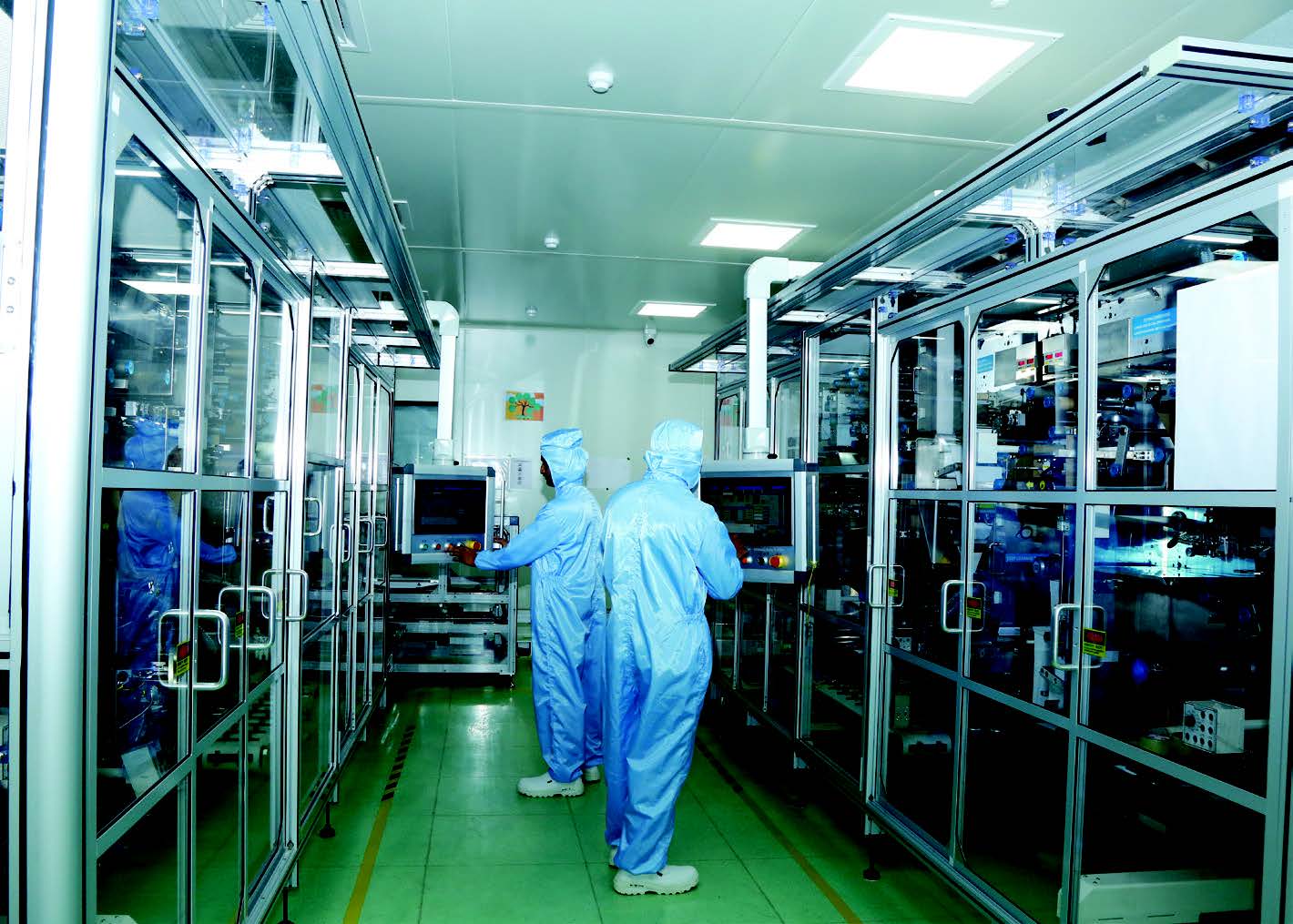
Nash Energy was established to address the growing demand for reliable and scalable energy storage solutions in India. We built the country’s first mass manufacturing facility for cylindrical LFP battery cells in Bengaluru, with an annual capacity of 600 MWh. This facility was set up in a short time frame as compared to what larger companies have taken years to achieve, by leveraging Nash Industries’ manufacturing expertise and the R&D capabilities of Forte Nippon, a Japanese research centre acquired and integrated as Nash Energy Japan. We work with more than 50 customers globally and are focused on providing end-to-end solutions, from cell manufacturing to battery systems tailored to specific applications.
What are your key product offerings?
The company’s primary product is the NEI32140 cylindrical LFP cell, designed in Japan and manufactured in Bengaluru. We offer energy, power and hybrid cells, which are currently undergoing testing with customers for various use cases, including energy storage and mobility. In addition to cells, we also design and manufacture battery packs and BMSs that can be customised for client requirements.
What drove Nash Energy’s decision to prioritise LFP cell chemistry, and how does it align with India’s energy storage needs?
Our decision to prioritise LFP chemistry was guided by considerations of safety, longevity and cost-effectiveness for applications in various sectors ranging from automobiles to energy storage systems. These features are particularly relevant in India’s diverse climatic conditions and price-sensitive market. With India’s renewable energy capacity expanding rapidly, the demand for energy storage is projected to grow to 336 GWh by 2030, with battery systems expected to grow to 208 GWh. LFP batteries are well suited to meet this need. We aim to offer localised, transparent and collaborative solutions that can be adapted quickly to feedback from Indian customers and respond to the ever-growing energy storage needs of the country.
What are the key R&D milestones and challenges in your transition towards solid-state cells?
Our research division in Japan is currently working on developing solid-state battery technologies. We aim to commercialise the solid-state battery space while overcoming the various associated material, manufacturing and economic challenges. Key areas of focus include the creation of solid electrolytes with high ionic conductivity and electrochemical stability, as well as manufacturing techniques that can scale these materials for commercial use using dry processing and high-throughput fabrication. We have identified several challenges in this space – balancing performance with stability and cost, building uniform interface layers for solid-state cells and developing local supply chains for critical materials. The goal is to achieve lower per-kWh costs than conventional Li-ion cells while maintaining safety and scalability.
Could you share details on the upcoming gigafactory – including timelines, investments and its potential role in India’s battery ecosystem?
We will set up a gigafactory by 2030 to further expand our manufacturing capacity. The gigafactory is being built in a phased manner, with a new manufacturing unit expected to become operational within the next year. The demand for Li-ion battery cells in the electric vehicle sector alone is projected to reach 60-65 GWh by FY 2029-30. Even with upcoming facilities that are being executed in a planned and phased manner, domestic supply will likely lag behind demand, especially given additional needs from sectors like energy storage and defence. To address this, we are developing off-the-shelf and custom solutions to meet sector-specific requirements and strengthen India’s domestic battery ecosystem.
What are Nash Energy’s future expansion plans, both in terms of manufacturing capacity and technology innovation?
Looking ahead, our efforts at Nash Energy Japan remain focused on both improving existing battery technologies and developing next-generation solutions. We believe our role goes beyond just being a cell manufacturer. Our broader objective is to become a comprehensive energy solutions provider. To this end, we are not only manufacturing LFP cells, but also building complete systems, including battery packs and BMSs, with the flexibility to tailor these solutions to the specific needs of our customers.
 We see value in working closely with customers across applications, ranging from long-duration storage requirements in energy systems to high C-rate performance needs in mobility. At the same time, we are expanding our R&D capabilities to integrate more intelligent solutions into our offerings. For instance, we are actively exploring AI-powered solutions that can make energy management more predictive and efficient.
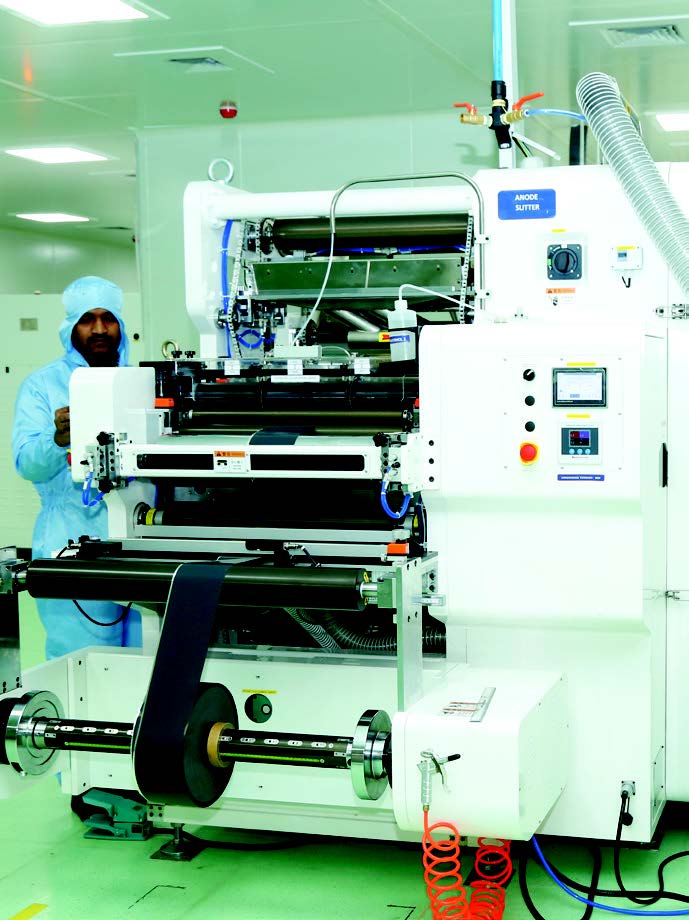
On the manufacturing front, our manufacturing facility is capable of producing not only LFP cells but also multi-chemistry cells. This enables us to develop customised configurations for a wide range of use cases and to adapt more quickly to shifting market demands. Furthermore, to improve time to market, enhance data transparency and provide customers with control across the product life cycle, we are in the process of establishing a manufacturing excellence centre in India.
What are the major challenges and policy gaps in the Li-ion manufacturing space, and what kind of support would help accelerate domestic manufacturing?
Despite its progress, several significant structural barriers remain in India’s Li-ion manufacturing ecosystem. One, the country relies heavily on imports for critical raw materials such as lithium carbonate, LFP cathode powder and high-purity graphite, which affects cost and supply security. Moreover, there is a lack of large-scale domestic producers of essential components like lithium salts and electrolyte precursors. Two, the industry also suffers from a shortage of trained technical workforce with expertise in Li-ion and high-volume manufacturing. Three, India has no strategic global resource framework to secure long-term access to lithium and other critical minerals. The country needs to build a stronger global engagement framework via long-term agreements and international partnerships to stabilise the supply chain. Four, there is a lack of government-funded R&D infrastructure focused on LFP and other chemistries relevant to India’s mobility and storage needs. At present, there are very few government-supported pilot lines, joint labs or shared testing facilities that focus on localised innovation in LFP technology. Five, domestic manufacturers compete with established global players who have scale advantages and direct access to raw materials. Without equivalent support, it is difficult to match them on cost, even when quality and performance are on par. Six, Indian manufacturers also have to face competition with the influx of low quality imported cells sold at lower prices. These often compromise safety and performance, damaging overall market confidence and hurting serious Indian manufacturers. Addressing these challenges through targeted policies and government support will be crucial in accelerating India’s Li-ion manufacturing capabilities.
